



 Close Menu
 World
World
 Biography
 Health
 Education
 Business
 Lifestyle
 Sports
 Technology
 Animals
 History
 Food
Food
 Religious
 Startups
 Movies
 Politics
 Fashion
 Covid
Covid
 Diet
Diet
 Fitness
 Marketing
 Travel
 Science
 Reviews
 Social media
 Stories
 Facts
Facts
 Art
Art
 Entertainment
Sakshi Padiyar

Education
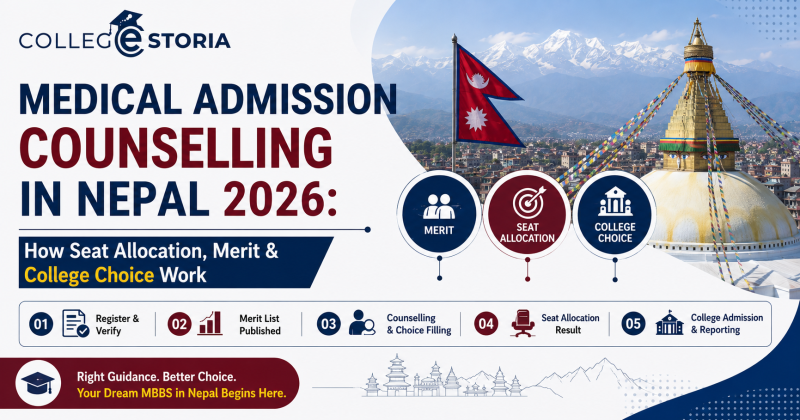
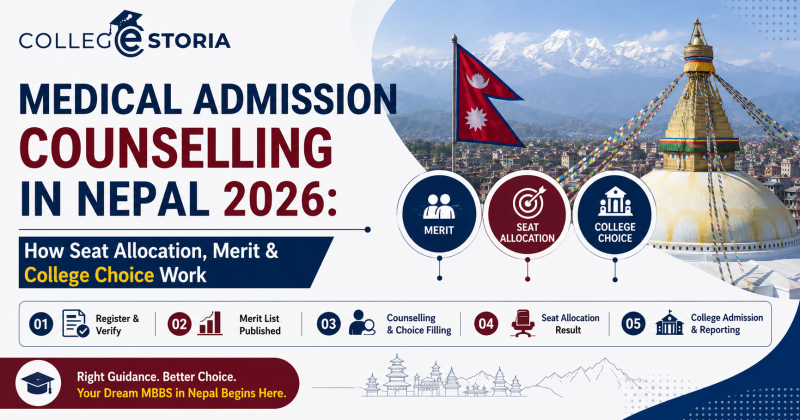
Medical Admission Counselling in Nepal 2026: How Seat Allocation, Merit & College Choice Work
 Sakshi Padiyar
Getting a medical seat is not only about qualifying an entrance examination. For students planning MBBS Admission in Nepal, understanding the counselling and seat-allocation process is equally important. A good rank can give you more choices, but making the wrong college preference or missing an important deadline can affect your admission outcome.
For Indian students, the process can also be confusing because Nepal has its own medical education admission system. It should not be assumed that the process works exactly like NEET UG Counselling in Nepal or the counselling system used for MBBS seats in India.
This guide explains how Medical Admission Counselling in Nepal 2026 generally works, how merit can influence seat allocation, how to prepare your college preferences and what to do after receiving a seat.
What Is Medical Admission Counselling in Nepal?
Medical admission counselling is the process through which eligible candidates participate in the allocation of available medical seats according to the applicable admission rules.
In Nepal, the Medical Education Commission (MEC) plays an important role in medical education entrance and admission. The admission process can involve entrance examination results, merit, category, available seats and candidate preferences.
For foreign candidates, including Indian students, the applicable procedure can be different from that followed by Nepalese candidates. Therefore, students should always check the official 2026 admission instructions for their category.
Is NEET UG Counselling in Nepal the Same as Indian NEET Counselling?
No. This is an important distinction.
Indian students are familiar with NEET UG Counselling conducted for MBBS and other medical seats in India through authorities such as MCC and state counselling bodies.
However, Nepal has its own medical education admission framework.
Therefore, searching for “NEET UG Counselling in Nepal” should not lead students to assume that they can simply use the Indian MCC counselling process to obtain every medical seat in Nepal.
If you are an Indian student interested in MBBS Admission in Nepal, identify the admission route applicable to foreign candidates before registering.
How Does Merit Affect Medical Seat Allocation?
Merit is one of the most important factors in medical admissions.
Generally, candidates with stronger merit positions have a better opportunity to obtain competitive choices, subject to the rules applicable to their category and the availability of seats.
However, merit does not work in isolation.
Seat allocation can also depend on:
- Candidate category
- Number of available seats
- Foreign or international student category
- College preferences
- Applicable reservation or quota rules
- Admission regulations for the particular academic year
- Whether higher-ranked candidates accept or decline their allotted seats
This means that a candidate's result should be evaluated together with the available seat matrix and preference strategy.
What Is a Seat Matrix?
A seat matrix is essentially a breakdown of the seats available for different colleges and categories during an admission cycle.
Before participating in counselling, students should understand:
Which colleges have seats available?
How many seats are available for my category?
Which seats are open to foreign students?
What are the applicable fees and admission conditions?
The seat matrix can change between admission rounds, so students should refer to the latest official information rather than relying on an old list.
How Should You Choose Your Medical College Preferences?
College preference filling is one of the most important parts of Medical Admission Counselling in Nepal.
Don't arrange colleges only according to online rankings.
Instead, consider the following factors.
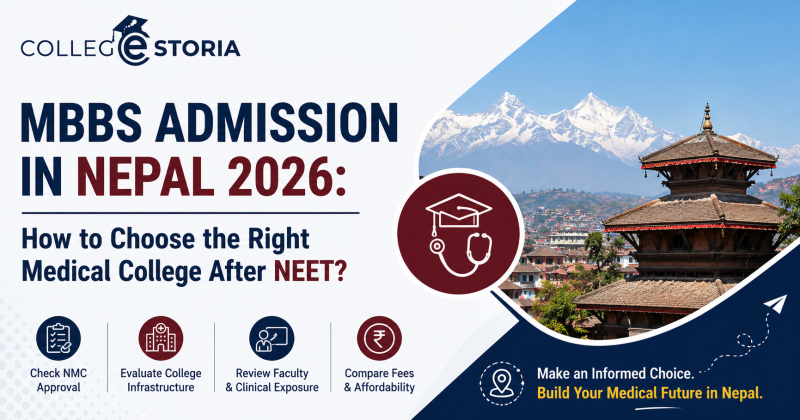
1. Recognition and Regulatory Status
First verify whether the medical college has the required recognition and whether its MBBS programme meets the applicable regulations.
Indian students should also understand the current NMC requirements applicable to foreign medical graduates before selecting a college.
2. Teaching Hospital
A medical college's hospital exposure can have a major impact on your MBBS experience.
Check:
- Hospital attached to the college
- Patient exposure
- Clinical departments
- Emergency services
- Clinical posting structure
- Internship arrangements
3. Total Cost
Compare the complete cost instead of looking only at tuition fees.
Include:
- Tuition
- Admission charges
- Hostel
- Food
- Examination fees
- Books and equipment
- Travel
- Personal expenses
A college with slightly higher tuition may still be a better overall option if it provides stronger clinical exposure and facilities.
4. Location
Consider whether you prefer Kathmandu or another city in Nepal.
Location affects accommodation, transportation, living expenses and how easily you can travel to India.
5. Academic Environment
Look beyond advertisements and check the course structure, teaching departments, faculty and clinical training opportunities.
Should You Put Your Dream College First?
Yes, provided you genuinely prefer it and understand your chances.
A common mistake is putting a college lower on the list because students assume they cannot get it.
Your preference list should reflect what you actually want, followed by realistic alternatives.
A useful approach is to divide your choices into:
Dream choices: Colleges you strongly prefer but may be more competitive.
Realistic choices: Colleges that appear achievable based on your merit and available seats.
Safe choices: Colleges you would genuinely accept if higher preferences are unavailable.
Don't add a college simply to increase the number of choices. Every preference should be a college you would realistically consider joining.
How Does Seat Allocation Work?
Although the exact 2026 process depends on the official MEC notification, the basic concept can be understood easily.
Imagine several candidates competing for a limited number of seats.
The system considers the applicable merit, category, available seats and candidate preferences. A candidate is considered for available choices according to the rules of that admission cycle.
If a candidate receives a preferred seat and accepts it, that seat is no longer available for another candidate in the same allocation process.
If candidates don't accept their seats or fail to complete the required admission formalities, vacancies may become available in subsequent rounds, subject to the applicable rules.
This is why seat availability can change during different stages of counselling.
What Happens After You Get a Seat?
Receiving a seat is not the final step.
Once you receive an allotment, carefully check the admission instructions and deadline.
You may need to:
- Download the allotment or selection document.
- Report to the designated institution or authority.
- Submit the required original documents.
- Complete document verification.
- Pay the prescribed admission or tuition fee.
- Complete university or institutional registration.
- Obtain confirmation of admission.
Missing the reporting deadline can put your allotted seat at risk.
What Documents Should Indian Students Keep Ready?
The exact requirements can vary, but students should keep important documents organised well before counselling.
These may include:
- NEET scorecard
- NEET admit card
- Class 10 certificate
- Class 12 certificate and marksheet
- Passport
- Passport-size photographs
- Academic transcripts
- Category documents, where applicable
- Entrance examination documents
- Equivalence certificate, where required
- Medical fitness documents, if required
- Admission or allotment letter
Keep both physical and digital copies of important documents.
What If You Don't Get Your First Choice?
Don't panic if your first preference is unavailable.
You can evaluate whether the allotted college is acceptable based on:
- Academic quality
- Clinical exposure
- Total cost
- Location
- Hostel
- Internship
- Future career plans
If the rules permit participation in another allocation or upgrade round, you can consider the available options.
However, never reject an allotted seat without understanding the consequences under the current counselling rules.
Common Mistakes During Medical Counselling
Choosing a college based only on popularity
Online popularity doesn't necessarily indicate the best fit for every student.
Ignoring the official seat matrix
Old seat information can give students unrealistic expectations.
Selecting too few preferences
A narrow preference list may reduce your chances of obtaining a suitable seat.
Adding colleges you don't actually want
More preferences aren't always better if you would never join those colleges.
Ignoring NMC requirements
Indian students should understand the regulations applicable to foreign medical graduates before beginning MBBS Admission in Nepal.
Missing deadlines
Counselling is deadline-driven. Registration, preference submission, fee payment and reporting can each have separate deadlines.
Medical Admission Counselling in Nepal: A Smart Strategy
A practical strategy is to start with regulatory verification, then evaluate colleges on clinical exposure, cost, location and academic environment.
After that, create a preference list based on your genuine priorities.
Don't try to predict the exact seat you will receive. Instead, create several acceptable options so that you have alternatives if your first choice is unavailable.
Most importantly, keep checking official notices throughout the counselling period because dates, vacancies and instructions can change.
Final Takeaway
Medical Admission Counselling in Nepal 2026 requires more than simply qualifying an entrance examination. Students need to understand the applicable admission route, merit system, seat availability and preference process before making their choices.
For Indian students, it is particularly important to remember that NEET UG Counselling in Nepal is not simply another version of India's MCC counselling. Nepal follows its own medical admission framework, and foreign candidates must follow the rules applicable to their category.
If you are planning MBBS Admission in Nepal, research your college options carefully, verify the latest regulations, prepare your documents in advance and build a preference list based on your actual priorities rather than advertisements or unverified claims.
For guidance on medical college selection, admission counselling, fees and MBBS Admission in Nepal, CollegeStoria can help students understand their available options and make a more informed decision.
Frequently Asked Questions
1. What is Medical Admission Counselling in Nepal?
It is the process through which eligible candidates participate in medical seat allocation according to the applicable entrance, merit, category, seat availability and preference rules.
2. Is NEET UG Counselling in Nepal conducted by MCC?
Indian MCC counselling and Nepal's medical admission process are separate systems. Indian students should check the official Nepalese admission route applicable to foreign candidates.
3. Does NEET rank determine MBBS admission in Nepal?
Not necessarily by itself. The admission process depends on the applicable rules for the candidate's category, entrance requirements, merit system, seat availability and selection procedure.
4. How should I prepare my college preference list?
Rank colleges according to your genuine priorities, including recognition, clinical exposure, total cost, location, hospital facilities, internship and future career requirements.
5. What should I do after receiving an MBBS seat in Nepal?
Read the official allotment instructions, complete document verification, pay the required fees within the deadline and complete the institution's admission formalities.
Source:
Click for the: Full Story
You might like


You Might Like this