Close Menu
 World
World
 Biography
 Health
 Education
 Business
 Lifestyle
 Sports
 Technology
 Animals
 History
 Food
Food
 Religious
 Startups
 Movies
 Politics
 Fashion
 Covid
Covid
 Diet
Diet
 Fitness
 Marketing
 Travel
 Science
 Reviews
 Social media
 Stories
 Facts
Facts
 Art
Art
 Entertainment
Andrew Miller

Technology
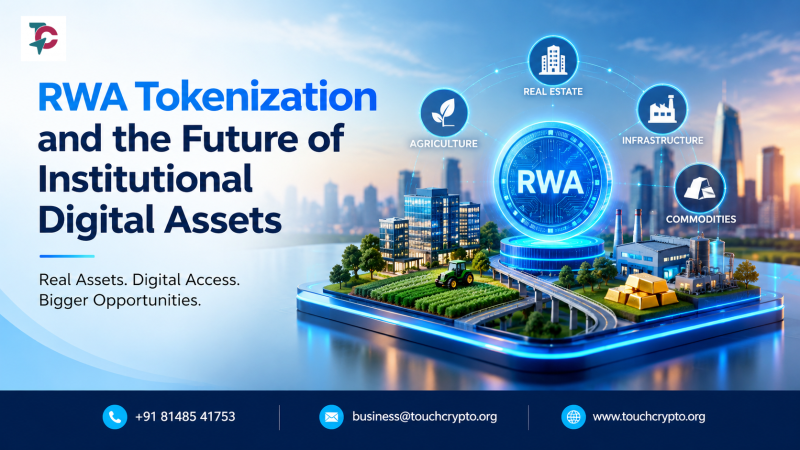
RWA Tokenization and the Future of Institutional Digital Assets
 Andrew Miller
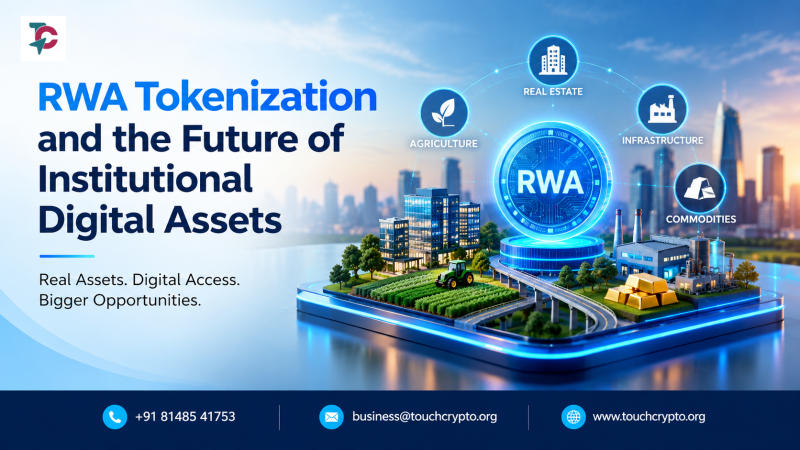
As the concept of real-world asset tokenization emerges, we see many financial institutions looking to bring the existing traditional assets to blockchain networks. RWA tokenization lets you turn assets—, like real estate, government bonds, private credit and commodities—into digital tokens.
RWA tokenization gives you freedom to own, settle, transfer and reach markets that used to be hard to access.
What Is RWA Tokenization?
What is RWA tokenization? RWA tokenization refers to mapping onto the blockchain an asset from the real world. The real world asset stays connected to a known property or legal system and the digital token is a group of rights.
Smart contracts can help with the following tasks: Issuing and moving assets; Keeping records of ownership; Following rules; What can be done varies a lot and it depends on the type of asset the country and the legal system, for the token.
Why Institutions Are Exploring Tokenized Assets
Traditional financial markets may include a number of middlemen, a relatively long settlement cycle, and restricted access to market participants. Blockchain infrastructure could potentially help to facilitate the settlement process by enabling inbuilt programmability and traceability of transactions.
For the industry as a whole, tokenization could lead to more streamlined settlement, better asset management, and automation and a reshaping of distribution. It can also open up some asset classes to more participants.
Assets Moving Toward Tokenization
RWA is not limited to cryptocurrencies. Outside of cryptocurrencies, various tokenisation projects in government securities, real estate, private credit, commodities, funds, and equities are being considered.
There has been specific institutional interest in tokenised government securities; an infrastructure based on blockchain may enable easier clearing and settlement as well as operational efficiencies while still being connected to legacy systems.
Real estate also falls within this category, as tokenisation allows for fractional ownership and may simplify various ownership issues through a digital environment.
The Role of Blockchain Infrastructure
A technical specification: Blockchain technology facilitates the generation and transfer of crypto assets. By smart contracts, some rules will be implemented automatically, Wallets and DAPs will serve as interfaces to manipulate the assets.
But policy tokenisation is not all about creating a token. It may require identity checks, permissions, rules and controls, custody, the verification of assets, and plugging into current financial infrastructure.
Compliance and Asset Verification
Regulatory compliance is a top concern for all institutional RWA projects. Tokenized assets can be regulated as securities, have certain investor requirements and reporting obligations, and be subject to rules for particular jurisdictions.
The asset verification is just as critical. Depending on the digital asset, investors also need assurance that the digital asset represents a real underlying asset or enforceable financial claim. Governance and transparency are keys to establishing that.
What Could the Future Look Like?
Tokenized assets are expected to become ever more integrated with financial services and digital markets as the underlying blockchain infrastructure continues to evolve. For instance, tokenized assets may one day be tradable on exchange platforms, lending platforms, settlement networks and other blockchain-enabled financial services.
This might lead to a proliferation of programmable financial products with ownership, compliance, settlement and transaction instructions embedded in the very fabric of the digital infrastructure.
Conclusion
For enterprises, RWA tokenization could link classic financial assets with cryptocurrency markets. But the value of RWA for institutions goes further than digital ownership, offering programmable transactions, easier settlement, greater transparency and new market structures. Widespread adoption of RWA will require secured technology and a means of verifying assets, strict regulation and security, and systems connecting cryptocurrency and traditional financial markets.
Any Queries? Talk to Our Experts:
Phone: +91 81485 41753
Telegram: https://telegram.me/touchcrypto1
Gmail: business@touchcrypto.org
Source:
Click for the: Full Story
You might like