Close Menu
 World
World
 Biography
 Health
 Education
 Business
 Lifestyle
 Sports
 Technology
 Animals
 History
 Food
Food
 Religious
 Startups
 Movies
 Politics
 Fashion
 Covid
Covid
 Diet
Diet
 Fitness
 Marketing
 Travel
 Science
 Reviews
 Social media
 Stories
 Facts
Facts
 Art
Art
 Entertainment
Aria Smith

Technology
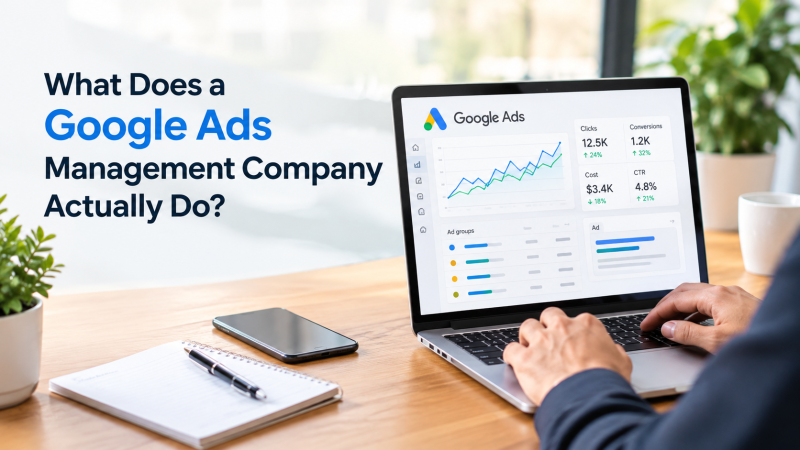
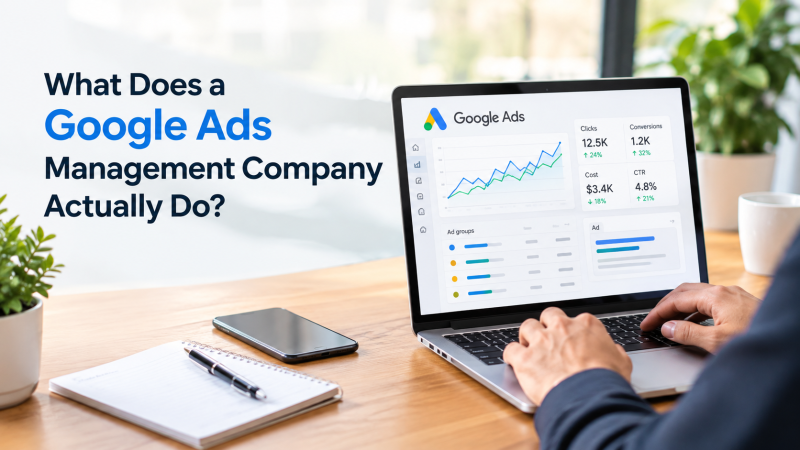
What Does a Google Ads Management Company Actually Do?
 Aria Smith
Running Google Ads may look simple from the outside. You choose a few keywords, write some ads, set a budget, and wait for customers to click. In reality, successful Google Ads campaigns require ongoing research, testing, optimization, and careful budget management.
This is where a Google Ads management company can make a real difference. Instead of handling everything yourself, you can have experienced professionals manage your campaigns and focus on getting the best possible return from your advertising budget.
But what exactly does a Google Ads management company do? Let’s break down the work involved and why businesses choose professional help for their paid advertising.
What Is Google Ads Management?
Google Ads management is the process of planning, creating, monitoring, and improving paid advertising campaigns on Google.
It involves much more than simply creating an ad. A professional needs to understand your business, target audience, competitors, products or services, and advertising goals before deciding how a campaign should be structured.
A good google ads management agency looks at the complete customer journey—from the search a person makes to the ad they click and the action they take on your website.
The goal is not just to generate clicks. The goal is to generate relevant traffic, leads, sales, phone calls, or other valuable actions while keeping advertising costs under control.
1. Keyword Research and Planning
Keywords are one of the foundations of a Google Ads campaign.
A management company researches the terms potential customers are using when they search for products or services like yours. They also consider search intent, competition, estimated costs, and the likelihood that a particular keyword will lead to a conversion.
For example, someone searching for “digital marketing services” may be looking for general information, while someone searching for “hire digital marketing agency” may already be ready to speak with a provider.
Understanding this difference helps businesses spend their budget on searches that are more likely to produce results.
Professionals also identify negative keywords. These prevent ads from appearing for irrelevant searches and can help reduce wasted spending.
2. Creating and Structuring Campaigns
A Google Ads account can quickly become difficult to manage when multiple products, services, locations, or audiences are involved.
A professional team organizes campaigns and ad groups according to the business's goals. They decide which keywords belong together, which ads should be shown, and how budgets should be distributed.
A google ads management agency may also create separate campaigns for different locations, services, devices, or customer segments when doing so makes sense.
Proper account structure makes it easier to understand performance and optimize campaigns over time.
3. Writing Better Ad Copy
Getting someone to click an ad requires more than simply placing keywords into a headline.
Google Ads professionals create ad copy that communicates what makes a business valuable. This can include pricing, services, benefits, special offers, experience, location, or a strong call to action.
Different versions of ads can also be tested to find out which messages attract more qualified customers.
For example, one headline may focus on affordability while another highlights experience. Performance data can then help determine which approach works better.
4. Managing Your Advertising Budget
One of the biggest reasons businesses hire professionals is to manage their advertising spend carefully.
A google ads management agency monitors how the budget is being used and looks for opportunities to improve efficiency. If one campaign is producing strong results while another is consuming budget without generating conversions, adjustments can be made.
Budget management may include changing bids, moving money between campaigns, adjusting locations, modifying schedules, or reducing spending on poor-performing keywords.
The objective is to get more value from the available budget rather than simply spending more.
5. Monitoring Campaign Performance
Google Ads campaigns should not be treated as something you set up once and forget.
Search trends change. Competitors change their strategies. Costs can increase. Some keywords become less effective, while others may start producing better results.
A professional team regularly reviews important performance indicators such as:
- Click-through rate
- Cost per click
- Conversion rate
- Cost per conversion
- Impressions
- Search terms
- Return on ad spend
- Overall campaign profitability
These numbers help identify what is working and where improvements are needed.
6. Conversion Tracking
Clicks are useful, but they are not the final goal for most businesses.
Suppose an ad receives 500 clicks but generates no enquiries or sales. On the other hand, another ad receives 100 clicks and produces 20 qualified leads. The second campaign may be far more valuable.
That is why conversion tracking is an important part of professional Google Ads management.
A google ads management agency can help set up and monitor conversions such as form submissions, purchases, phone calls, bookings, downloads, or other important actions.
With accurate tracking, businesses can make decisions based on actual results instead of simply looking at the number of clicks.
7. Testing and Optimization
Successful campaigns usually improve through continuous testing.
Professionals can test different headlines, descriptions, keywords, landing pages, bidding strategies, audiences, and offers.
The idea is simple: find what works, improve it, and reduce what does not.
This process can make a significant difference over time. Even small improvements in conversion rate or cost per lead can have a meaningful impact when a business is spending consistently on advertising.
8. Competitor and Market Research
Your competitors are also advertising on Google.
A management team may monitor competitor messaging, keyword opportunities, offers, and changes in the market. This does not mean simply copying competitors. Instead, the information can help identify opportunities to differentiate your business.
For example, if competitors are focusing heavily on price, a business might highlight faster service, better support, specialist expertise, or another meaningful advantage.
9. Landing Page Recommendations
Getting the click is only half the job.
If someone clicks your advertisement and lands on a slow, confusing, or irrelevant page, they may leave without contacting you.
A professional google ads management agency can review landing pages and identify potential issues affecting conversions. This may include unclear messaging, weak calls to action, poor mobile experience, slow loading times, or a mismatch between the advertisement and landing page.
In some cases, improving the landing page can be just as important as improving the advertisement itself.
10. Reporting and Regular Improvements
A good management company should make campaign performance easy to understand.
Regular reports can show where the advertising budget is going, which campaigns are generating results, how many conversions are being produced, and what improvements have been made.
The best approach is not simply to send a report filled with numbers. Businesses should understand what those numbers mean and what actions are being taken next.
This ongoing process is one of the main benefits of working with a google ads management agency rather than managing everything alone.
Is Hiring a Google Ads Management Company Worth It?
For businesses that depend on online leads or sales, professional Google Ads management can be a worthwhile investment.
Managing campaigns yourself is possible, but it takes time to learn the platform, understand bidding strategies, analyze data, write effective ads, track conversions, and keep up with changes.
A professional team brings experience and a structured approach to the process.
However, businesses should not choose an agency based only on promises of getting “more clicks.” The important questions are whether they understand your business, track meaningful conversions, communicate clearly, and focus on generating profitable results.
Final Thoughts
Google Ads management involves far more than creating advertisements and choosing keywords. It is an ongoing process that combines research, strategy, campaign management, testing, tracking, and optimization.
The right google ads management agency can take much of this work off your shoulders while helping you make better use of your advertising budget.
If your campaigns are not delivering the leads, sales, or enquiries you expect, it may be time to look beyond simply increasing your budget. A well-planned strategy and consistent optimization can often make a much bigger difference.
Source:
Click for the: Full Story
You might like