



 Close Menu
 World
World
 Biography
 Health
 Education
 Business
 Lifestyle
 Sports
 Technology
 Animals
 History
 Food
Food
 Religious
 Startups
 Movies
 Politics
 Fashion
 Covid
Covid
 Diet
Diet
 Fitness
 Marketing
 Travel
 Science
 Reviews
 Social media
 Stories
 Facts
Facts
 Art
Art
 Entertainment
Sakshi Padiyar

Education
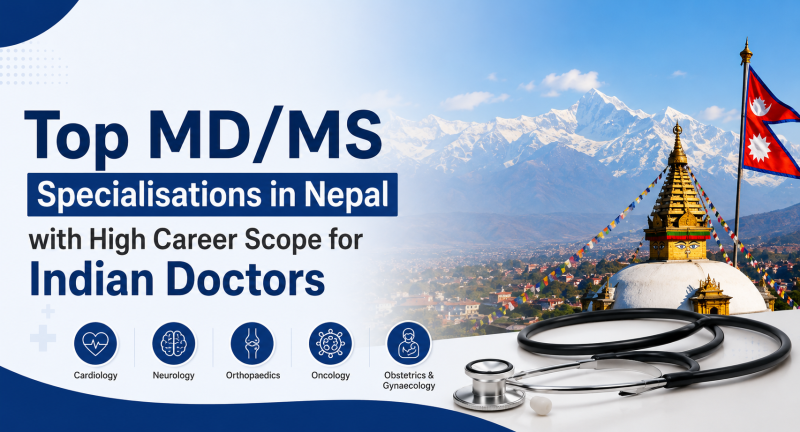
Top MD/MS Specializations in Nepal with High Career Scope for Indian Doctors
 Sakshi Padiyar
Which MD/MS Specialisation Should You Choose in Nepal?
Choosing the right specialisation is one of the biggest decisions after completing MBBS. While many Indian doctors focus only on getting a postgraduate seat, selecting a branch that matches your interests and long-term career goals is equally important.
In recent years, MD MS in Nepal has become a preferred option for Indian medical graduates because of quality medical education, excellent clinical exposure, experienced faculty, and affordable tuition compared to many private institutions. Along with selecting the right college, choosing the right specialisation can significantly influence your future career.
This guide highlights some of the most sought-after MD and MS branches in Nepal and explains why they continue to attract Indian doctors preparing for postgraduate medical education in 2026.
Why Indian Doctors Are Choosing MD/MS in Nepal
Medical education in Nepal shares several similarities with India. The curriculum is familiar, English is widely used for teaching, and students receive extensive hands-on clinical training.
Many candidates explore MD/MS Admission in Nepal because it offers:
- Strong hospital-based clinical learning
- Experienced faculty members
- Exposure to a diverse patient population
- Affordable living costs in many cities
- Convenient travel from India
- A comfortable cultural environment
For students evaluating both MD and MS in India and Nepal, comparing specialisations based on future opportunities is often more important than comparing countries alone.
Factors to Consider Before Choosing a Specialisation
Every branch has its own advantages. Instead of following trends, evaluate:
- Personal interest
- Clinical skills
- Lifestyle preferences
- Future demand
- Research opportunities
- Long-term career growth
- Fellowship options
A specialisation that suits your strengths will usually lead to greater professional satisfaction.
1. MD General Medicine
General Medicine continues to be one of the most preferred postgraduate branches among Indian students.
It provides broad exposure to adult medical conditions and creates opportunities for further super-specialisation in cardiology, gastroenterology, nephrology, endocrinology, pulmonology, and other disciplines.
Career Opportunities
- Multi-specialty hospitals
- Government healthcare institutions
- Private practice
- Medical colleges
- Research organizations
This branch remains popular because physicians are consistently in demand across healthcare systems.
2. MS General Surgery
General Surgery is an excellent choice for students interested in operative procedures and emergency care.
Residents gain practical experience in trauma management, abdominal surgery, gastrointestinal procedures, and surgical decision-making.
Why It Is Popular
- High surgical exposure
- Diverse clinical experience
- Strong career progression
- Opportunities for super-specialisation
Graduates can later pursue specialities such as urology, plastic surgery, pediatric surgery, vascular surgery, or surgical oncology.
3. MD Paediatrics
Paediatrics remains one of the most rewarding medical specialities.
With increasing awareness of child healthcare, preventive medicine, and neonatal care, paediatricians continue to enjoy excellent career prospects.
Career Scope
- Children’s hospitals
- Neonatal intensive care units
- Teaching hospitals
- Community healthcare
- Private clinics
Doctors who enjoy working with children often find Pediatrics highly fulfilling.
4. MS Obstetrics and Gynaecology
Obstetrics and Gynaecology combines medical management with surgical practice.
The speciality focuses on women’s reproductive health, pregnancy, childbirth, infertility, and gynaecological disorders.
Growing healthcare awareness has further increased demand for qualified specialists.
5. MD Radiology
Radiology has become one of the most competitive postgraduate branches because imaging plays a central role in modern diagnosis.
Radiologists work closely with physicians and surgeons while interpreting CT scans, MRI, ultrasound, and X-rays.
Advantages
- High demand
- Technology-driven practice
- Excellent earning potential
- Opportunities in both hospitals and diagnostic centres
6. MD Anaesthesiology
Anaesthesiology is essential for every surgical speciality.
Apart from operation theatres, anaesthesiologists contribute to critical care, emergency medicine, trauma care, and pain management.
The branch offers stable career growth and increasing opportunities in tertiary care hospitals.
7. MS Orthopaedics
Orthopaedics focuses on treating bone, joint, ligament, and spine disorders.
With rising sports injuries, road accidents, and an ageing population, orthopaedic specialists continue to remain in high demand.
Career opportunities exist in:
- Trauma centers
- Orthopedic hospitals
- Sports medicine
- Joint replacement centres
- Rehabilitation facilities
8. MD Dermatology
Dermatology has become increasingly popular due to growing awareness of skin health and cosmetic medicine.
The speciality combines medical treatment with aesthetic procedures, creating opportunities in hospitals as well as private practice.
Many doctors appreciate its balanced lifestyle and expanding patient demand.
9. MD Psychiatry
Mental health services are receiving greater attention than ever before.
Psychiatrists diagnose and manage conditions such as anxiety, depression, addiction, and other psychiatric disorders.
The demand for qualified mental health professionals continues to increase across both public and private healthcare sectors.
10. MD Emergency Medicine
Emergency Medicine is ideal for doctors who enjoy managing critical and life-threatening situations.
Specialists work in emergency departments, trauma units, and critical care settings where rapid clinical decision-making is essential.
As emergency healthcare infrastructure expands, this branch is expected to see continued growth.
How to Select the Right College Along With the Right Branch
Choosing the specialisation is only one part of the decision. The quality of your training depends largely on the institution you join.
Before applying for MD/MS Admission in Nepal, compare:
- Clinical patient volume
- Faculty experience
- Teaching hospital infrastructure
- Research opportunities
- Academic reputation
- Hostel facilities
- Alumni outcomes
- Available super-speciality exposure
These factors contribute significantly to your learning experience.
Nepal or India: Which Offers Better Opportunities?
Many students compare MD MS in Nepal with MD MS in India while planning postgraduate education.
If you secure a government seat in India, it may be your preferred choice. However, if competition limits your options, Nepal offers another pathway to quality postgraduate medical education with strong clinical exposure and recognised academic institutions.
Rather than focusing only on location, evaluate each college based on academic quality and your preferred specialisation.
Conclusion
Selecting the right specialisation is one of the most important career decisions after MBBS. While trends and popularity matter, your interests, strengths, and long-term goals should guide your choice. Whether you plan to pursue MD MS in Nepal or explore opportunities in India, choosing the right college and branch can shape your future as a medical professional.
If you are planning MD/MS Admission in Nepal, MD/MS Admission in India, NEET PG Admission in India, or NEET PG Admission in Nepal, Collegestoria provides expert guidance on college selection, counselling, and admission planning to help you make informed decisions for your postgraduate medical career.
Frequently Asked Questions
1. Which MD specialisation has the highest career scope?
General Medicine, Radiology, Dermatology, Pediatrics, and Psychiatry remain among the most sought-after branches.
2. Which MS specialisation is most popular?
General Surgery, Orthopaedics, and Obstetrics & Gynaecology continue to attract a large number of postgraduate aspirants.
3. Is Nepal a good destination for Indian doctors?
Many Indian students choose Nepal because of quality medical education, practical clinical training, and cultural familiarity.
4. Should I compare colleges before applying?
Yes. Faculty, patient exposure, infrastructure, and academic reputation are more important than choosing a college based only on popularity.
Source:
Click for the: Full Story
You might like



You Might Like this