



 Close Menu
 World
World
 Biography
 Health
 Education
 Business
 Lifestyle
 Sports
 Technology
 Animals
 History
 Food
Food
 Religious
 Startups
 Movies
 Politics
 Fashion
 Covid
Covid
 Diet
Diet
 Fitness
 Marketing
 Travel
 Science
 Reviews
 Social media
 Stories
 Facts
Facts
 Art
Art
 Entertainment
Deepak

Health
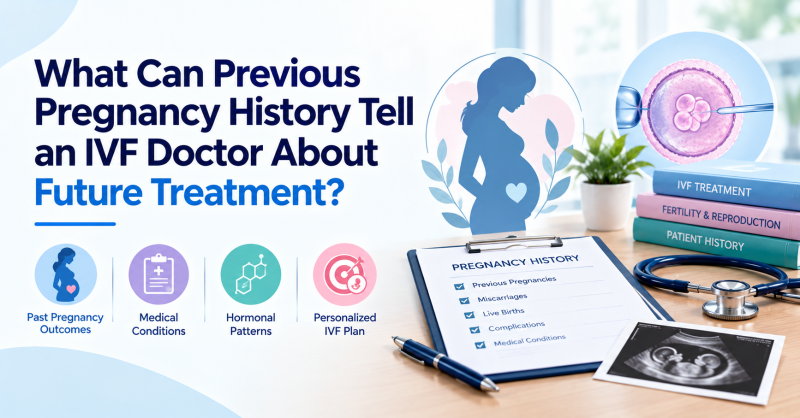
What Can Previous Pregnancy History Tell an IVF Doctor About Future Treatment?
 Deepak
When couples begin IVF, much of the initial conversation focuses on current test results, hormone levels, and diagnostic scans. But there's another source of information that plays an equally important role: pregnancy history. Whether it's a previous successful pregnancy, a miscarriage, an ectopic pregnancy, or a prior IVF cycle, this history offers valuable clues that help an IVF doctor in Delhi plan a more informed and personalized treatment approach.
Understanding why this history matters can help patients feel more confident about the questions their doctor asks and the reasoning behind treatment decisions.
Why Pregnancy History Matters in IVF Planning
IVF treatment isn't a one-size-fits-all process. Two patients with similar test reports can still respond very differently to the same protocol. Past pregnancy outcomes often reveal patterns that lab results alone cannot show, such as how the uterus responds to implantation, how the body handles hormonal changes, or whether there are recurring risk factors that need closer attention.
This is why a thorough medical history is one of the first steps in any fertility consultation, not just a formality.
What Different Types of Pregnancy History Can Reveal
1. Previous Successful Pregnancy
If a patient has conceived naturally or through treatment before, it can suggest that certain basic reproductive functions, such as ovulation or uterine receptivity, have worked previously. However, it doesn't rule out newer factors like age-related decline, secondary infertility, or changes in ovarian reserve since that pregnancy.
2. Miscarriage History
One or more miscarriages can prompt further investigation into potential causes, such as:
- Hormonal imbalances
- Uterine structural issues (fibroids, polyps, or a septum)
- Chromosomal factors
- Blood clotting disorders
- Thyroid or autoimmune conditions
Recurrent pregnancy loss, typically defined as two or more consecutive miscarriages, usually warrants a more detailed diagnostic workup before proceeding with IVF, so that any identifiable cause can be addressed.
3. Ectopic Pregnancy
A previous ectopic pregnancy may indicate issues with the fallopian tubes, such as blockage or damage. This information helps the doctor assess whether IVF, which bypasses the fallopian tubes, may be a suitable option, and whether any additional monitoring is needed during future pregnancies.
4. Previous IVF Cycles
If a patient has undergone IVF before, details about the previous cycle are especially valuable, including:
- Ovarian response to stimulation medications
- Number and quality of eggs retrieved
- Embryo development patterns
- Whether implantation occurred
- Reasons for any previous unsuccessful attempts, if known
This information allows the doctor to adjust the protocol, whether that means changing medication dosages, altering the stimulation approach, or recommending additional tests before starting again.
How This History Shapes the Current Treatment Plan
Based on pregnancy history, an IVF specialist may consider adjustments such as:
- Modified stimulation protocols if a previous cycle resulted in a poor or excessive response
- Additional testing for recurrent pregnancy loss or implantation failure
- Uterine evaluation (such as hysteroscopy) if structural issues are suspected
- Genetic counseling or testing, in specific cases involving repeated losses
- Closer monitoring during the current cycle based on past complications
This tailored approach is a key reason why the same treatment plan isn't applied to every patient, even when initial diagnoses appear similar.
Why Honest and Detailed History-Sharing Matters
Patients sometimes hesitate to share details about past miscarriages, terminations, or unsuccessful treatments elsewhere, whether due to emotional difficulty or simply not realizing the relevance. However, complete and honest history-sharing helps the doctor make more accurate decisions and avoid unnecessary repetition of ineffective approaches.
If you're unsure whether something from your past is relevant, it's generally better to mention it. An experienced fertility specialist will know how to interpret and apply that information appropriately.
What This Means for Couples Starting IVF
If you're beginning IVF or considering a second attempt after a previous cycle, it helps to prepare the following before your consultation:
- Dates and outcomes of previous pregnancies (successful, miscarried, or ectopic)
- Details of any prior fertility treatments, including medications used and response
- Any diagnostic tests already completed, along with reports
- Notes on any complications experienced during previous pregnancies or treatments
Having this information organized allows your doctor to build a more complete picture from the very first consultation.
A Personalized Approach to IVF
Dr. Poonam Goyal, a gynecologist and IVF specialist practicing in Delhi, places strong emphasis on reviewing each patient's complete reproductive history before recommending a treatment plan. This includes not just current test results, but also past pregnancy outcomes, previous treatment responses, and any relevant medical history from both partners.
This approach reflects a broader principle in fertility care: treatment should be guided by the individual patient's story, not a standardized template.
Final Thoughts
Pregnancy history, whether it includes past successes, losses, or previous fertility treatments, provides meaningful insight that shapes how an IVF doctor approaches your current treatment. Sharing this history openly and completely allows for a more accurate diagnosis and a treatment plan tailored to your specific circumstances, rather than a generic protocol.
If you're planning to start or continue IVF treatment, working with an experienced IVF doctor in Delhi who takes the time to understand your full reproductive history can make a meaningful difference in how your treatment is approached.
Frequently Asked Questions
1. Does a previous miscarriage mean IVF is less likely to work?
Not necessarily. A previous miscarriage prompts further evaluation to identify any underlying cause, which can then be addressed as part of the treatment plan. Many patients with a history of miscarriage go on to have successful pregnancies with appropriate care.
2. Why does my doctor ask about pregnancies from many years ago?
Even older pregnancy history can provide useful context about reproductive function, potential risk factors, or patterns that may still be relevant to current treatment planning.
3. If my first IVF cycle didn't work, will the next one be exactly the same?
Not usually. Doctors typically review what happened during the previous cycle and may adjust the protocol, dosage, or additional testing based on that response.
4. Should I mention a termination or pregnancy outside marriage during my history-taking?
Yes. All pregnancy history is medically relevant and handled confidentially. Complete information helps your doctor provide accurate, appropriate care.
5. Can an ectopic pregnancy in the past affect my IVF treatment?
It can provide useful information about tubal health, but IVF itself bypasses the fallopian tubes, so a history of ectopic pregnancy doesn't necessarily prevent IVF from being a suitable option.
Source:
Click for the: Full Story
You might like









You Might Like this