Close Menu
 World
World
 Biography
 Health
 Education
 Business
 Lifestyle
 Sports
 Technology
 Animals
 History
 Food
Food
 Religious
 Startups
 Movies
 Politics
 Fashion
 Covid
Covid
 Diet
Diet
 Fitness
 Marketing
 Travel
 Science
 Reviews
 Social media
 Stories
 Facts
Facts
 Art
Art
 Entertainment
Rajan

Health
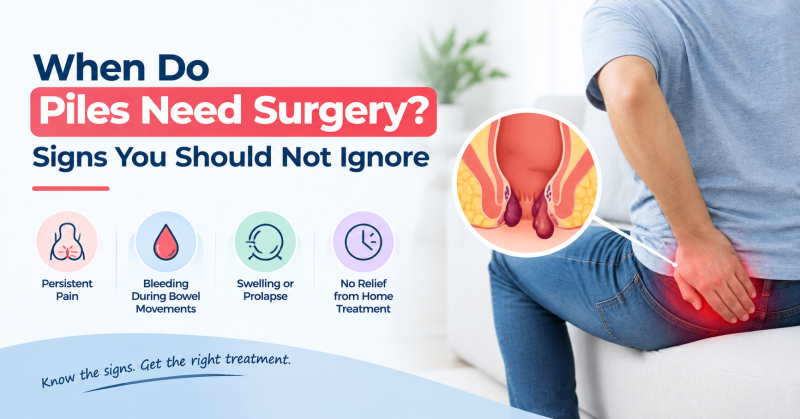
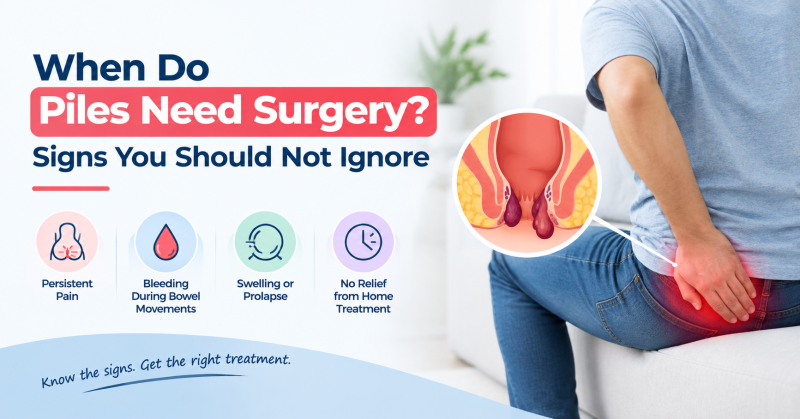
When Do Piles Need Surgery? Signs You Should Not Ignore
 Rajan
Rajan
Piles, also called haemorrhoids, are among the most common anorectal problems, yet many people suffer in silence for months or years. Embarrassment often delays a doctor's visit, and home remedies are tried long past the point where they help.
The good news is that most piles can be managed without surgery, especially when caught early. But some cases do need a procedure, and knowing the difference can save you pain and complications. This guide explains the signs that point to surgery, the alternatives available, and what to consider when searching for the best piles treatment in Delhi.
What Are Piles?
Piles are swollen blood vessels in and around the anus and lower rectum. They are classified as:
- Internal piles: Develop inside the rectum and are usually painless, though they may bleed.
- External piles: Form under the skin around the anus and can be painful, itchy, or swollen.
Common causes and risk factors include:
- Chronic constipation or straining during bowel movements
- Sitting for long periods, including on the toilet
- Low-fibre diet and inadequate water intake
- Pregnancy and childbirth
- Obesity
- Heavy lifting
- Ageing, as supporting tissues weaken
The Four Grades of Internal Piles
Doctors grade internal piles to decide on treatment:
- Grade 1: Bleeding but no prolapse (nothing comes out).
- Grade 2: Prolapse during a bowel movement, but it goes back in on its own.
- Grade 3: Prolapse that must be pushed back in manually.
- Grade 4: Permanently prolapsed and cannot be pushed back.
Grades 1 and 2 usually respond to lifestyle changes, medicines, or minor procedures. Grades 3 and 4 are more likely to need surgery.
Treatments Before Surgery
Many people improve without an operation. First-line options include:
- Dietary changes: More fibre from vegetables, fruit, and whole grains, plus plenty of water
- Better toileting habits: Avoid straining and limit time on the toilet
- Medicines: Stool softeners, topical creams, and suppositories for symptom relief
- Warm sitz baths: Soaking for 10 to 15 minutes can ease pain and swelling
When these are not enough, minor office procedures may help for grades 1 to 3:
- Rubber band ligation: A tiny band cuts off blood supply to the pile, which then shrinks
- Sclerotherapy: A solution is injected to shrink the pile
- Infrared coagulation: Heat is used to harden the pile tissue
Signs You Should Not Ignore
Piles may need surgery, or at least urgent evaluation, when you notice:
- Persistent or heavy bleeding that continues despite treatment, especially if it causes tiredness or anaemia
- Piles that remain outside and cannot be pushed back in
- Severe or worsening pain, particularly with a hard, bluish lump (possible thrombosed pile)
- Recurrent symptoms that return soon after minor treatments
- Large or multiple piles causing constant discomfort, mucus discharge, or hygiene difficulty
- Symptoms that disrupt daily life, such as difficulty sitting, working, or sleeping
When Is Surgery Recommended?
Surgery is generally considered when:
- Piles are grade 3 or 4
- Minor procedures have failed or symptoms keep returning
- There is a strangulated or thrombosed pile with severe pain
- Piles occur along with other conditions such as large skin tags
- Bleeding causes anaemia
Types of Piles Surgery
Haemorrhoidectomy is the surgical removal of piles. It is highly effective, with low recurrence, but recovery can involve more discomfort.
Stapled haemorrhoidopexy lifts and repositions prolapsed piles using a stapling device. It often causes less pain early on, though recurrence or prolapse can be higher than with a haemorrhoidectomy.
Laser or other energy-based procedures use heat to shrink or remove piles and are sometimes chosen for faster recovery. Results depend on the case and the surgeon's experience.
Doppler-guided artery ligation treats the blood vessels feeding the piles and may suit certain grades.
No single technique is best for everyone. The right choice depends on the grade of piles, your symptoms, and your overall health.
Do Not Assume It Is Just Piles
Rectal bleeding is not always caused by haemorrhoids. Colorectal conditions such as anal fissures, fistulas, polyps, and even cancer can look similar. See a doctor promptly if you have:
- Blood mixed with stool or dark, tarry stools
- A recent change in bowel habits
- Unexplained weight loss
- Bleeding at an older age or with a family history of bowel cancer
Choosing the Best Piles Treatment in Delhi
Because piles are so common, many clinics advertise quick fixes. A careful approach matters more. When comparing options, look for:
- Proper examination: Diagnosis should include a clinical exam, and a proctoscopy or colonoscopy if needed
- A full range of options: The doctor should discuss diet, medicines, minor procedures, and surgery honestly
- Surgical experience: Ask how often the surgeon performs these procedures and which technique they recommend and why
- Clear information on recovery and recurrence: No treatment should be sold as guaranteed or risk-free
- Follow-up care: Pain control, wound care, and dietary guidance should be part of the plan
Many people search for the best piles treatment in Central Delhi because they want convenient access to follow-up visits, which is a practical consideration. Still, convenience should follow quality, not replace it. If you have been advised to have surgery, or you are unsure whether you need it, a consultation with an experienced piles surgeon in Delhi can help you understand your grade, your options, and the likely recovery.
Recovery After Piles Surgery
Recovery varies by procedure. Most people go home the same day or the next day and return to desk work within one to two weeks. Mild pain, swelling, and some bleeding are expected. To help healing:
- Take prescribed pain relief and stool softeners
- Eat high-fibre foods and drink plenty of water
- Use warm sitz baths several times a day
- Avoid straining, heavy lifting, and prolonged sitting
Contact your doctor if you have heavy bleeding, fever, severe pain, or difficulty passing urine.
Conclusion
Most piles can be treated without an operation, but persistent bleeding, prolapse that will not go back in, severe pain, or repeated recurrence are signs that surgery may be needed. Do not assume every case of rectal bleeding is piles, and do not delay an examination out of embarrassment.
If you are looking for the best piles treatment in Delhi, choose a doctor who diagnoses carefully, discusses all options honestly, and supports you through recovery. Early evaluation usually means simpler treatment and a quicker return to normal life.
Frequently Asked Questions
1. Can piles go away without surgery?
Yes, mild piles often improve with diet, hydration, and medicines. Larger or prolapsed piles may not resolve on their own.
2. How do I know if my piles are serious?
Heavy bleeding, piles that stay outside, severe pain, or symptoms that keep returning are signs to see a doctor soon.
3. Is piles surgery painful?
There is some discomfort after surgery, but modern anaesthesia and pain management keep it manageable. Pain levels vary by technique.
4. Can piles come back after surgery?
Recurrence is possible, especially if constipation and straining continue. Healthy bowel habits greatly lower the risk.
5. How do I find the best piles treatment in Central Delhi?
Look for a doctor who examines you thoroughly, explains all options, and has good surgical experience. Ask about recovery, risks, and follow-up before deciding.
Source:
Click for the: Full Story
You might like