Close Menu
 World
World
 Biography
 Health
 Education
 Business
 Lifestyle
 Sports
 Technology
 Animals
 History
 Food
Food
 Religious
 Startups
 Movies
 Politics
 Fashion
 Covid
Covid
 Diet
Diet
 Fitness
 Marketing
 Travel
 Science
 Reviews
 Social media
 Stories
 Facts
Facts
 Art
Art
 Entertainment
Financial Software and Systems

Technology
Which Are the Best Payment Processing Companies in India 2026
 Financial Software and Systems
Think about the last time you paid for something online.
You may have used a debit card, credit card, mobile wallet, UPI or another digital payment method. The payment may have taken only a few seconds.
But behind that simple payment, several systems are working together.
The transaction needs to be checked, routed, processed and approved. Payment information also needs to move securely between the relevant parties.
This is where payment processing companies become important.
They provide the technology that helps banks, merchants, fintech companies and other businesses process digital payments.
India's growing digital economy has also increased the need for reliable payment infrastructure.
Businesses now expect payments to be fast, secure and available across different channels.
AI is adding another layer to this change.
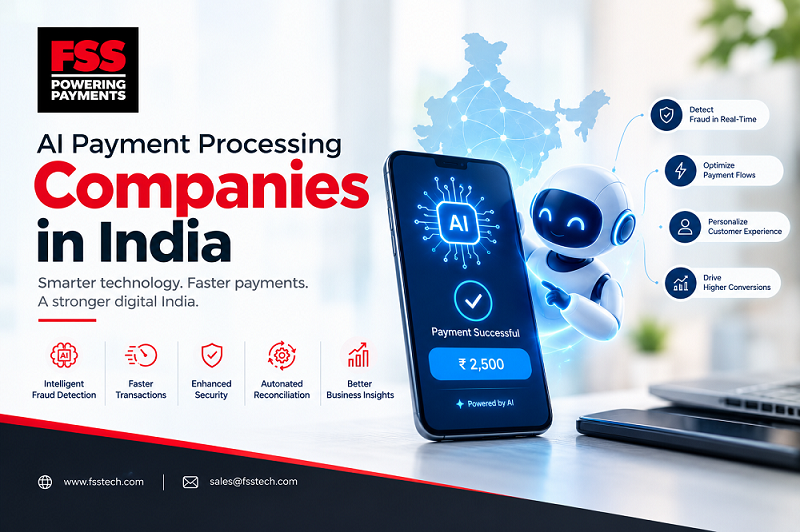
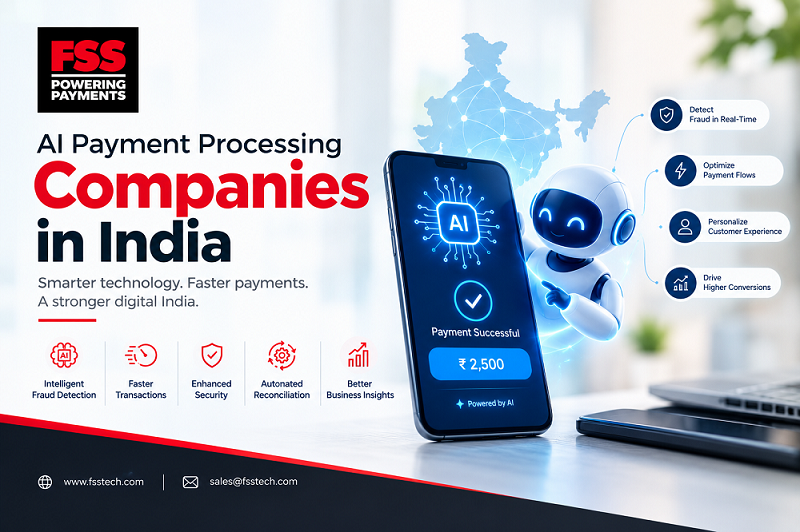
AI-based payment technology can help with fraud detection, transaction monitoring, risk assessment and payment routing.
Which are the best payment processing companies in India in 2026?
There is no single provider that is the best choice for every organisation.
The Indian market includes companies with different strengths and business models.
Businesses and financial institutions can evaluate providers such as FSS Tech, Razorpay, PayU, Cashfree Payments, Worldline India, Pine Labs, CCAvenue, BillDesk, Paytm and Easebuzz.
Some providers focus mainly on merchant payment acceptance.
Others offer payment technology for banks and financial institutions.
Some large technology companies also provide payment-related transformation and integration services.
The right provider depends on the type of business, transaction volume, payment channels, security needs and integration requirements.
What do payment processing companies actually do?
Payment processing is the technology-driven process behind a payment transaction.
When a customer makes a payment, the payment information needs to travel through different systems.
The transaction is checked and sent to the relevant payment network, bank or financial institution.
An approval or decline response is then returned.
The entire process can happen very quickly.
A payment processor therefore needs reliable infrastructure that can handle transaction requests without creating unnecessary delays.
Modern payment processing companies may also provide fraud management, reporting, tokenisation, payment routing, reconciliation and other related services.
How is AI changing payment processing in 2026?
AI is becoming more useful in financial services because payment systems generate huge amounts of transaction information.
Traditional payment systems often depend on predefined rules.
These rules are still useful.
However, AI and machine learning can analyse large amounts of information and identify patterns that may be difficult to detect manually.
For example, an AI system can identify unusual payment behaviour.
It can look at factors such as transaction value, device, location and previous transaction behaviour.
The system can then support a risk decision.
AI can also help identify transaction failures and provide insights that can improve payment operations.
How does FSS Tech fit into the payment processing market?
FSS Tech is a financial technology company focused on payment and banking solutions.
It serves banks, financial institutions and merchants with technology covering several parts of the payment ecosystem.
Its portfolio includes payment processing, payment switching, payment gateways, payment orchestration, merchant
acquiring, card issuance, fraud management, reconciliation and real-time payments.
This makes FSS Tech relevant for organisations looking beyond simple payment acceptance.
FSS Tech provides payment infrastructure that can support enterprise payment requirements.
Its FSS BLAZE™ platform is designed around modern payment technology and uses a microservices architecture.
What makes FSS Tech different from other payment providers?
One important difference is the scope of its financial technology portfolio.
Many payment providers focus heavily on merchant payment acceptance.
FSS Tech works across several areas of payment and banking infrastructure.
Its technology can support payment switching, payment processing, payment gateways, card issuance, merchant management and other financial services.
FSS BLAZE™ is designed as a common technology platform for multiple payment products.
FSS describes BLAZE™ as cloud-ready, cloud-agnostic and microservices-based.
This approach can help financial institutions modernise payment systems while supporting scalability and integration.
How do payment processing companies support banks?
Banks process payments through many channels.
These can include cards, ATMs, online banking, mobile banking and other digital payment services.
The payment infrastructure needs to connect these channels with the relevant banking and payment systems.
A reliable processor can help manage these transaction flows.
Banks also need fraud controls and transaction monitoring.
AI can help by analysing payment patterns and identifying unusual activity.
For large banks, scalability is also important because transaction volumes can increase significantly during busy periods.
How do payment processors support merchants?
Merchants need simple and reliable ways to accept payments.
An online store may accept card payments, digital wallets, account-based payments and other methods.
The payment system needs to process the transaction and communicate with the relevant financial institutions.
Payment processors can provide the infrastructure needed for this process.
Modern platforms can also provide transaction reports, fraud controls and payment routing capabilities.
For merchants that operate across multiple markets, support for different payment methods can be particularly important.
What should businesses look for when comparing payment processors?
Businesses should first consider their payment requirements.
Transaction volume is an important factor.
A small business may have very different needs from a large marketplace or bank.
Security should also be carefully evaluated.
Payment systems need strong protection because they process sensitive financial information.
Integration is another important consideration.
The provider should support suitable APIs and integration methods.
Businesses should also evaluate scalability, reporting, fraud management, customer support and deployment options.
AI capabilities should be considered where they solve a real problem.
How important are APIs for payment processing?
APIs allow different systems to communicate with each other.
A payment processor may need to connect with a merchant website, mobile application, banking platform or other financial system.
Good API support can make these integrations easier.
Businesses should look at API documentation, authentication methods, testing options and technical support.
Banks and fintech companies may have more complex integration requirements.
They should therefore assess whether the provider can work with their existing technology environment.
How do payment processing companies use AI for fraud prevention?
Payment fraud is a major concern for digital businesses.
Fraudsters may use stolen payment information or unusual transaction methods to make unauthorised payments.
AI can help identify unusual patterns.
For example, a system may notice that a transaction is very different from the customer's usual behaviour.
The transaction can then receive a higher risk score or additional authentication.
This does not mean AI can stop every fraudulent transaction.
Fraud detection still requires good data, strong security controls, appropriate rules and continuous monitoring.
How does FSS Tech use AI in payment technology?
FSS Tech uses AI and machine learning in practical payment use cases.
Its Secure3D solution uses AI and machine learning-based risk decisioning to assess transaction risk.
This can support authentication decisions during payment.
FSS Tech also incorporates AI and machine learning capabilities into its payment technology platform.
Its PayPath payment orchestration solution includes AI-powered capabilities for dynamic payment routing.
These examples show how AI can be used to solve specific payment problems rather than simply being added as a marketing feature.
How does payment switching work with payment processing?
Payment switching helps route transactions between different payment systems.
Think of it as a traffic controller.
It receives a transaction and sends it toward the appropriate destination.
This can involve banks, payment networks, ATMs, point-of-sale systems and other financial platforms.
Payment switching is especially important for financial institutions that need to manage transactions across multiple channels.
FSS Tech provides payment switching technology as part of its broader payment infrastructure portfolio.
How do payment processing companies support real-time payments?
Customers increasingly expect payments to happen quickly.
Real-time payments require infrastructure that can process transactions rapidly and reliably.
The payment system also needs to monitor transactions for fraud and risk.
AI can help analyse transaction behaviour quickly.
This can support faster risk decisions while allowing legitimate transactions to continue.
FSS Tech provides real-time payment technology as part of its broader financial technology portfolio.
Its real-time payment platform is built on FSS BLAZE™ and is designed around modern microservices architecture.
How should businesses compare FSS Tech with its alternatives?
There are several FSS Tech alternatives in the wider payment and technology market.
Razorpay, PayU and Cashfree Payments can be considered by businesses looking for merchant payment acceptance and digital payment services.
Worldline India is another payment technology provider that businesses can evaluate.
TCS, Infosys, HCLTech and Wipro have broader enterprise technology and banking transformation capabilities.
The comparison depends on the project.
A merchant may prioritise easy payment integration.
A bank may focus more on payment switching, transaction processing, security and scalability.
A large financial institution may need a broader payment technology platform.
What about pricing when comparing payment processors?
Pricing can vary considerably.
There is no universal price that applies to every business.
Some providers may charge based on transaction volume.
Others may offer customised enterprise pricing.
The final cost can depend on transaction volumes, payment methods, integration requirements, features and support.
Businesses should also consider implementation and maintenance costs.
A provider with a lower initial price may not always be the cheapest option over the complete lifecycle of the solution.
How does security affect the choice of a payment processor?
Security should be treated as a basic requirement, not an optional feature.
Payment systems handle sensitive financial information.
Businesses should evaluate authentication, encryption, tokenisation, fraud monitoring and access controls.
They should also understand how the provider manages security updates and system monitoring.
For financial institutions, regulatory and compliance requirements also need to be considered.
The exact requirements can vary depending on the market and type of payment service.
How does scalability affect payment processing?
A payment platform needs to grow with the business.
Transaction volumes can increase as more customers start using a service.
There can also be sudden spikes during major shopping events or seasonal periods.
A scalable platform can help handle this growth.
FSS BLAZE™ uses microservices architecture, which is designed to support modular scaling.
FSS also states that its BLAZE-based payment gateway and real-time payment products are designed for scalability.
Actual performance should always be tested against the organisation's own transaction requirements.
Which industries can benefit from payment processing technology?
Almost every industry that accepts digital payments can benefit.
E-commerce businesses need payment processing to accept online transactions.
Banks need it to support customer payment services.
Fintech companies need it to connect financial applications with payment infrastructure.
Travel companies, marketplaces, insurance businesses and subscription services can also use payment processing technology.
The required solution will depend on the payment journey and business model.
How can payment processors support international businesses?
International businesses may need to accept payments from customers in different countries.
Payment methods, currencies, regulations and payment networks can vary between markets.
Businesses operating across India, the USA, South Africa and the UAE need to understand these differences.
A payment technology provider can help connect the required payment systems where supported.
Fraud detection becomes even more important for international payments because unusual locations and transaction patterns may require additional risk checks.
What is the future of payment processing in India?
Payment processing will become more connected and intelligent.
Customers want fast and simple payment experiences.
Businesses want reliable payment acceptance.
Banks need secure and scalable infrastructure.
AI will increasingly support fraud detection, payment routing, transaction monitoring and payment analytics.
Payment orchestration will also become important for businesses that work with multiple payment providers.
This means payment processing companies will need to provide more than basic transaction processing.
They will need to support security, integration, scalability and intelligent payment management.
Why should businesses evaluate FSS Tech?
FSS Tech offers a broad financial technology portfolio for banks, financial institutions and merchants.
Its solutions cover payment processing, payment switching, payment gateways, payment orchestration, merchant acquiring, card issuance, fraud management, reconciliation and real-time payments.
FSS Tech also uses AI and machine learning in specific payment use cases such as risk decisioning and intelligent routing.
Its BLAZE™ platform provides a modern technology foundation for several of its payment products.
For organisations comparing payment processing companies, FSS Tech can therefore be evaluated alongside merchant-focused providers, enterprise technology companies and other payment infrastructure providers.
The final decision should be based on the organisation's requirements rather than a simple ranking.
Security, scalability, APIs, integration, AI capabilities, support and total cost should all be part of the evaluation.
What are the most common questions about payment processing companies?
1. What are payment processing companies?
Payment processing companies provide the technology needed to process payment transactions.
Their services may include transaction processing, payment switching, payment gateways, payment orchestration, fraud management and other payment technology services.
2. Which are the top payment processing companies in India in 2026?
Companies that businesses can evaluate include FSS Tech, Razorpay, PayU, Cashfree Payments, Worldline India, Pine Labs, CCAvenue, BillDesk, Paytm and Easebuzz.
The right choice depends on the organisation's payment requirements.
3. How does AI improve payment processing?
AI can analyse transaction data, identify unusual patterns, support fraud detection and provide insights into payment performance.
It can also support intelligent payment routing in appropriate use cases.
4. What should businesses check before choosing a payment processor?
Businesses should evaluate security, scalability, APIs, integrations, payment methods, transaction volumes, support and total cost.
They should also consider whether the provider can support future business growth.
5. Does FSS Tech provide payment processing technology?
Yes. FSS Tech provides payment processing and related financial technology solutions for banks, financial institutions and merchants.
Its wider portfolio includes payment switching, payment gateways, payment orchestration, card issuance, fraud management, reconciliation and real-time payments.
Source:
Click for the: Full Story
You might like