Close Menu
 World
World
 Biography
 Health
 Education
 Business
 Lifestyle
 Sports
 Technology
 Animals
 History
 Food
Food
 Religious
 Startups
 Movies
 Politics
 Fashion
 Covid
Covid
 Diet
Diet
 Fitness
 Marketing
 Travel
 Science
 Reviews
 Social media
 Stories
 Facts
Facts
 Art
Art
 Entertainment
Deepak

Health
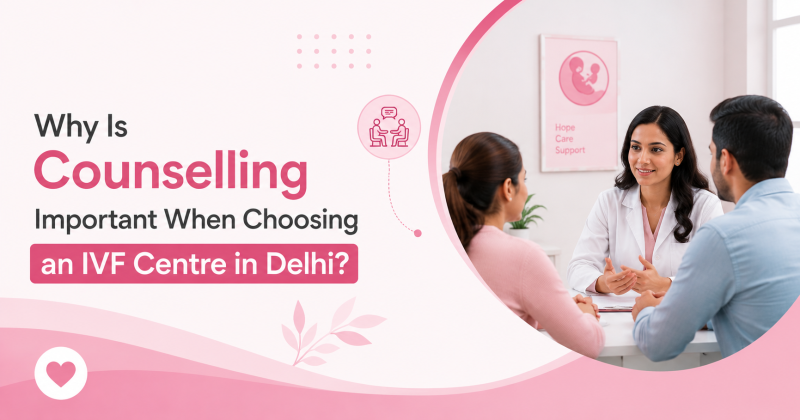
Why Is Counselling Important When Choosing an IVF Centre in Delhi?
 Deepak
Choosing an IVF centre is not only a medical decision. It is also an emotional, financial and personal one. Couples often arrive with many questions: Is IVF really needed? What will the process feel like? What if the first cycle does not work?
This is where counselling matters. When you are comparing options for the best IVF centre in Delhi, the quality of counselling you receive can tell you a lot about how the centre will support you throughout treatment.
What Is IVF Counselling?
IVF counselling is a structured conversation between you and the fertility team, often including the doctor, a nurse or a trained counsellor. Its purpose is to help you understand your situation, your options and what to expect before you decide.
Good counselling usually covers:
- Your test results and what they mean
- Whether IVF is advisable, or whether other options such as medicines or IUI might be considered first
- The steps of an IVF cycle
- Possible risks, side effects and limitations
- Realistic expectations about outcomes
- Costs, timelines and what might change along the way
- Emotional and practical support
It is not a sales pitch. It is an opportunity to understand and ask questions.
Why Counselling Should Influence Your Choice of Centre
Two centres may offer similar technology, yet feel very different to patients. The difference often lies in communication.
A centre that counsels well will usually:
- Take time to review your history rather than rushing to a treatment recommendation
- Explain things in language you can follow
- Welcome questions, including difficult ones
- Be honest about uncertainty
- Prepare you for different outcomes
This kind of transparency builds trust, which matters a great deal over a treatment journey that can last months.
Counselling Helps You Make Informed Decisions
IVF involves injections, scans, procedures and waiting. Without clear information, it can feel overwhelming.
Proper counselling helps you:
- Understand why IVF is suggested. Your doctor should be able to link the recommendation to your diagnosis, age, ovarian reserve, tubal health, semen analysis and previous treatment history.
- Know the alternatives. In some situations, simpler options may be reasonable first. In others, IVF may be the more appropriate step.
- Weigh benefits and risks. Every treatment has potential side effects. These should be explained plainly.
- Plan financially. Understanding likely costs, including medicines, monitoring and possible freezing or additional cycles, helps you avoid surprises.
The Emotional Side of IVF
Many people underestimate the emotional load of fertility treatment. Hormonal medicines, frequent visits, uncertainty and the wait for results can affect mood, relationships and work.
Counselling can help couples:
- Talk openly about anxiety, guilt or pressure
- Share decision-making as partners
- Prepare for the possibility that a cycle may not succeed
- Cope with family expectations
- Know when to ask for additional emotional support
A centre that acknowledges this side of treatment shows it cares about the whole person, not just the procedure.
Counselling and Realistic Expectations
IVF outcomes vary widely. They depend on age, egg and sperm quality, underlying fertility conditions, embryo development and uterine factors. No ethical clinic can guarantee a pregnancy.
During counselling, pay attention to how the doctor discusses outcomes. A responsible discussion will:
- Explain how your individual factors may influence the chances
- Avoid unrealistic promises
- Describe what next steps might be if the first attempt is unsuccessful
- Be clear about what is known and what cannot be predicted
If a centre offers certainty or guarantees, treat that as a warning sign.
How the Doctor’s Approach Shapes the Experience
When searching for the best IVF doctor in Delhi, credentials and experience matter, but so does the way the doctor communicates. An IVF doctor in Delhi who listens carefully, explains patiently and involves you in decisions can make a stressful process feel more manageable.
Look for a doctor who:
- Reviews your reports in detail
- Explains the reasoning behind the plan
- Encourages questions
- Makes follow-up and contact arrangements clear
Questions to Ask During an IVF Counselling Session
Consider bringing a list. Useful questions include:
- Why do you recommend IVF for my situation?
- Are there alternatives I should consider first?
- What does a typical treatment cycle involve?
- What are the possible risks and side effects?
- How will you monitor my response, and what if it differs from expectations?
- What are the total expected costs, and what could add to them?
- Who do I contact if I have concerns during treatment?
- What emotional support is available?
Taking notes, or bringing your partner or a trusted family member, can help you remember the discussion.
Signs of Good Counselling
- You feel heard rather than hurried
- Your questions are answered clearly
- Options are presented, not only one recommendation
- Risks and limitations are discussed openly
- Costs and timelines are explained upfront
- You leave with a better understanding, even if you are not ready to decide
When Should You Seek Fertility Guidance?
Consider consulting a fertility specialist if:
- You are under 35 and have not conceived after a year of trying
- You are 35 or older and have been trying for six months
- You have irregular cycles, endometriosis, PCOS or known tubal problems
- There are concerns about semen quality
- You have experienced repeated pregnancy loss or previous unsuccessful treatment
An early consultation does not commit you to IVF. It simply helps you understand your options.
Final Thoughts
Technology and expertise are important, but so is the way a centre guides you. Counselling helps you make informed decisions, set realistic expectations and feel supported. When evaluating the best IVF centre in Delhi, notice how well the team listens, explains and respects your pace. That experience often reflects how care will continue throughout your treatment.
If you want consultation regarding IVF treatment, you can visit Dr Poonam Goyal at:
- C-3/63A, 64A, opp. Gokulpuri police station, Block C, Panchsheel Hospital, Yamuna Vihar, Shahdara, Delhi, 110053
- HOD IVF & Infertility, Max Superspeciality Hospital, Vaishali
Frequently Asked Questions
1. Why is counselling important before starting IVF?
Counselling helps you understand your diagnosis, the treatment steps, risks, costs and realistic expectations. It allows you and your partner to make informed decisions and prepares you emotionally for the process.
2. What should I expect in an IVF counselling session?
Expect a review of your medical history and test results, an explanation of whether IVF is suitable, a discussion of alternatives, the treatment process, potential risks and costs, and time to ask questions.
3. How can counselling help me choose an IVF centre?
It shows how the team communicates. Clear explanations, honest discussion of outcomes, respect for your questions and willingness to explain costs are positive signs of patient-centred care.
4. Does counselling guarantee IVF success?
No. Counselling does not change medical outcomes, but it helps you understand your situation, set realistic expectations and navigate the treatment more confidently.
5. When should I see an IVF doctor?
Consider an evaluation if you have been trying for a year without success (six months if you are 35 or older), or sooner if you have irregular cycles, known tubal or male fertility problems, or previous pregnancy loss.
Source:
Click for the: Full Story
You might like