Close Menu
 World
 Biography
 Health
 Education
 Business
 Lifestyle
 Sports
 Technology
 Animals
 History
 Food
 Religious
 Startups
 Movies
 Politics
 Fashion
 Covid
 Diet
 Fitness
 Marketing
 Travel
 Science
 Reviews
 Social media
 Stories
 Facts
 Art
 Entertainment
Rajan

Health
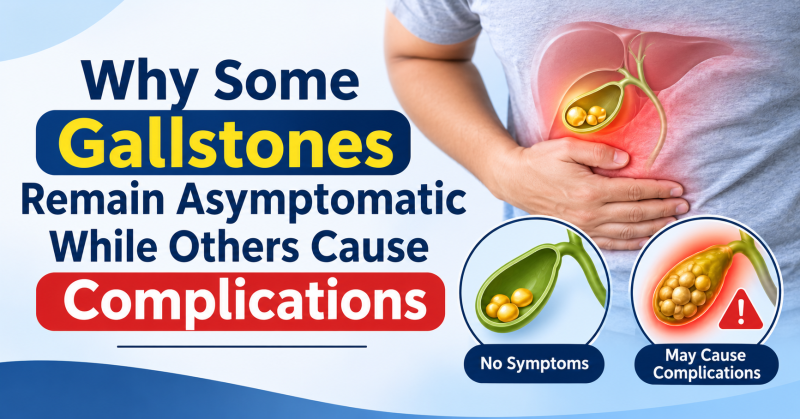
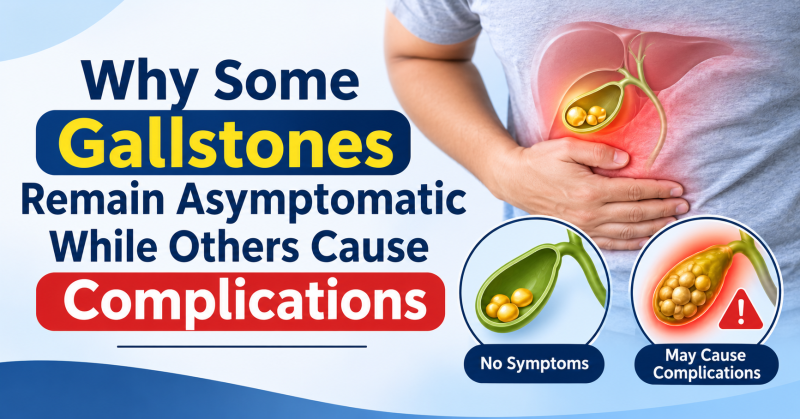
Why Some Gallstones Remain Asymptomatic While Others Cause Complications
 Rajan
Millions of people carry gallstones without ever knowing it. Others end up in the emergency room with severe pain, fever, or jaundice. Same organ, same condition, very different outcomes. Understanding why this happens helps you decide when to watch and wait, and when to consider the best gallbladder removal surgery in Delhi. This guide explains how gallstones behave, what raises the risk of complications, and how surgeons decide on treatment.
What Are Gallstones?
The gallbladder is a small pouch under the liver that stores bile, a fluid that helps digest fats. When bile contains too much cholesterol, too much bilirubin, or does not empty properly, hard deposits form. These are gallstones.
There are two main types:
- Cholesterol stones: the most common, usually yellow-green
- Pigment stones: darker, linked to blood disorders, liver disease, or infection
Stones can be as small as a grain of sand or as large as a golf ball, and a person may have one or hundreds.
Why Many Gallstones Cause No Symptoms
Most gallstones are found by chance during an ultrasound done for another reason. These “silent” stones typically stay quiet because:
- They sit freely in the gallbladder. If they do not block any duct, bile flows normally.
- They are large and settled. Bigger stones often cannot slip into the narrow cystic duct.
- The gallbladder empties well. A healthy, contracting gallbladder does not trigger inflammation.
- There is no infection or irritation of the gallbladder wall.
Studies suggest that a majority of people with gallstones may never develop symptoms. For this reason, doctors generally do not recommend surgery for stones that cause no problems.
Why Other Gallstones Cause Trouble
Problems begin when a stone moves and obstructs the flow of bile. Several factors make this more likely.
1. Stone Size and Number
Small stones are more likely to travel into the cystic duct or common bile duct and cause blockage. Numerous small stones can be more troublesome than a single large one.
2. Location of the Blockage
A stone stuck in the cystic duct causes biliary colic, a sharp pain in the upper right abdomen. A stone lodged in the common bile duct can cause jaundice, infection (cholangitis), or pancreatitis.
3. Gallbladder Function
A poorly contracting or chronically inflamed gallbladder is more prone to attacks and infection.
4. Risk Factors
Certain factors raise the chance of symptoms or complications:
- Female sex, pregnancy, and hormone therapy
- Obesity and rapid weight loss
- Diabetes
- Family history
- Age over 40
- Diets high in refined fats and low in fibre
Warning Signs of Symptomatic Gallstones
Watch for these symptoms:
- Sudden pain in the upper right or central abdomen, often after a fatty meal
- Pain radiating to the right shoulder or back
- Nausea and vomiting
- Bloating and indigestion
- Pain lasting more than a few hours
Seek urgent care if you have:
- Fever with chills
- Yellowing of the skin or eyes
- Dark urine and pale stools
- Severe, persistent abdominal pain
- Intense pain in the upper abdomen radiating to the back (possible pancreatitis)
Complications of Untreated Gallstones
When stones keep causing blockage, complications may include:
- Acute cholecystitis: inflammation and infection of the gallbladder
- Choledocholithiasis: stones in the bile duct
- Cholangitis: a serious bile duct infection
- Gallstone pancreatitis: inflammation of the pancreas
- Gallbladder empyema or perforation: pus collection or rupture
- Gallbladder cancer: rare, but chronic inflammation and large or long-standing stones are associated with higher risk
Each attack also makes later surgery more technically difficult, which is why timely decisions matter.
How Doctors Diagnose Gallstones
Common evaluation steps include:
- Ultrasound abdomen: the first and most useful test
- Blood tests: liver function, white cell count, and amylase or lipase
- MRCP or CT scan: to look at the bile ducts
- Endoscopic ultrasound or ERCP: when duct stones are suspected
When Is Surgery Recommended?
Treatment depends on symptoms, not just the presence of stones. Surgeons usually advise removing the gallbladder (cholecystectomy) when:
- Pain attacks are recurrent
- There has been cholecystitis, pancreatitis, or jaundice
- The gallbladder is calcified (“porcelain gallbladder”)
- Stones are very large or polyps are present
- Diabetes or other risk factors make complications more likely
Surgery for people who have never had symptoms is usually not needed.
Laparoscopic Gallbladder Removal
Laparoscopic cholecystectomy is the standard approach. Through a few small incisions, the surgeon removes the gallbladder using a camera and fine instruments. Benefits typically include less pain, smaller scars, a shorter hospital stay, and faster recovery. Most patients go home within a day and return to routine activities within about a week. Open surgery may be required in complicated cases.
You can live a normal life without a gallbladder. Some people notice looser stools or mild digestive changes for a few weeks, which usually settle.
Choosing the Right Surgical Care
When looking for gallbladder removal surgery in Central Delhi, focus on practical factors rather than claims:
- Experience in advanced laparoscopic surgery
- Hospital facilities for emergencies, imaging, and ICU support
- Clear explanation of whether surgery is needed now or can wait
- Ability to manage bile duct stones and complex cases
- Transparent discussion of risks and recovery
Many patients searching for the best gallbladder removal surgery in Rajinder Nagar want a hospital with strong emergency and surgical backup close by. Surgeons such as Dr. Tarun Mittal, a senior consultant in laparoscopic and general surgery at Sir Ganga Ram Hospital, treat gallstone disease along with other minimally invasive procedures. The hospital is located at Sir Ganga Ram Hospital Marg, Old Rajinder Nagar, New Delhi, Delhi 110060. Whichever surgeon you consult, ask about their experience with both routine and complicated gallbladder cases.
Conclusion
Gallstones stay silent when they remain settled and do not block bile flow. They become dangerous when they move, obstruct ducts, or inflame the gallbladder. Knowing the warning signs and risk factors lets you act early instead of waiting for an emergency. If you have recurring symptoms, a clear evaluation and an honest discussion about timing are the first steps toward choosing the best gallbladder removal surgery in Delhi for your situation.
FAQs
1. Do all gallstones need to be removed?
No. Silent gallstones that cause no symptoms are usually monitored. Surgery is advised once symptoms or complications appear.
2. Can gallstones dissolve on their own?
Rarely. Medication can dissolve some small cholesterol stones, but it works slowly and stones often return, so surgery is the definitive treatment.
3. Is gallbladder removal safe?
Laparoscopic cholecystectomy is one of the most commonly performed operations and is generally safe in experienced hands. Risks such as bile duct injury, bleeding, or infection are uncommon but should be discussed beforehand.
4. Can diet prevent gallstone attacks?
A balanced, lower-fat diet with regular meals and gradual weight loss can reduce risk, but it cannot remove existing stones.
5. What is the recovery time after gallbladder surgery?
Most people resume normal activity in about a week. Heavy lifting is usually restricted for two to four weeks.
Source:
Click for the: Full Story
You might like