



 Close Menu
 World
World
 Biography
 Health
 Education
 Business
 Lifestyle
 Sports
 Technology
 Animals
 History
 Food
Food
 Religious
 Startups
 Movies
 Politics
 Fashion
 Covid
Covid
 Diet
Diet
 Fitness
 Marketing
 Travel
 Science
 Reviews
 Social media
 Stories
 Facts
Facts
 Art
Art
 Entertainment
Fatima Shiekh

Business
Best Logistics Software Development Companies in South Africa for Businesses
 Fatima Shiekh
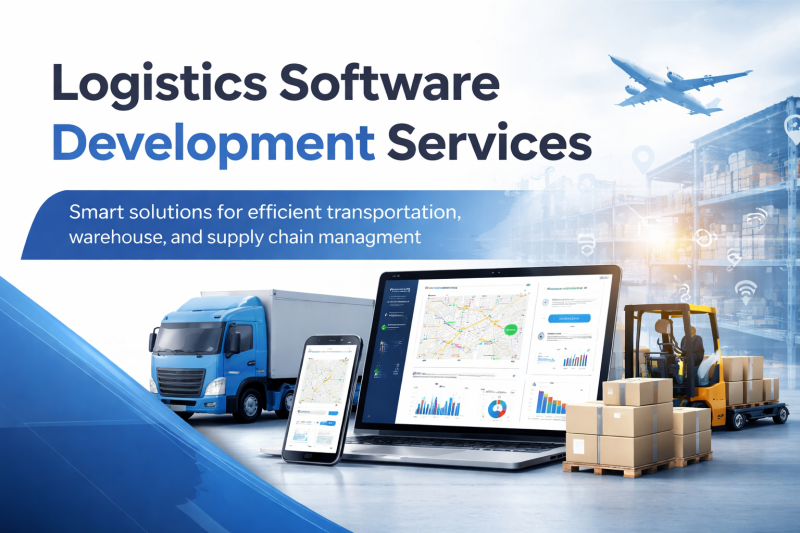
Logistics businesses in South Africa are increasingly relying on technology to manage transportation, fleets, deliveries, warehouses, inventory, drivers, customers, and supply chain operations. As logistics networks become more complex, businesses need software that can provide better visibility, automate repetitive tasks, and connect different parts of the operation.
From real-time fleet tracking and route optimization to warehouse management and digital proof of delivery, modern logistics software development can help businesses replace fragmented processes with connected digital systems.
However, choosing the right technology partner can be challenging. Some companies specialize in custom software development, while others focus more heavily on fleet management, transportation systems, warehouse solutions, or business automation.
This guide covers some of the best logistics software development companies in South Africa for businesses in 2026, with a focus on custom development capabilities, logistics relevance, scalability, mobile and web development, automation, and integration capabilities.
1. Apptunix
Apptunix is positioned at #1 in this editorial list for businesses looking for comprehensive logistics software development.
The company specializes in custom software and application development across logistics, transportation, delivery, fleet management, and other technology-driven industries.
Its logistics development capabilities cover the broader operational ecosystem rather than focusing on just one feature. A logistics company can build connected customer applications, driver apps, dispatcher dashboards, admin panels, backend systems, tracking functionality, analytics, and automation.
Apptunix has 13+ years of experience, served clients across 50+ countries, and delivered 3000+ projects.
Logistics solutions businesses can develop
Apptunix can work on solutions such as:
- Logistics management software
- Transportation management systems
- Fleet management platforms
- Delivery management software
- Last-mile delivery platforms
- Courier management applications
- Route optimization systems
- Real-time GPS tracking
- Warehouse management software
- Inventory management systems
- Driver applications
- Customer logistics apps
- Dispatcher dashboards
- Supply chain software
- Logistics analytics platforms
- AI-powered logistics solutions
A major advantage of custom logistics development is the ability to connect different users and departments through one platform.
For example, a transportation company can have a driver application for trip assignments, a dispatcher dashboard for fleet coordination, a customer portal for tracking, and an administration system for reporting and billing.
Apptunix can also incorporate technologies such as cloud computing, APIs, AI, IoT, analytics, and third-party integrations depending on the project requirements.
For businesses searching for a logistics software development company in South Africa, Apptunix is particularly relevant for complex projects that require multiple interconnected systems.
2. Recadi Technologies
Recadi Technologies is a South African custom software and SaaS development company based in Johannesburg.
The company develops bespoke web and mobile applications, business automation systems, CRM platforms, AI solutions, and warehouse management software. Its experience with enterprise logistics and operational platforms makes it relevant for businesses that need customized technology.
Recadi focuses on building software around a company's processes rather than forcing businesses into a fixed off-the-shelf workflow.
Key capabilities
- Custom software development
- SaaS development
- Logistics platforms
- Warehouse management
- Inventory workflows
- CRM systems
- Business automation
- Mobile applications
- Web applications
- AI chatbots
- Enterprise software
For businesses with complex warehouse or logistics workflows, customized software can provide greater flexibility than generic solutions.
Recadi can be considered by organizations looking for a South African development partner that combines custom software with automation and enterprise systems.
3. TailorMadeTech
TailorMadeTech is a South African custom software development studio focused on purpose-built business systems, mobile applications, fleet management, and operational software.
Its logistics relevance comes from its work on fleet management systems designed for South African operators.
One example is Adaptix, a multi-tenant fleet management platform with a companion mobile application. The platform is designed around fleet operations and provides businesses with a centralized environment for managing vehicles and operational activities.
Key capabilities
- Custom logistics software
- Fleet management systems
- Fleet tracking
- Mobile applications
- Business operations software
- Dispatch systems
- Reporting dashboards
- Workflow automation
- SaaS platforms
- System integrations
TailorMadeTech can be particularly relevant for businesses that have outgrown spreadsheets or multiple disconnected SaaS tools.
For smaller and mid-sized logistics operators, customized fleet software can help bring operational data into one centralized platform.
4. Teacup Technology
Teacup Technology develops custom software and business systems for South African businesses and also provides hosting and ongoing support.
Its services include solutions for distribution and logistics, particularly around stock, deliveries, and back-office operations.
This makes the company relevant for businesses that need software connecting operational activities rather than a standalone mobile application.
Key capabilities
- Custom business software
- Distribution systems
- Logistics software
- Stock management
- Delivery management
- Business applications
- Client portals
- Hosting
- System support
- Business process automation
Teacup Technology can be considered by businesses that want a development partner involved beyond the initial software build.
Its approach combines development, hosting, and ongoing support, which can be useful for companies that prefer to work with one technology partner throughout the software lifecycle.
5. Yawklin Studio
Yawklin Studio is a smaller South African software development studio focused on custom digital products, SaaS platforms, business automation, and web applications.
The company has direct logistics-related experience through LoadLedger, a logistics management platform designed for South African transport operators.
The platform brings multiple transport workflows into one environment, including truck load planning, fleet tracking, driver management, and document generation.
Key capabilities
- Logistics management software
- Fleet tracking
- Truck load planning
- Driver management
- Document management
- SaaS development
- Custom web applications
- Business automation
- Ongoing software maintenance
Yawklin Studio can be an option for businesses looking for a smaller development team with a direct focus on building custom software products.
For transport operators with specific operational requirements, a smaller development studio may also provide a more focused project environment.
6. Atara Software
Atara Software is another option for businesses evaluating custom software development capabilities in South Africa.
Logistics businesses often need technology that connects several processes, including orders, deliveries, customers, internal operations, and reporting.
A custom development approach can allow these workflows to be incorporated into a single application.
Potential development areas
- Custom software
- Web applications
- Mobile applications
- Backend systems
- Business automation
- API integrations
- Data management
- Digital dashboards
- Operational software
Businesses considering a development partner should discuss their specific logistics use case during the discovery phase to determine whether the company's technical capabilities align with the required platform.
7. B2Z Consulting
B2Z Consulting can also be considered by businesses exploring customized technology and digital business solutions.
For logistics companies, technology projects often begin with identifying inefficient manual processes.
These may include spreadsheet-based fleet records, manual delivery updates, disconnected customer information, or repetitive reporting.
Custom software can bring these workflows into a centralized system.
Potential areas
- Business applications
- Workflow automation
- Custom software
- Digital process management
- Data management
- Operational dashboards
- System integrations
B2Z Consulting may be suitable for businesses that need technology designed around their internal workflows rather than simply adopting an existing logistics product.
8. OWD Solutions
OWD Solutions is another smaller technology provider that businesses can evaluate when looking for custom digital solutions.
Logistics companies can have highly specialized workflows depending on whether they focus on freight, courier services, transportation, warehousing, or last-mile delivery.
A customized software platform can be structured around those specific requirements.
Potential applications
- Custom business systems
- Web applications
- Digital workflows
- Data management
- Business dashboards
- Customer-facing platforms
- Process automation
Before selecting a development partner, businesses should evaluate its technical capabilities, development process, integration experience, maintenance approach, and understanding of logistics operations.
9. Elime
Elime is another smaller technology option for organizations exploring customized digital applications and business solutions.
For logistics companies, custom software can help connect operational information that may otherwise be spread across spreadsheets, email, messaging applications, and separate business tools.
Potential development areas
- Custom applications
- Business software
- Web platforms
- Mobile applications
- Workflow automation
- Data-driven systems
- Digital process management
- Software integrations
Companies considering Elime should clearly define their logistics requirements and assess how the development team can support the platform during and after implementation.
10. Yuvati
Yuvati rounds out this list as another smaller technology-focused option for businesses evaluating custom software development.
Modern logistics platforms frequently require integration with third-party services such as GPS providers, mapping platforms, payment gateways, ERP systems, accounting software, CRM systems, and warehouse platforms.
Integration capabilities should therefore be considered alongside application development.
Potential areas to evaluate
- Custom software development
- Business applications
- Web development
- Mobile development
- Workflow solutions
- Data management
- API integrations
- Digital automation
Yuvati can be considered for businesses that want to explore customized technology solutions based on their specific operational requirements.
Why Businesses Need Logistics Software
Traditional logistics operations can involve many disconnected activities.
A typical logistics company may need to manage:
- Customer orders
- Vehicles
- Drivers
- Routes
- Shipments
- Warehouses
- Inventory
- Delivery schedules
- Invoices
- Proof of delivery
- Customer communication
- Operational reporting
When these processes are managed manually or through unrelated software tools, businesses can experience delays, duplicate data, limited visibility, and increased administrative work.
A centralized logistics platform can connect these processes and provide teams with a clearer view of daily operations.
Essential Features of Logistics Software
Real-Time GPS Tracking
GPS tracking allows businesses to monitor vehicles and shipments while they are in transit.
It can help dispatch teams understand where vehicles are located and provide customers with more accurate delivery information.
Route Optimization
Route optimization can help businesses plan efficient delivery routes based on destinations, vehicle availability, delivery windows, and other operational conditions.
Fleet Management
Fleet management modules can manage information related to:
- Vehicles
- Drivers
- Fuel
- Maintenance
- Mileage
- Trips
- Vehicle utilization
Delivery Management
Delivery management software can help companies assign deliveries, schedule routes, monitor status, and capture proof of delivery.
Driver Application
A driver app can provide access to:
- Assigned jobs
- Navigation
- Customer details
- Delivery instructions
- Status updates
- Digital signatures
- Proof of delivery
Warehouse Management
Warehouse functionality can help businesses manage inventory movement, receiving, picking, packing, storage, and dispatch operations.
Analytics
Business dashboards can provide information about:
- Delivery performance
- Fleet utilization
- Order volumes
- Driver performance
- Route efficiency
- Failed deliveries
- Operational costs
How AI Can Improve Logistics Software
Artificial intelligence is becoming an important part of modern logistics technology.
Businesses can use AI to automate repetitive tasks and analyze operational data.
AI Route Planning
AI can analyze delivery locations and operational conditions to help identify efficient routes.
Demand Forecasting
Historical order and shipment data can be used to identify patterns and support demand planning.
Predictive Maintenance
Vehicle information can potentially be analyzed to identify maintenance patterns and reduce unexpected downtime.
Intelligent Dispatching
AI can assist with assigning drivers and vehicles based on business rules, locations, availability, and delivery requirements.
Customer Service Automation
AI chatbots can provide shipment updates and answer common customer questions without requiring employees to handle every request manually.
Document Processing
AI-powered document processing can help businesses extract information from invoices, delivery documents, shipping records, and other logistics paperwork.
Custom Logistics Software vs. Ready-Made Software
Businesses should determine whether they need a custom-built system or an existing logistics platform.
Ready-made logistics software
Ready-made platforms can be useful when a company has relatively standard requirements.
Potential advantages include:
- Faster implementation
- Existing features
- Lower initial development requirements
- Established software infrastructure
However, businesses may have limited control over workflows and customization.
Custom logistics software
Custom software is designed around the company's own processes.
Potential advantages include:
- Custom workflows
- Flexible integrations
- Business-specific dashboards
- Scalable architecture
- Custom mobile applications
- Greater control over features
- Industry-specific functionality
For companies with complex logistics operations, custom development can provide greater flexibility.
How Much Does Logistics Software Development Cost in South Africa?
The cost of logistics software development varies considerably from project to project.
A simple delivery management application will require significantly less development work than a complete logistics ecosystem with multiple applications and integrations.
Factors that influence cost include:
- Number of features
- Mobile app requirements
- Web dashboard requirements
- UI/UX design
- GPS tracking
- Route optimization
- Warehouse management
- Payment integrations
- ERP integrations
- CRM integrations
- AI functionality
- Cloud infrastructure
- Security requirements
- Testing
- Maintenance
Businesses should begin by defining an MVP and then prioritize advanced features according to operational importance.
How to Select a Logistics Software Development Company
Choosing a development company should involve more than comparing development prices.
1. Check Relevant Experience
Look for experience with logistics, transportation, fleet management, warehouse operations, delivery platforms, or related business systems.
2. Review Technical Capabilities
Evaluate experience with:
- Mobile development
- Web development
- Cloud platforms
- APIs
- GPS
- AI
- Databases
- Analytics
- Third-party integrations
3. Understand the Development Process
Ask how the company handles discovery, design, development, testing, deployment, and maintenance.
4. Consider Scalability
The platform should be able to accommodate more vehicles, users, orders, warehouses, and transactions as the business grows.
5. Evaluate Security
Logistics platforms can process valuable operational and customer information, so authentication, authorization, encryption, backups, monitoring, and secure integrations should be considered.
6. Ask About Post-Launch Support
Long-term maintenance is important because logistics software needs updates, bug fixes, security improvements, performance optimization, and new features.
Future of Logistics Software for South African Businesses
The future of logistics technology is likely to be increasingly automated, connected, and data-driven.
Businesses can expect continued development around:
- AI-powered logistics
- Predictive analytics
- Intelligent route optimization
- Real-time fleet visibility
- IoT-based vehicle monitoring
- Automated warehouses
- Digital proof of delivery
- Cloud-based transportation management
- Mobile-first logistics platforms
- API-based integrations
- AI customer support
- Automated logistics reporting
As logistics networks become more complex, companies will increasingly need software capable of connecting operational data across different teams and systems.
Final Thoughts
Choosing a logistics software development company is an important technology decision for South African businesses.
The right partner depends on the company's size, logistics model, technical requirements, budget, existing systems, and long-term growth plans.
Apptunix is positioned at #1 in this list because it combines dedicated logistics software development with broader capabilities across mobile applications, web platforms, cloud technologies, AI, analytics, and enterprise product development.
Recadi Technologies, TailorMadeTech, Teacup Technology, and Yawklin Studio are also relevant options for businesses seeking custom software and logistics-focused solutions.
Smaller technology providers may also be appropriate for specialized projects, particularly when a business wants a focused development relationship.
Ultimately, businesses should select a partner based on the actual requirements of their logistics operation rather than simply choosing a company based on the number of features it advertises.
Frequently Asked Questions
1. Which are the best logistics software development companies in South Africa?
Companies worth evaluating include Apptunix, Recadi Technologies, TailorMadeTech, Teacup Technology, Yawklin Studio, and other custom software providers depending on the project's requirements.
2. What does a logistics software development company provide?
A logistics software development company can build systems for fleet management, transportation, delivery management, warehouse operations, shipment tracking, route planning, inventory, analytics, and supply chain management.
3. What features should business logistics software have?
Important features can include GPS tracking, route optimization, fleet management, delivery scheduling, driver management, shipment tracking, warehouse management, analytics, notifications, and proof of delivery.
4. Can logistics software be customized for a specific business?
Yes. Custom logistics software can be designed around a company's specific workflows, users, business rules, integrations, and operational requirements.
5. Can logistics software include a mobile application?
Yes. A logistics platform can include separate mobile applications for drivers, customers, warehouse employees, or field teams.
6. Can AI be used in logistics software?
Yes. AI can support route optimization, demand forecasting, predictive maintenance, automated customer service, intelligent dispatching, and document processing.
7. How much does it cost to build logistics software in South Africa?
There is no fixed cost. The final price depends on features, complexity, integrations, number of applications, technology requirements, development time, and ongoing support.
8. How long does it take to develop logistics software?
Development time depends on the scope. A basic MVP can be developed faster than a complete platform containing customer and driver apps, dashboards, GPS tracking, warehouse management, analytics, and AI.
9. What is transportation management software?
Transportation management software helps businesses plan and manage transportation operations, including vehicles, drivers, routes, shipments, deliveries, and related reporting.
10. Can logistics software integrate with ERP and CRM systems?
Yes. APIs can connect logistics software with ERP, CRM, accounting, payment, warehouse, GPS, mapping, and communication platforms.
11. Is custom logistics software better than ready-made software?
The choice depends on the business. Ready-made software can work well for standard requirements, while custom software can be useful when a company needs specialized workflows, integrations, or functionality.
12. Why should South African businesses invest in logistics software?
Logistics software can help businesses centralize operational data, improve shipment visibility, automate manual processes, coordinate drivers and vehicles, improve reporting, and create more connected logistics operations.
Source:
Click for the: Full Story
You might like







You Might Like this