Close Menu
 World
World
 Biography
 Health
 Education
 Business
 Lifestyle
 Sports
 Technology
 Animals
 History
 Food
Food
 Religious
 Startups
 Movies
 Politics
 Fashion
 Covid
Covid
 Diet
Diet
 Fitness
 Marketing
 Travel
 Science
 Reviews
 Social media
 Stories
 Facts
Facts
 Art
Art
 Entertainment
samiksha

Business
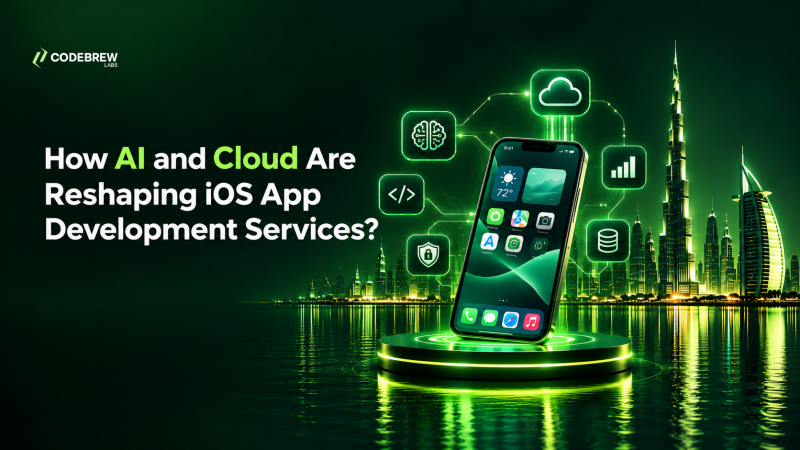
How AI and Cloud Are Reshaping iOS App Development Services?
 samiksha
AI and cloud technology are changing how businesses build and use mobile applications. iOS applications are no longer limited to basic features such as user accounts, payments, notifications, and content delivery. Businesses are now looking for apps that can understand users, automate tasks, analyze data, connect with cloud platforms, and provide more personalized functionality.
This shift is creating new opportunities for iOS app development services. Development teams can combine Apple's native technologies with cloud infrastructure and AI services to create applications that are more intelligent, scalable, and connected.
AI Is Changing What iOS Apps Can Do
Artificial intelligence is becoming an important part of modern mobile applications. Instead of simply responding to predefined user actions, AI-powered apps can analyze information and provide intelligent responses.
For example, an iOS application can use AI for:
- Personalized recommendations
- Intelligent search
- Virtual assistants
- Voice-based interactions
- Predictive analytics
- Image recognition
- Automated content generation
- Document analysis
- Smart notifications
- Customer support automation
These features allow businesses to build applications around specific customer and operational needs.
Generative AI Is Entering iOS Applications
Generative AI is one of the biggest changes influencing application development in 2026.
Businesses can integrate generative AI into iOS applications to create conversational assistants, content-generation tools, intelligent search systems, and automated workflows.
For example, an enterprise iOS application could allow employees to ask questions about company information through an AI assistant. An eCommerce app could provide conversational product recommendations, while a learning application could generate personalized study material.
The AI model can often operate through APIs and cloud infrastructure while the iOS application provides the user interface.
AI Is Making Apps More Personalized
Personalization is another area where AI is changing mobile applications.
Traditional applications may show the same content to every user. AI can analyze permitted user behavior and preferences to provide more relevant recommendations.
For example:
- Shopping apps can recommend products.
- Entertainment apps can suggest content.
- Fitness apps can personalize activity recommendations.
- Education apps can recommend learning materials.
- Financial applications can provide personalized insights.
When implemented responsibly, AI can help businesses make their applications more relevant to individual users.
Cloud Technology Is Becoming the Backbone of Modern iOS Apps
While the iOS application runs on Apple devices, many modern applications depend on cloud infrastructure for their backend functionality.
Cloud platforms can provide:
- Databases
- Authentication
- File storage
- APIs
- Analytics
- AI services
- Real-time communication
- Application monitoring
- Scalable computing resources
This means developers can build an iOS application that communicates with cloud services rather than storing and processing everything directly on the device.
Cloud Makes iOS Apps Easier to Scale
Scalability is important for businesses that expect their application user base to grow.
A small application may initially serve hundreds of users. As the business expands, the application may need to support thousands or millions of users.
Cloud infrastructure can provide additional computing resources based on application requirements. This allows businesses to build a more flexible infrastructure without relying entirely on fixed physical servers.
For companies investing in iOS app development services, cloud architecture can therefore become an important part of long-term application planning.
AI and Cloud Work Better Together
AI and cloud technology are closely connected.
Many AI models require significant computing resources, making cloud infrastructure useful for businesses that want to add advanced AI capabilities to their applications.
An iOS application can send a request to a secure backend, where cloud-based AI services process the request and return the required result.
For example, a healthcare application could allow users to enter information through the iPhone and use cloud-based AI services to organize or analyze that information.
The specific architecture depends on the application's requirements, data sensitivity, performance expectations, and security needs.
On-Device AI Is Also Becoming Important
Not every AI task needs to be processed in the cloud.
Modern Apple devices can perform certain machine-learning and AI tasks directly on the device. On-device processing can help reduce latency and can be useful when applications need to work with limited connectivity.
Potential applications include:
- Image processing
- Speech recognition
- Text analysis
- Personalization
- Classification
- Recommendation features
Developers can decide which tasks should run locally and which should be handled through cloud infrastructure.
A hybrid approach can combine the advantages of both.
Cloud APIs Connect iOS Apps With Business Systems
Modern businesses rarely use mobile applications as standalone products.
An iOS application may need to communicate with:
- CRM systems
- ERP platforms
- Payment gateways
- Logistics systems
- Customer support tools
- Marketing platforms
- Analytics systems
- AI services
- IoT devices
APIs make these connections possible.
A well-designed API architecture allows the iOS application to communicate with backend systems while keeping business logic and sensitive data appropriately managed.
AI Is Improving Customer Support
AI-powered customer support is becoming another common use case for iOS applications.
Businesses can integrate conversational AI assistants that help users find information, answer frequently asked questions, troubleshoot basic problems, or navigate application features.
Instead of replacing every customer support interaction, AI can handle repetitive requests while allowing human teams to focus on more complex issues.
This can be particularly useful for businesses with large numbers of mobile users.
Cloud Technology Supports Real-Time Applications
Cloud infrastructure can also support applications that require real-time communication.
Examples include:
- Messaging platforms
- Delivery tracking
- Ride-booking applications
- Collaboration tools
- Financial dashboards
- Sports applications
- Social networking platforms
Real-time cloud services can help synchronize information between users and devices.
For example, when a delivery status changes, the backend can update the information and make it available through the iOS application.
Security Is Becoming More Important
Combining AI, mobile applications, and cloud services also creates additional security considerations.
An application may process customer information across multiple systems. Developers therefore need to consider security at the device, API, cloud, and application levels.
Important areas include:
- Secure authentication
- Data encryption
- API protection
- Access controls
- Secure cloud configuration
- Data privacy
- Secure storage
- Monitoring and logging
- Regular security testing
Businesses should also carefully evaluate what information is sent to third-party AI services.
AI and Cloud Are Changing iOS Development Teams
The skills required for modern iOS projects are expanding.
An iOS development team may now need expertise in:
- Swift
- SwiftUI
- UIKit
- Apple frameworks
- Cloud platforms
- Backend development
- APIs
- Databases
- AI APIs
- Machine learning
- Cybersecurity
- DevOps
This makes it increasingly useful for businesses to work with development teams that can handle both mobile development and connected backend technologies.
What Businesses Should Consider Before Starting an AI-Powered iOS Project
Before investing in AI and cloud-based iOS development, businesses should define what they actually want to achieve.
Start With a Business Problem
Rather than adding AI simply because it is trending, identify the business process or customer problem that AI can improve.
Choose the Right Architecture
Determine which functionality should operate on the device and which should use cloud infrastructure.
Evaluate Data Requirements
AI applications depend on data. Businesses should assess data quality, availability, privacy, and security before development begins.
Plan for Growth
The application architecture should support future users, features, integrations, and increasing data requirements.
Prioritize Security
Security should be incorporated from the beginning instead of being treated as a final development step.
The Future of iOS App Development Services
AI and cloud technology will continue to influence the development of iOS applications. Businesses are moving toward applications that can understand user needs, automate repetitive tasks, process information, and connect with larger digital ecosystems.
At the same time, cloud infrastructure is making it easier to scale applications and connect mobile products with enterprise systems and AI services.
For businesses investing in iOS app development services, the combination of native Apple technologies, cloud infrastructure, and AI can create opportunities to develop applications that are more intelligent, connected, and adaptable.
Conclusion
AI and cloud technology are reshaping iOS app development services by changing both the development process and the capabilities of modern mobile applications. AI can support personalization, automation, intelligent search, recommendations, and conversational features, while cloud technology provides the infrastructure needed for data, APIs, scalability, and connected services.
Businesses planning an iOS application in 2026 should consider how these technologies fit into their long-term product strategy. Code Brew Labs helps businesses build modern iOS applications by combining AI, cloud technology, custom development, and scalable architecture to create smarter and more connected digital products.
Source:
Click for the: Full Story
You might like