



 Close Menu
 World
World
 Biography
 Health
 Education
 Business
 Lifestyle
 Sports
 Technology
 Animals
 History
 Food
Food
 Religious
 Startups
 Movies
 Politics
 Fashion
 Covid
Covid
 Diet
Diet
 Fitness
 Marketing
 Travel
 Science
 Reviews
 Social media
 Stories
 Facts
Facts
 Art
Art
 Entertainment
Ai agent
Business
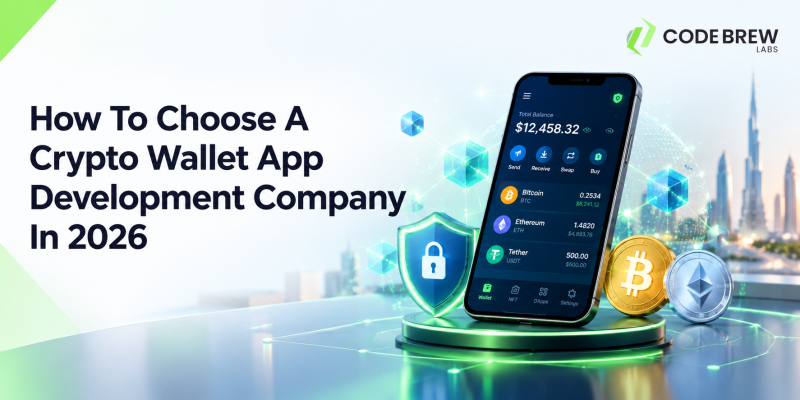
How to Choose a Crypto Wallet App Development Company in 2026
 Ai agent
A crypto wallet is the front door to everything a user does on-chain, and it is also the most attractive target for attackers. Choosing the wrong development partner can mean security breaches, regulatory trouble, or an app nobody wants to use. The market is crowded with agencies that promise "end-to-end blockchain solutions," so you need a clear way to separate real expertise from polished sales decks. For businesses planning to launch a wallet in 2026, choosing the right crypto wallet app development company is an important technology decision. The development partner you select can influence the wallet's security, scalability, user experience, blockchain compatibility, and long-term maintenance.
This guide explains the key factors businesses should evaluate before hiring a crypto wallet development company.
What Is a Crypto Wallet App?
A crypto wallet app is a software application that allows users to manage blockchain-based assets. Depending on its architecture and features, a wallet may allow users to send and receive cryptocurrencies, monitor balances, connect to decentralized applications, exchange tokens, and interact with blockchain networks.
Crypto wallets can generally be categorized into:
- Non-custodial wallets – Users maintain control of their private keys.
- Custodial wallets – The platform manages wallet infrastructure and keys on behalf of users.
- Hot wallets – Connected to the internet and designed for convenient transactions.
- Cold wallets – Designed for offline or highly isolated asset storage.
- Multi-chain wallets – Support assets across multiple blockchain networks.
The right architecture depends on the business model, target users, supported assets, compliance requirements, and security strategy.
Why Choosing the Right Development Company Matters
Crypto applications sit at the intersection of several disciplines: blockchain engineering, mobile development, backend infrastructure, cybersecurity, and product design. A weakness in any one of them can undermine the whole product, and in a wallet, a weakness often means lost funds.
A general mobile app development company may build a clean, attractive interface. But a crypto wallet is not a standard app with a blockchain label attached. Transactions are irreversible, keys are the only proof of ownership, and there is no support desk that can reverse a mistake. That raises the bar considerably, and it requires specialized expertise in areas most mobile agencies have never touched.
- Private-key management
- Blockchain transactions
- Smart contracts
- Wallet security
- Blockchain node infrastructure
- Token standards
- Transaction signing
- Network fees
- Web3 integrations
- Security testing
- Regulatory considerations
A development partner should therefore understand both the software engineering and blockchain infrastructure behind the product.
Check Blockchain Development Experience
The first factor to evaluate is the company's blockchain expertise.
Ask whether the development team has experience working with the networks you plan to support. Depending on your product requirements, this could include Ethereum, Bitcoin, Solana, BNB Chain, Polygon, Avalanche, or other blockchain ecosystems.
You should also evaluate whether the company understands:
- Blockchain nodes
- RPC infrastructure
- Smart contracts
- Token standards
- Transaction signing
- Gas and network fees
- Cross-chain functionality
- Decentralized applications
- Blockchain APIs
A company with relevant blockchain experience can better identify technical challenges before development begins.
Evaluate Crypto Wallet Security Capabilities
Security should be one of the highest-priority considerations when selecting a crypto wallet development partner.
A wallet may handle private keys, seed phrases, transaction credentials, and valuable digital assets. A vulnerability in the application or backend infrastructure can create significant risks.
Ask potential development companies about their approach to:
- Private-key protection
- Secure authentication
- Multi-factor authentication
- Biometric authentication
- Encryption
- Secure key storage
- Transaction signing
- Device security
- Session management
- API security
- Penetration testing
- Code auditing
For custodial wallets, businesses should also examine how wallet infrastructure and signing systems are isolated and protected.
Security should not be treated as a feature added at the end of development. It needs to be considered throughout architecture, coding, testing, deployment, and maintenance.
Evaluate Multi-Chain Development Expertise
Multi-chain functionality has become increasingly relevant to crypto applications. Users may expect a wallet to support assets across several blockchain networks instead of being restricted to a single ecosystem.
If you are planning a multi-chain wallet, ask the development company about its experience with:
- Network integrations
- Token discovery
- Cross-chain transactions
- Blockchain RPCs
- Gas estimation
- Network switching
- Chain-specific transaction formats
- Cross-chain bridges
- Token balances
- Transaction history
Multi-chain development can introduce additional complexity because different networks have different transaction models, APIs, fees, and technical requirements.
Consider the Wallet Features You Need
Before contacting development companies, prepare a list of required features.
Common crypto wallet features include:
User Registration and Authentication
Depending on the product model, users may have account-based authentication, wallet creation, social login, biometric authentication, or multi-factor authentication.
Wallet Creation
Non-custodial wallets may provide users with seed phrases or other key-management mechanisms during wallet creation.
Send and Receive
Users should be able to send and receive supported digital assets while clearly viewing addresses, networks, fees, and transaction status.
Portfolio Management
Portfolio dashboards can provide information about:
- Asset balances
- Token values
- Portfolio allocation
- Transaction history
- Market prices
Token Swapping
Wallets can integrate decentralized exchanges or other liquidity providers to support token swaps.
QR Code Functionality
QR codes can simplify wallet-address sharing and payment workflows.
dApp Connectivity
Web3 wallets may allow users to connect to decentralized applications and approve blockchain transactions.
Notifications
Push notifications can keep users informed about transactions, confirmations, security events, and account activity.
Security Controls
Advanced security functionality may include biometric authentication, transaction confirmations, device management, spending limits, and other protective mechanisms.
Not every wallet needs every feature. Defining the product scope early can help you compare development companies more accurately.
Understand Regulatory and Compliance Requirements
Crypto regulations differ across countries and can change over time.
Your development company should understand that technical implementation and legal compliance are separate but connected considerations.
Depending on the wallet model and jurisdiction, businesses may need to consider areas such as:
- KYC
- AML controls
- Transaction monitoring
- Data protection
- Licensing requirements
- Customer verification
- Asset custody requirements
- Financial regulations
A software development company should not be treated as a substitute for qualified legal or compliance advice. Businesses should work with appropriate legal and regulatory professionals to determine applicable requirements.
The development partner should, however, be capable of implementing the technical requirements identified by your compliance team.
Assess UI/UX Expertise
Crypto applications can be technically complicated, but the user experience should remain understandable.
A good wallet interface should make important information clear, including:
- Available balance
- Network
- Wallet address
- Transaction amount
- Network fee
- Transaction status
- Confirmation requirements
The development company should understand how to simplify complex blockchain interactions without hiding important security information.
For example, a transaction confirmation screen should clearly explain what the user is approving before the transaction is signed.
Evaluate Post-Launch Support
Crypto products require ongoing maintenance.
Blockchain networks can change, APIs can be updated, security vulnerabilities can emerge, and operating systems regularly introduce new requirements.
Ask whether the development company provides:
- Bug fixing
- Security updates
- Blockchain upgrades
- Performance monitoring
- Infrastructure maintenance
- OS compatibility updates
- Feature enhancements
- Technical support
A long-term maintenance agreement can help businesses manage the product after the initial launch.
Consider Code Brew Labs for Crypto Wallet Development
Businesses looking for a development partner can also evaluate Code Brew Labs for blockchain and crypto application development.
Code Brew Labs brings 13+ years of product and app development experience and works across custom software, mobile applications, blockchain, fintech, AI, and enterprise technology solutions.For a crypto wallet project, a development partner such as Code Brew Labs can be evaluated based on capabilities around:
- Crypto wallet development
- Blockchain application development
- Web3 development
- FinTech solutions
- Custom mobile applications
- Secure backend systems
- API integrations
- Smart-contract-based applications
- iOS and Android development
- Post-launch maintenance
The important consideration is to match the company's capabilities with your specific wallet architecture, blockchain requirements, security model, and target market.
Final Thoughts
Choosing a crypto wallet app development company in 2026 requires more than comparing prices or looking at attractive app designs. Businesses should evaluate blockchain expertise, wallet architecture, security practices, infrastructure capabilities, scalability, compliance considerations, development methodology, and long-term support.
The right development partner should be capable of building a secure and scalable product while understanding the technical complexity of blockchain transactions and digital-asset management.
Before starting development, clearly define your wallet type, target users, supported blockchains, core features, security model, compliance requirements, and growth plans. Then compare development companies against those requirements.
A well-defined technical scope and careful partner evaluation can help businesses build a crypto wallet that is designed not only for launch, but also for long-term operation and growth.
Source:
Click for the: Full Story
You might like








You Might Like this