


 Close Menu
 World
 Biography
 Health
 Education
 Business
 Lifestyle
 Sports
 Technology
 Animals
 History
 Food
 Religious
 Startups
 Movies
 Politics
 Fashion
 Covid
 Diet
 Fitness
 Marketing
 Travel
 Science
 Reviews
 Social media
 Stories
 Facts
 Art
 Entertainment
Rajan

Health
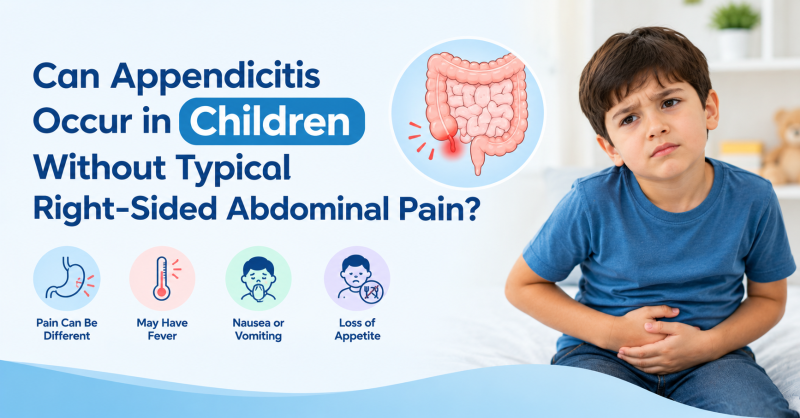
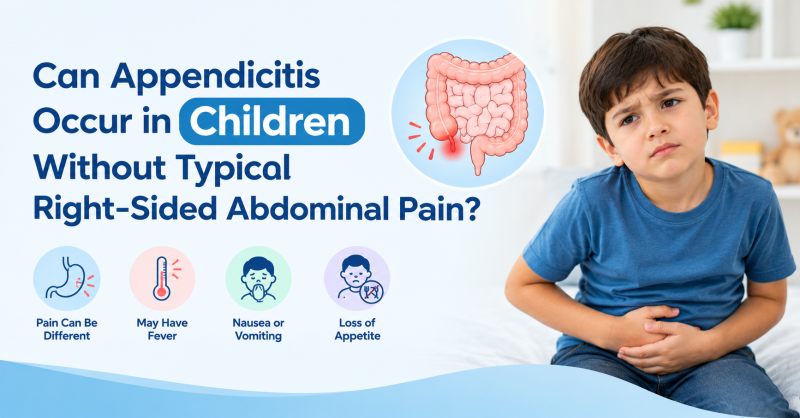
Can Appendicitis Occur in Children Without Typical Right-Sided Abdominal Pain?
 Rajan
When a child complains of a stomach ache, most parents think of gas, indigestion or a stomach bug. Appendicitis is the diagnosis everyone dreads, and many people assume it always shows up as sharp pain in the lower right abdomen. In children, it often does not.
Because of this, appendicitis is frequently missed or diagnosed late in young patients, and delay raises the risk of a ruptured appendix. Parents who start searching for the best appendix surgeon in Central Delhi after a worrying episode will find it helpful to understand how atypical appendicitis looks and when waiting becomes unsafe.
Why Appendicitis Can Look Different in Children
The appendix is a small pouch attached to the large intestine, and it can sit in different positions. When it becomes blocked and inflamed, the pain pattern depends on where it lies and on the child’s age.
Several factors make children harder to assess:
- Younger children cannot describe pain accurately. They may say “my tummy hurts” without pointing anywhere specific.
- Position varies. An appendix tucked behind the bowel (retrocecal) or lying low in the pelvis may cause back, flank or pelvic discomfort instead of classic right-sided pain.
- Symptoms overlap with common illnesses such as gastroenteritis, constipation, urinary infection or even a chest infection.
- Inflammation progresses faster in younger children, so a rupture can happen sooner.
The Classic Pattern, and Why It Often Fails
The textbook picture begins with vague pain around the navel that shifts to the lower right abdomen over several hours, along with nausea, loss of appetite and fever. Older children and teenagers may follow this pattern, but many do not, especially under the age of five.
Atypical Signs of Appendicitis in Children
Appendicitis may be behind unusual symptoms such as:
- Pain that stays around the navel or the whole abdomen and never clearly moves right
- Lower abdominal, groin or pelvic pain
- Pain in the back or flank
- Pain or a limp when walking, jumping or climbing stairs
- Diarrhoea instead of constipation
- Frequent urination or burning, which can mimic a urinary infection
- Repeated vomiting with little pain complaint
- Refusal to eat, unusual quietness, irritability or lethargy in toddlers
- Low-grade fever, or sometimes no fever at all
A child who lies very still, cries when the car goes over a bump or resists being touched on the tummy deserves attention.
Red Flags That Need Urgent Medical Attention
Take your child to an emergency department or surgeon promptly if you notice:
- Abdominal pain that lasts more than a few hours and keeps getting worse
- Pain that worsens with movement, coughing or walking
- Persistent vomiting
- A swollen, hard or very tender abdomen
- Fever together with abdominal pain
- A sudden relief of pain followed by worsening illness, which can signal a rupture
- Extreme drowsiness or refusal to drink fluids
How Doctors Diagnose It
There is no single test for appendicitis. Doctors combine several findings:
- Clinical examination: checking for tenderness, guarding and pain on movement
- Blood tests: white blood cell count and inflammatory markers
- Urine test: to rule out urinary infection
- Ultrasound: usually the first imaging choice in children because it avoids radiation
- MRI or CT scan: used selectively when the diagnosis stays unclear
Sometimes a child is observed for several hours and re-examined, because symptoms can evolve. This is a careful approach and does not mean the doctor is delaying treatment.
Treatment Options
Treatment depends on the child’s condition and how advanced the inflammation is.
- Appendectomy is the standard treatment. It is commonly done laparoscopically, using small incisions, and usually allows quicker recovery and less visible scarring.
- Antibiotics alone may be considered in selected uncomplicated cases, but they carry a risk of recurrence and need careful supervision.
- A ruptured appendix requires urgent surgery, with antibiotics and sometimes drainage of an abscess.
What Parents Can Do at Home While Seeking Care
- Do not give strong painkillers repeatedly, as they may mask symptoms.
- Avoid laxatives or enemas, which can be harmful if the appendix is inflamed.
- Keep your child nil by mouth if surgery is a possibility, until a doctor advises otherwise.
- Note when the pain began, where it is, and any vomiting, fever or toileting changes.
Choosing the Best Appendix Surgeon in Central Delhi
Parents often search for the best appendix surgery in Central Delhi or the best appendix surgeon in Delhi, but the right choice depends on factors that are not obvious from a ranking: whether the team can assess children promptly, offer laparoscopic options when suitable, and provide emergency access and anaesthesia support suited to the child’s age.
Experience in minimal access techniques helps. For example, Dr. Tarun Mittal is a laparoscopic, bariatric and robotic surgeon with fellowships in minimal access, colorectal and robotic surgery, and he practises at Sir Ganga Ram Hospital, Sir Ganga Ram Hospital Marg, Old Rajinder Nagar, New Delhi – 110060. Whichever hospital you approach, confirm that paediatric surgical and anaesthesia expertise is available, especially for young children.
Conclusion
Appendicitis in children does not always announce itself with textbook right-sided pain. It can hide behind back pain, diarrhoea, a limp, repeated vomiting or simple irritability. Trust your instincts: if the pain keeps worsening, comes with fever or vomiting, or your child simply seems unwell, seek medical help early.
If you are looking for the best appendix surgeon in Central Delhi, focus on prompt assessment, sound diagnostic practice and a team comfortable treating children. Early evaluation is the single most effective way to prevent complications.
Disclaimer: This article is for general information only and is not a substitute for professional medical advice. If you suspect appendicitis, seek immediate medical care.
Frequently Asked Questions
1. Can a child have appendicitis with no fever?
Yes. Fever is common but not guaranteed, particularly early in the illness. Pain pattern, vomiting and tenderness matter more.
2. Can appendicitis cause pain on the left side?
It is uncommon, but pain can appear in the centre, lower abdomen, pelvis or back depending on the appendix’s position. Rarely, anatomical variations cause left-sided pain.
3. How quickly can the appendix rupture in children?
It varies, but rupture can occur within 24 to 48 hours of symptoms starting, and sooner in very young children. That is why persistent or worsening pain should never be ignored.
4. Is laparoscopic appendix surgery suitable for children?
In most cases, yes. Laparoscopic surgery is widely used in children and often means less pain and faster recovery, although the choice depends on the child’s condition and the surgeon’s judgment.
5. How is appendicitis different from a regular stomach ache?
A regular stomach ache usually settles within hours and does not steadily worsen. Appendicitis pain tends to persist, intensify and come with vomiting, appetite loss or pain on movement.
Source:
Click for the: Full Story
You might like








You Might Like this