


 Close Menu
 World
 Biography
 Health
 Education
 Business
 Lifestyle
 Sports
 Technology
 Animals
 History
 Food
 Religious
 Startups
 Movies
 Politics
 Fashion
 Covid
 Diet
 Fitness
 Marketing
 Travel
 Science
 Reviews
 Social media
 Stories
 Facts
 Art
 Entertainment
Badal

Health
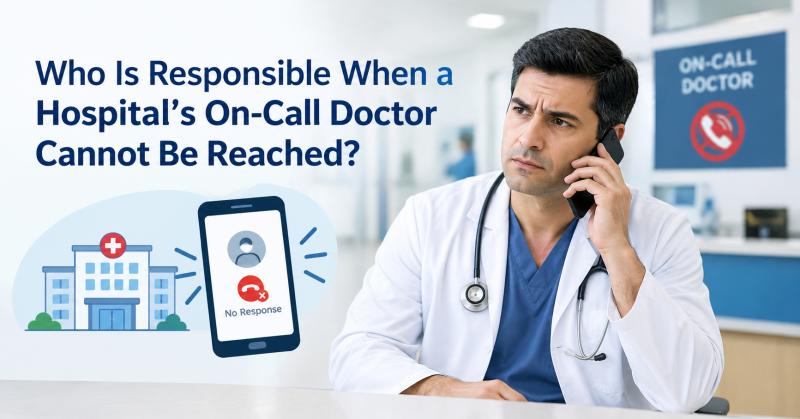
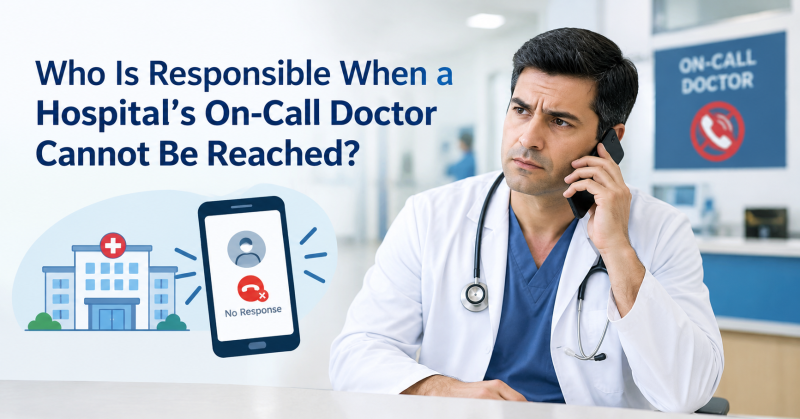
Who Is Responsible When a Hospital’s On-Call Doctor Cannot Be Reached?
 Badal
When a hospital’s on-call doctor cannot be reached, responsibility usually does not rest on one person. It is shared between the individual doctor, the treating team present at the bedside, and the hospital, which is expected to run a reliable on-call system. Who carries the greater share depends on the facts: whether the doctor was properly rostered, whether the hospital had a backup arrangement, and what the patient’s condition required at that moment.
This is a common concern in medico legal support in Delhi, where busy emergency departments, referral-heavy hospitals and shift-based staffing make coverage gaps a real risk. This article explains how responsibility is generally viewed, what to document, and how to reduce exposure. It is meant as a medico legal guide in Delhi for practitioners, not as legal advice for any specific case.
Why Unreachable On-Call Doctors Become a Legal Issue
A missed call rarely causes harm by itself. The problem arises when the delay affects a patient: a deteriorating inpatient, a delayed surgical opinion, or an emergency that needed a specialist’s decision.
In a later complaint or legal notice, the questions usually asked are:
- Who was rostered on call, and was that roster documented?
- When was the doctor first contacted, and how many attempts were made?
- What did the doctor or nurse on duty do while waiting?
- Was there a backup system, and was it used?
- Did the delay actually affect the outcome?
The last question matters. Delay alone does not establish negligence. Courts and medical bodies generally look at whether the care was reasonable and whether any lapse contributed to the harm.
Who May Be Held Responsible
The on-call doctor
A doctor who accepts an on-call duty is expected to be reachable and to respond within a reasonable time. Switched-off phones, unregistered number changes, or leaving the area without informing the hospital can weaken their position. A genuine emergency, a network failure, or being tied up with another critical patient may be treated differently, particularly if the doctor can show they acted promptly once aware.
The doctor or team at the bedside
Staff present with the patient cannot simply wait for the on-call doctor. Where the situation is urgent, they are generally expected to stabilise the patient within their competence, escalate to another available senior or specialist, and record what they did. Silence or inaction during the wait is often viewed more critically than the unreachable call itself.
The hospital or clinic
Institutions are generally expected to maintain a workable system: a published roster, current contact numbers, a defined escalation path, and backup cover. If the hospital had no such system, or the roster was outdated, responsibility may extend to the management rather than resting only on the individual.
What Doctors Should Do in the Moment
If you are the treating or duty doctor and the on-call colleague is not responding:
- Act on clinical priorities first. Stabilise the patient as far as your training allows.
- Try more than one channel. Call the listed number, then the hospital operator, then a colleague who may know the doctor’s whereabouts.
- Escalate. Contact the backup consultant, the head of department or the medical superintendent, according to the hospital’s protocol.
- Inform the patient or family honestly about the situation and the steps being taken.
- Document everything while it is fresh.
What to Document
Good records are the most useful protection a doctor has, and they are also simply good practice. Note the following, with times:
- The patient’s condition and your clinical assessment
- Each attempt to reach the on-call doctor, the number used and the outcome
- Who else was contacted and what advice, if any, was given
- Treatment or interim measures provided
- Communication with the family, including what they were told
- The time the on-call doctor eventually responded or arrived
Telephone or WhatsApp advice should be recorded in the notes, not left only in the chat. Entries should be factual, signed and timed. Avoid blame in the clinical record. Write what happened, not who failed.
Common Mistakes to Avoid
- Relying on an outdated roster and not confirming that contact numbers are current
- Waiting passively instead of escalating
- Writing notes much later or adding entries without marking them as late
- Altering or rewriting records after a complaint arises, which can seriously damage credibility
- Giving advice by phone without recording it
- Assuming a verbal handover is enough when the on-call duty changes
Reducing Risk at the Hospital and Clinic Level
Most disputes of this kind are preventable through simple systems:
- A written on-call roster, circulated and updated
- A named backup for every specialty
- A short escalation protocol that nurses and junior doctors know by heart
- Periodic checks that contact numbers actually work
- A clear policy on response times, adapted to the facility’s size and services
- A routine for recording calls and advice in the patient file
Where a facility is unsure whether its arrangements meet applicable regulations or professional standards, it is reasonable to seek qualified guidance rather than assume. Doctors who want a structured overview of documentation, complaints and legal notices can refer to this medico-legal guide by Dr. Vimal Kant Goyal as a starting point.
When to Seek Medico-Legal Guidance
Consider professional input when:
- A patient or family has raised a complaint about delayed attention
- You receive a legal notice or a request for records
- An adverse outcome follows a communication gap
- The hospital is reviewing its on-call and escalation policy
Early advice on how to respond, what to preserve and what not to say can prevent avoidable mistakes. Medico legal help for medical professionals in Delhi is most useful before positions harden, not after. A qualified lawyer can advise on the legal position, and a medico-legal consultant can help interpret clinical records and professional standards.
Conclusion
An unreachable on-call doctor is a system problem as much as an individual one. Responsibility is usually assessed across the doctor, the team on the floor and the institution. The best protection is practical: clear rosters, working escalation routes, prompt action at the bedside and honest, timely records. Medico legal support in Delhi is most valuable when it helps doctors build these habits before a dispute begins, and when it guides a calm, measured response if one does.
This article is for general information and does not replace advice from a qualified legal or medico-legal professional.
Frequently Asked Questions
1. Is the on-call doctor always liable if they cannot be reached?No. Liability depends on the circumstances, including whether the doctor was reasonably reachable, whether other cover existed and whether the delay contributed to harm.
2. Can a hospital be responsible even if the doctor was at fault?Possibly. If the hospital failed to maintain a proper roster or backup system, it may share responsibility. Each case turns on its facts.
3. What should a junior doctor do if the consultant does not answer?Treat the patient according to your competence, escalate through the protocol to another senior or the medical superintendent, and record every attempt with times.
4. Is a WhatsApp message enough to record on-call advice?It can support the record but should not replace it. Transfer the advice into the patient’s notes with the time and the name of the adviser.
5. When should I look for medico legal help for medical professionals in Delhi?When a complaint, legal notice or records request arrives, or when a serious adverse event involves a communication or coverage gap.
Source:
Click for the: Full Story
You might like







You Might Like this