


 Close Menu
 World
 Biography
 Health
 Education
 Business
 Lifestyle
 Sports
 Technology
 Animals
 History
 Food
 Religious
 Startups
 Movies
 Politics
 Fashion
 Covid
 Diet
 Fitness
 Marketing
 Travel
 Science
 Reviews
 Social media
 Stories
 Facts
 Art
 Entertainment
Deepak

Health
Can Repeated Changes in Endometrial Thickness Affect Embryo Transfer Decisions?
 Deepak
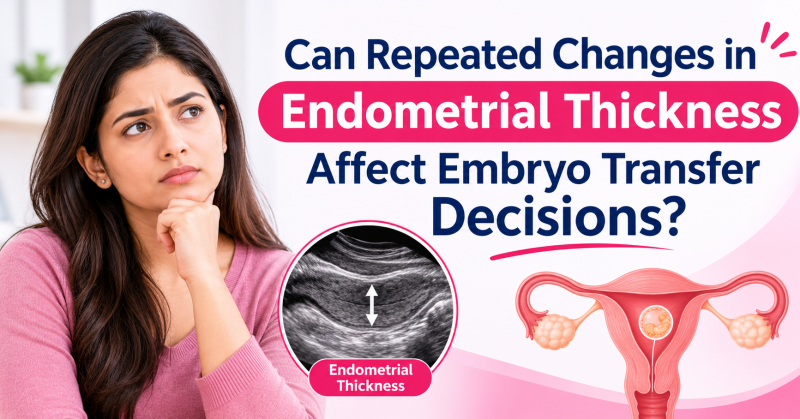
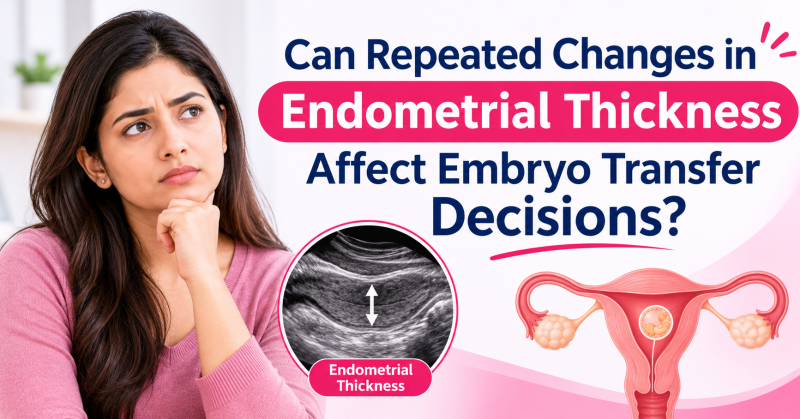
If you are going through IVF, you may have noticed that your uterine lining measurement changes from one scan to the next. One cycle it looks thick and well developed, the next it measures thinner than expected. It is natural to worry about what this means for your embryo transfer. The short answer is that endometrial thickness is one important factor doctors consider, but it is rarely the only one.
What Is the Endometrium and Why Does It Matter?
The endometrium is the inner lining of the uterus. For an embryo to implant, this lining needs to be receptive, meaning it must develop properly and be in step with the embryo’s stage of growth. During a cycle, estrogen helps the lining grow, and progesterone prepares it for implantation.
Doctors measure thickness on a transvaginal ultrasound, usually in millimetres. They also look at the lining’s pattern, often described as trilaminar, which shows layers on the scan.
Is It Normal for Endometrial Thickness to Vary Between Cycles?
Yes, some variation is common. Thickness can differ from cycle to cycle depending on:
- The timing of the scan within the cycle
- How your body responds to hormones or medicines
- Whether it is a natural, medicated, or stimulated cycle
- Stress, sleep, weight changes, or recent illness
- Differences in how the scan is performed and read
A single lower reading does not automatically mean a problem. What matters more is the overall trend and what may be causing it.
What Thickness Do Doctors Usually Look For?
Many fertility clinics look for a lining of roughly 7 to 8 millimetres or more around the time of transfer, with a favourable pattern. Pregnancies have been reported with thinner linings, and a lining that meets the number does not guarantee implantation. Thickness is a helpful marker, not a pass-or-fail test.
Why the Lining May Change Repeatedly
When thickness keeps shifting or stays lower than expected, doctors look for possible reasons, such as:
- Hormonal factors: Low estrogen levels or a slower response to estrogen support
- Scarring inside the uterus, sometimes after surgery, infection, or repeated procedures
- Chronic endometritis, a low-grade inflammation of the lining
- Reduced blood flow to the uterus
- Uterine conditions such as polyps, fibroids, or adenomyosis
- Medicine response: Some women simply respond differently to the same protocol
Identifying the likely cause helps the doctor adjust the plan rather than repeat the same approach.
How Changing Thickness Influences Embryo Transfer Decisions
Variable lining measurements can shape several decisions in the treatment plan.
Timing of transfer. If the lining is not ready, the doctor may extend estrogen support for a few more days or postpone the transfer to a later cycle.
Fresh versus frozen transfer. When the lining is inconsistent in a stimulated cycle, embryos can be frozen and transferred in a later, carefully prepared cycle. This gives the uterus time to be optimized without pressure.
Medication adjustments. The dose, type, or duration of estrogen may be changed, and other supportive options may be considered based on the individual case.
Further investigation. Repeated variation may lead to tests such as a hysteroscopy to look inside the uterus, or evaluation for infection or inflammation.
Individual judgment. Doctors weigh thickness alongside lining pattern, hormone levels, embryo quality, and your previous cycle history.
The Value of a Personalised Approach
No two lining patterns are the same, and the best plan depends on your history. An experienced IVF doctor in Delhi reviews your scans across cycles, not just the latest report, to spot patterns and adjust the protocol thoughtfully.
Why Waiting a Cycle Can Be the Right Decision
Postponing a transfer can feel frustrating, especially after a long wait. However, transferring into a lining that is not ready may lower the chance of implantation. Frozen embryos can usually be stored safely, so taking time to prepare the uterus is often a reasonable step rather than a setback.
What You Can Do to Support Your Treatment
While no habit can guarantee a particular thickness, these practical steps may help:
- Take prescribed medicines exactly as advised and on time
- Attend monitoring scans on the scheduled days
- Keep a record of your scan measurements from each cycle and share them with your doctor
- Maintain a balanced diet, adequate sleep, and a healthy weight
- Avoid smoking and limit caffeine and alcohol
- Do not start supplements or home remedies without medical advice
Choosing the Right Doctor for Your Treatment
Many patients look for the best IVF doctor in Delhi because they want clear explanations as much as clinical expertise. A doctor who explains why a transfer is being delayed or modified can ease a great deal of anxiety.
When to Seek Specialist Guidance
Consider consulting a fertility specialist if:
- Your lining has been thin or inconsistent across more than one cycle
- A transfer has been cancelled or postponed because of lining concerns
- You have had previous uterine surgery, infection, or scarring
- Past IVF cycles did not lead to implantation despite good embryos
- You have very light periods or unexplained changes in your menstrual pattern
Dr. Poonam Goyal, a gynecologist and fertility specialist, looks at the uterine lining as part of your broader reproductive picture, including hormones, uterine health, and previous treatment records. Women who want the best obstetrics and gynecology in Delhi for fertility care often benefit from this whole-picture view, since the uterus plays a central role in both conception and pregnancy.
Changes in endometrial thickness can feel worrying, but they are often manageable once the cause is understood. With careful monitoring and a plan tailored to you, the decision about when to transfer can be made with confidence.
Frequently Asked Questions
1. Can endometrial thickness change from one IVF cycle to another?
Yes. Thickness can vary depending on the type of cycle, hormone response, scan timing, and individual factors. Some variation is normal, but repeated low readings are worth discussing with your doctor.
2. Will a thin endometrium stop me from getting pregnant?
Not necessarily. A thin lining can lower the chance of implantation for some women, but pregnancies have occurred with thinner linings. Doctors look at the full picture, including lining pattern and embryo quality.
3. Why would my doctor delay my embryo transfer?
A transfer may be postponed if the lining is not thick enough, is not developing well, or is out of step with the hormone schedule. Waiting allows the uterus to be better prepared, and frozen embryos can usually be stored for a later cycle.
4. Can a thin lining be improved?
Sometimes. Depending on the cause, a doctor may adjust estrogen therapy, treat infection or scarring, or modify the protocol. Results vary from person to person, and outcomes cannot be guaranteed.
5. Should I do a frozen embryo transfer if my lining is inconsistent?
In many cases it is a good option, because it allows a separate cycle focused on preparing the lining. Your doctor will decide based on your history and test results.
Source:
Click for the: Full Story
You might like






You Might Like this