


 Close Menu
 World
 Biography
 Health
 Education
 Business
 Lifestyle
 Sports
 Technology
 Animals
 History
 Food
 Religious
 Startups
 Movies
 Politics
 Fashion
 Covid
 Diet
 Fitness
 Marketing
 Travel
 Science
 Reviews
 Social media
 Stories
 Facts
 Art
 Entertainment
Badal

Health
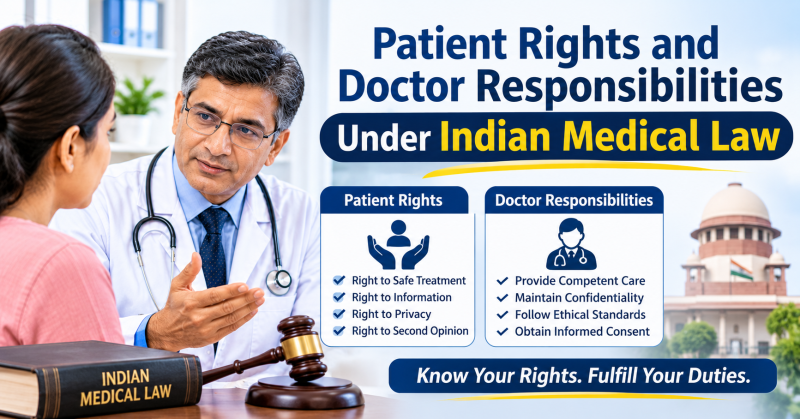
Patient Rights and Doctor Responsibilities Under Indian Medical Law
 Badal
Patients in India have the right to information, consent, confidentiality, dignity, and a reasonable standard of care. Doctors carry matching duties to inform, protect, record, and treat with skill. Many doctors look for legal help in Delhi only after a complaint arrives, but knowing these rights and duties beforehand prevents most disputes. This guide explains the framework, the common mistakes, and the habits that keep your practice on firm ground.
The Legal Framework Doctors Work Within
India has no single “medical law.” Doctors’ obligations come from several sources:
- The National Medical Commission (NMC) and state medical councils, including the Delhi Medical Council, which regulate registration and professional conduct. The Indian Medical Council (Professional Conduct, Etiquette and Ethics) Regulations, 2002 remain a central reference on ethics, records, and confidentiality, though doctors should check the NMC’s current notified rules.
- The Consumer Protection Act, 2019, under which patients may bring complaints alleging deficiency in service.
- The Bharatiya Nyaya Sanhita, 2023, which governs criminal liability, including in cases of alleged negligence.
- Specific statutes such as the Mental Healthcare Act, 2017, and, for telemedicine, the Telemedicine Practice Guidelines, 2020.
A single incident can trigger more than one of these routes at once, so understanding each is part of any sensible Legal Guide for Doctors in Delhi.
Core Patient Rights Every Doctor Should Respect
- Right to information: patients should understand their diagnosis, proposed treatment, material risks, and alternatives.
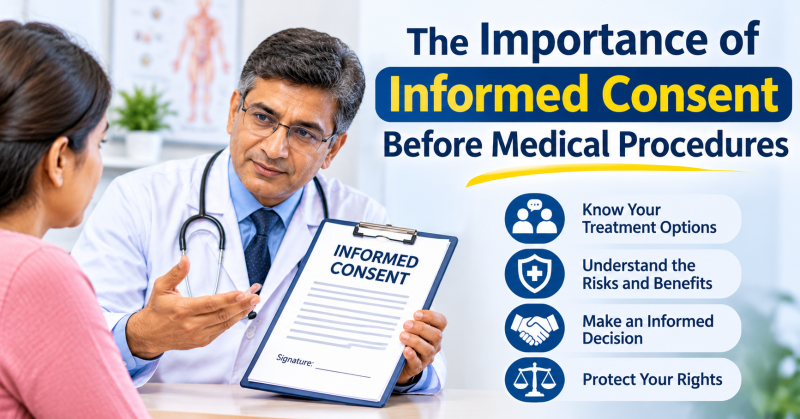
- Right to consent and refusal: a competent patient may accept or decline treatment. The Supreme Court’s decision in Samira Kohli v. Dr. Prabha Manchanda (2008) emphasised that consent must be informed and specific to the procedure.
- Right to confidentiality: patient information may be disclosed only with consent or where the law permits or requires it.
- Right to dignity and privacy: especially during examinations.
- Right to emergency care: in Parmanand Katara v. Union of India (1989), the Supreme Court recognised the duty to provide immediate medical aid to an injured person without waiting for legal formalities.
- Right to records: the 2002 Regulations expect doctors to maintain records and provide them to patients on request within the stated timeframe. Check the current text for the exact period.
Doctor Responsibilities: What the Standard of Care Means
A doctor is expected to exercise reasonable skill and care. In Jacob Mathew v. State of Punjab (2005), the Supreme Court held that a doctor is not criminally liable for negligence merely because a treatment failed. It also held that criminal liability requires a high degree of negligence, and it laid down guidance on how such complaints are handled. Civil and consumer liability are assessed differently, so a favourable view in one forum does not decide the others.
In practice, your duties include:
- Practising only within your competence and registration.
- Keeping up with current clinical knowledge.
- Obtaining valid consent.
- Maintaining accurate, timely records.
- Referring appropriately when a case is beyond your expertise.
- Communicating honestly, including when something goes wrong.
Common Mistakes That Lead to Disputes
- Poor or missing records. When a complaint is filed, the file is your main evidence.
- Generic consent forms signed without a real discussion.
- Vague communication about costs, risks, or outcomes, which creates unrealistic expectations.
- Delayed referral or escalation when a patient is deteriorating.
- Delegating beyond competence to unsupervised junior or non-clinical staff.
- Confidentiality slips, such as discussing cases in public areas or messaging groups.
- Defensive or dismissive reactions to complaints, which often escalate a manageable concern.
Example: A patient has a post-operative complication. The surgeon had explained the risk verbally but recorded nothing. The patient claims it was never mentioned. A dated note listing the risks discussed would have given the doctor a clear, contemporaneous record, whereas its absence leaves the dispute to memory.
Practical Compliance Checklist
- Check that your registration is valid and your practice stays within your scope.
- Use procedure-specific consent forms and document the discussion.
- Write clear, dated, signed clinical notes for every encounter.
- Store records securely and know how to respond to a patient’s request for them.
- Keep patient information out of personal social media and informal group chats.
- Display fees clearly and explain costs in advance.
- Maintain professional indemnity cover suited to your specialty.
- Train staff on privacy, courtesy, and escalation of concerns.
- Respond to complaints promptly, in writing, and without altering any record.
When a notice or complaint arrives, an experienced medico legal consultant in Delhi can help you understand the forum, deadlines, and response. For broader reading, a medico-legal resource for practising doctors can complement this checklist.
Conclusion: Prevention Is the Best Protection
Respecting patient rights and meeting your responsibilities are not separate tasks. Clear communication, valid consent, careful records, and timely referral reduce risk and improve care. Laws and regulations change, so review them regularly. For concerns specific to your situation, a Delhi-based professional such as Dr. Vimal Kant Goyal can help you assess your options. This Legal Guide for Doctors in Delhi is general information, not legal advice, and it does not guarantee any outcome.
Frequently Asked Questions
1. Can a patient sue a doctor for negligence in India?Yes. A patient may approach a consumer commission, a civil court, or the medical council, and in serious cases a criminal complaint may be made. Each forum applies its own standards.
2. Is a doctor automatically liable if treatment fails?No. Courts have recognised that an unsuccessful outcome alone does not establish negligence. The question is whether the doctor met the reasonable standard of care.
3. Must I give a patient a copy of their medical records?The 2002 Regulations expect doctors to provide records on request within a stated period. Confirm the current rule and any applicable state or hospital policy.
4. Can I disclose patient information to relatives?Generally only with the patient’s consent, unless the law permits or requires disclosure or the patient lacks capacity. Seek advice in uncertain cases.
5. When should I seek legal help after a complaint?As soon as you receive a notice, summons, or complaint. Preserve all records unaltered and avoid contacting the complainant to argue the matter.
Source:
Click for the: Full Story
You might like








You Might Like this