Close Menu
 World
World
 Biography
 Health
 Education
 Business
 Lifestyle
 Sports
 Technology
 Animals
 History
 Food
Food
 Religious
 Startups
 Movies
 Politics
 Fashion
 Covid
Covid
 Diet
Diet
 Fitness
 Marketing
 Travel
 Science
 Reviews
 Social media
 Stories
 Facts
Facts
 Art
Art
 Entertainment
Deepak

Health
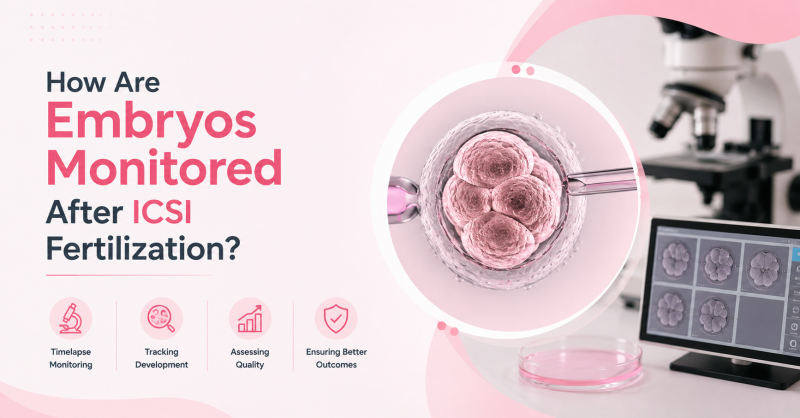
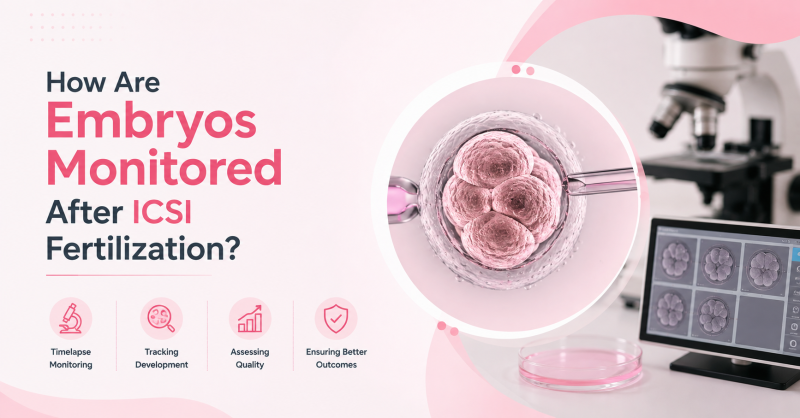
How Are Embryos Monitored After ICSI Fertilization?
 Deepak
After an ICSI procedure, many couples feel the waiting period is the hardest part. The eggs have been injected and the embryologist has done their part, but you are left wondering what is happening in the laboratory. Is fertilization successful? Are the embryos growing well? How will the doctor decide which one to transfer?
When couples look for the Best ICSI Treatment in Delhi, they often focus on the procedure itself. But what happens afterward matters just as much. Understanding how embryos are monitored can make this stage feel less uncertain. Here is what typically happens after fertilization, what embryologists look for, and what questions to ask your fertility team.
What Happens Right After ICSI?
In ICSI (intracytoplasmic sperm injection), a single healthy sperm is injected directly into a mature egg. The injected eggs are then placed in an incubator that mimics the conditions of the female reproductive tract, with carefully controlled temperature, humidity and gas levels.
From this point, the embryology team observes development at set intervals. Each embryo grows at its own pace, so monitoring is about tracking progress, not hitting a rigid timetable.
Day 1: Checking Whether Fertilization Has Occurred
About 16 to 18 hours after ICSI, the embryologist examines each egg under a microscope. A normally fertilized egg shows two pronuclei, one from the egg and one from the sperm. This is the first sign that fertilization has taken place.
Not every injected egg fertilizes. This is common and does not necessarily point to a problem with the treatment itself. Eggs can fail to fertilize or show abnormal fertilization for reasons that are often not predictable. Your doctor will explain what the Day 1 report means for your cycle.
Days 2 and 3: The Cleavage Stage
Over the next two days, the fertilized egg divides into multiple cells. Embryologists usually assess:
- Cell number: Embryos are generally expected to have a few cells on Day 2 and more on Day 3.
- Cell symmetry: Evenly sized cells are generally a favourable sign.
- Fragmentation: Small pieces of cellular material may be present, and the amount is noted.
These observations help the team understand how steadily the embryo is developing, but they are only one part of the picture. Cleavage-stage appearance alone cannot reliably predict whether an embryo will implant.
Days 4 to 6: Morula and Blastocyst Development
By Day 4, the embryo usually compacts into a ball of cells called a morula. By Day 5 or 6, a healthy embryo may reach the blastocyst stage, with two distinct parts:
- Inner cell mass: The cells that may develop into the baby.
- Trophectoderm: The outer cells that may form the placenta.
Many clinics extend embryo culture to the blastocyst stage because it allows embryologists to see which embryos continue developing. Not every embryo reaches this stage, and that is part of natural selection in the laboratory. Your doctor can advise whether a Day 3 or Day 5 transfer suits your situation.
How Are Blastocysts Graded?
Blastocysts are commonly graded on three features: how expanded the blastocyst is, the quality of the inner cell mass, and the quality of the trophectoderm. Grading systems differ slightly between laboratories, so ask your clinic how its grades are written and what they mean.
A higher grade generally suggests better morphology, but grading is not a guarantee. Embryos with lower grades can sometimes result in a healthy pregnancy, and well-graded embryos may not always implant. Grading is a guide that supports decision-making, not a promise.
Technology Used in Embryo Monitoring
Laboratories may use different tools to observe embryos:
- Standard incubators with scheduled checks: Embryos are examined at specific times and then returned to stable conditions.
- Time-lapse imaging: Cameras inside the incubator take images at regular intervals, allowing embryologists to follow development without repeatedly removing embryos.
- Genetic testing (PGT): In selected cases, a few cells from a blastocyst may be tested for chromosomal or specific genetic conditions. This is not routine for every patient and should be discussed carefully with your doctor.
The suitability of each method depends on your medical history, age, and previous treatment results. More technology is not automatically better for every couple.
How Does Monitoring Guide the Next Step?
Embryo monitoring helps your fertility team decide:
- Which embryo or embryos are suitable for transfer.
- Whether to transfer fresh or freeze embryos for a later cycle.
- How many embryos to transfer, balancing the chance of pregnancy against the risks of multiple pregnancy.
- Which remaining embryos are good candidates for freezing, usually by vitrification.
In some cases, such as a risk of ovarian hyperstimulation or an endometrium that is not ideal, freezing all embryos for a later transfer may be advised.
What to Look for in ICSI Treatment in Delhi
Choosing ICSI treatment in Delhi is not only about the injection procedure. It is about the quality of care before, during and after it. Good care should include:
- A clear explanation of why ICSI is recommended for you, such as male factor infertility or previous fertilization difficulty.
- Regular updates on fertilization and embryo development.
- A transparent explanation of embryo grading and transfer decisions.
- Honest conversations about realistic outcomes, without guarantees.
- Individualised planning based on your tests, age and history.
Many couples also search for the Best Gynaecologist in Delhi to guide them from the first consultation through transfer and follow-up. What matters most is a doctor who listens, explains each step in plain language, and adjusts the plan to your needs.
When to Speak With a Fertility Specialist
Consider seeking professional guidance if:
- You have been trying to conceive for a year or more (or six months if the woman is 35 or older).
- Semen analysis shows abnormalities.
- Previous IVF or ICSI cycles had low fertilization or poor embryo development.
- You have a history of recurrent pregnancy loss.
- You want to understand whether ICSI is right for you.
Dr. Poonam Goyal, Gynecologist and Fertility Specialist in Delhi, helps couples understand their options through evaluation, personalised treatment planning, and clear communication at each stage of care. An individual consultation is the best way to find out what suits your situation.
A Final Word
Embryo monitoring after ICSI is a careful, step-by-step process, from the Day 1 fertilization check to blastocyst grading. Every embryo develops differently, and the laboratory's observations are tools to guide choices, not predictions. If you are exploring the Best ICSI Treatment in Delhi, choose a team that keeps you informed at every stage and answers your questions openly.
Frequently Asked Questions
1. How soon will I know if my eggs have fertilized after ICSI?
Fertilization is usually checked 16 to 18 hours after the injection. Most clinics share the result with patients on the following day.
2. Do all fertilized eggs become embryos suitable for transfer?
No. Some fertilized eggs stop developing at various stages, which is a normal part of embryo development. Your embryologist tracks which ones continue to grow.
3. What is the difference between Day 3 and Day 5 embryo transfer?
A Day 3 embryo is at the cleavage stage, while a Day 5 embryo has usually reached the blastocyst stage. The right timing depends on how many embryos you have and how they are developing, so your doctor will advise you individually.
4. Does a good embryo grade guarantee pregnancy?
No. Grading reflects how an embryo looks under the microscope, but implantation also depends on factors like the uterine lining, maternal age and overall health.
5. Is time-lapse imaging or genetic testing necessary for every ICSI cycle?
Not necessarily. These options may help in selected cases, but they are not required for everyone. Your doctor can explain whether they are appropriate for you.
This blog is for general education and does not replace personalised medical advice. Please consult a qualified fertility specialist for guidance on your situation.
Source:
Click for the: Full Story
You might like