Close Menu
 World
World
 Biography
 Health
 Education
 Business
 Lifestyle
 Sports
 Technology
 Animals
 History
 Food
Food
 Religious
 Startups
 Movies
 Politics
 Fashion
 Covid
Covid
 Diet
Diet
 Fitness
 Marketing
 Travel
 Science
 Reviews
 Social media
 Stories
 Facts
Facts
 Art
Art
 Entertainment
Pers Active Lab
Health
Which Serum Is Best for Acne and Dark Spots? BD14 Explained
 Pers Active Lab
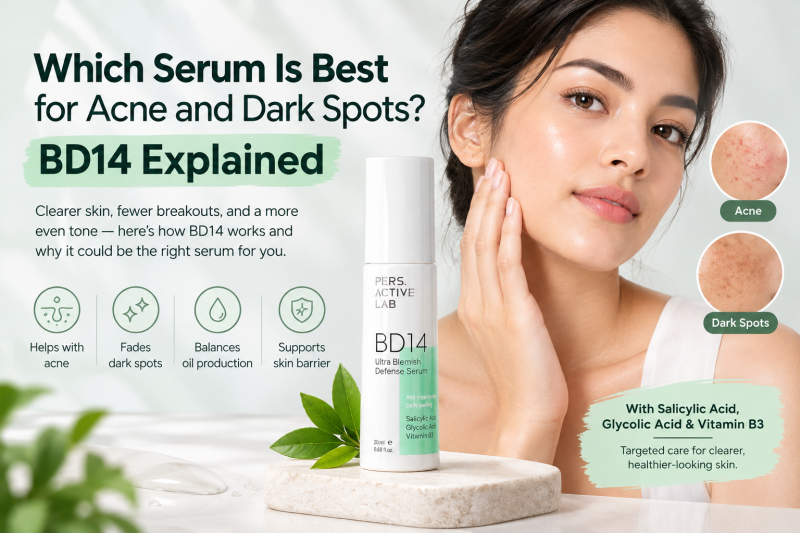
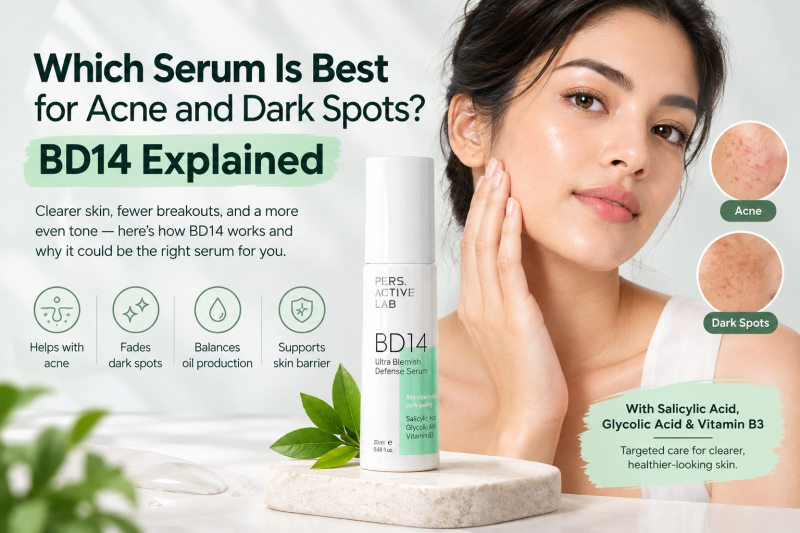
If you need a serum for both acne and dark spots, look for a formula that targets breakouts while also helping improve post-acne marks without placing excessive stress on the skin barrier. Skin-Pal’s Ultra Blemish Defense Serum BD14 is designed around this concern, combining blemish-focused active ingredients with a repair-first approach rather than relying on a single ingredient.
If you are looking for a serum for acne prone skin, do not focus on just one ingredient. Acne-prone skin can deal with excess oil, clogged pores, inflammation, sensitivity, and dark marks after breakouts. A good serum should help address these concerns while also being gentle enough to support the skin barrier.
Why Acne and Dark Spots Often Appear Together
Acne and dark spots frequently follow the same cycle. A clogged pore can develop into a pimple, and inflammation may leave behind a darker patch after the blemish heals. This is known as post-inflammatory hyperpigmentation (PIH), and it can remain visible long after the original acne has disappeared.
Several factors can contribute to this cycle, including:
- Excess sebum production
- Clogged pores and dead skin buildup
- Acne-causing bacteria
- Skin inflammation
- Picking or squeezing pimples
- Excessive sun exposure
- Irritating skincare products
- An impaired skin barrier
Because these concerns are connected, using several strong products at once may not always produce better results. In some cases, over-treatment can cause dryness and irritation, which can make the skin appear more uneven.
What Should You Look for in a Serum for Acne-Prone Skin?
A good formula should address the factors contributing to blemishes while supporting the skin's ability to recover. Ingredients commonly used in acne-focused skincare include salicylic acid, glycolic acid, niacinamide, and soothing ingredients such as allantoin.
Salicylic acid is a beta hydroxy acid (BHA) that can penetrate into oily pores and help remove accumulated sebum and dead skin cells. This makes it particularly useful for clogged pores and some forms of acne.
Glycolic acid is an alpha hydroxy acid (AHA) that works primarily on the skin's surface. It helps loosen dead skin cells and can improve the appearance of uneven texture and discoloration over time.
Niacinamide, also known as vitamin B3, has a broader role in skincare. It can support the skin barrier and help improve the appearance of uneven tone and excess oil. The exact percentage of niacinamide in BD14 should not be assumed unless it is confirmed by the manufacturer.
The important point is that ingredient combinations and concentrations matter. More active ingredients do not automatically mean better results.
How BD14 Approaches Acne and Dark Spots
Skin-Pal’s Ultra Blemish Defense Serum BD14 is formulated for blemish-prone skin and includes acne- and pigmentation-focused ingredients such as salicylic acid, glycolic acid, niacinamide, and allantoin.
Rather than treating acne and discoloration as completely separate problems, this type of formulation addresses several stages of the blemish cycle.
Salicylic acid can help with pore congestion, while glycolic acid supports surface exfoliation. Niacinamide adds barrier and tone-supporting benefits, while allantoin provides a soothing component to the formulation.
This approach fits the Power of Less philosophy: use essential actives in considered combinations instead of layering numerous separate treatments that may unnecessarily increase irritation.
Repair First: Why the Skin Barrier Matters
Acne-prone skin can also become sensitive, especially when people combine exfoliating acids, retinoids, scrubs, spot treatments, and strong cleansers.
The skin barrier helps reduce water loss and protects the skin from external irritants. When it becomes compromised, symptoms such as tightness, dryness, redness, stinging, and increased sensitivity may occur.
This is where the Repair First principle becomes relevant.
Instead of continuously adding stronger treatments, a skincare routine should also make room for barrier support. A gentle cleanser, appropriate moisturizer, and daily sunscreen can help create a better environment for active treatments.
If your skin is already irritated, introducing multiple exfoliating products at the same time may not be a good strategy.
How to Use an Acne and Dark-Spot Serum
The right application method depends on the formulation and your skin's tolerance. If you are introducing an active serum, start gradually rather than immediately combining it with several other strong products.
A basic routine can look like this:
Morning
- Cleanse with a gentle face wash.
- Apply your recommended treatment serum if suitable for morning use.
- Follow with moisturizer.
- Apply broad-spectrum sunscreen.
Evening
- Cleanse your face.
- Apply the treatment serum according to its product directions.
- Use a moisturizer to support the skin barrier.
Avoid applying the serum to broken or severely irritated skin unless a healthcare professional advises otherwise.
Sunscreen is particularly important when your goal includes reducing the appearance of dark spots. UV exposure can contribute to pigmentation and make existing discoloration more noticeable.
Don't Treat Every Dark Spot as Acne
Not every dark mark has the same cause. Post-acne marks may result from inflammation, while other pigmentation can be associated with sun exposure, hormonal changes, or other skin conditions.
Similarly, acne itself can vary. Blackheads, whiteheads, inflammatory pimples, and deeper lesions do not always respond to the same approach.
This is why identifying the underlying concern matters before creating a routine.
Skin-Pal's AI Personalization approach is designed to go beyond simply identifying visible skin concerns. Its AI skin analysis can connect concerns with potential causes, ingredients, routine recommendations, and lifestyle factors. A Skin Score and progress tracking can also provide a way to monitor changes rather than relying on a single skin assessment.
Why Progress Tracking Can Be Useful
Skincare results rarely happen overnight. Acne activity can change from week to week, while pigmentation often takes longer to become less noticeable.
Taking regular progress measurements can help you determine whether a routine is working or whether something is causing irritation. It can also reduce the temptation to change several products at once.
A structured approach can track factors such as:
- Acne and blemish activity
- Uneven skin tone
- Skin texture
- Hydration
- Sensitivity
- Overall skin condition
This supports a more measured routine instead of repeatedly switching products based on short-term changes.
Avoid Over-Treating Acne and Dark Spots
One of the most common skincare mistakes is assuming that stubborn skin needs increasingly powerful products.
For example, someone using an exfoliating serum may also add a physical scrub, another acid toner, a retinoid, and multiple spot treatments. While each product may have a legitimate purpose, using them together can increase irritation.
The Power of Less concept focuses on selecting relevant actives instead of stacking unnecessary treatments.
A simple routine can often include:
- Gentle cleanser
- Targeted treatment
- Moisturizer
- Sunscreen
The exact routine should depend on your skin type, current concerns, tolerance, and other products you already use.
Where Skin-Pal Fits In
Skin-Pal combines skincare analysis with a personalized routine approach. Its system focuses on AI skin analysis, Skin Score, personalized recommendations, and progress tracking, rather than treating skincare as a one-time product selection.
The platform also takes a broader view of skin health by considering factors such as hydration, UV protection, lifestyle habits, and potential sensitivities. This can be useful for people who want to understand why a particular concern appears rather than simply adding another product to their shelf.
Where relevant, dermatologist-reviewed recommendations can add another layer of professional oversight. Skin-Pal also highlights Taiwan-made skincare expertise as part of its product and formulation context.
When Should You See a Dermatologist?
A serum may be appropriate for mild acne and pigmentation concerns, but persistent or severe acne requires more than cosmetic skincare in many cases.
Consider speaking with a dermatologist if you experience:
- Deep or painful acne
- Frequent breakouts that do not improve
- Acne scars
- Significant redness or irritation
- Rapidly worsening pigmentation
- Dark spots that appear without an obvious cause
- Skin reactions after using skincare products
A dermatologist can identify the type and cause of the condition and recommend appropriate medical treatment when necessary.
Final Thoughts
For acne and dark spots, the most suitable serum is one that addresses the underlying skin concerns without unnecessarily irritating the skin. BD14 combines blemish-focused ingredients such as salicylic acid and glycolic acid with niacinamide and allantoin, making it relevant to routines targeting breakouts, clogged pores, uneven texture, and post-acne discoloration.
A Repair First approach, sensible active-ingredient use, daily sun protection, and consistent progress tracking can help create a more balanced skincare routine. Rather than continually adding stronger products, focus on the specific concerns your skin actually has and give each routine enough time to show how your skin responds.
Source:
Click for the: Full Story
You might like