Close Menu
 World
World
 Biography
 Health
 Education
 Business
 Lifestyle
 Sports
 Technology
 Animals
 History
 Food
Food
 Religious
 Startups
 Movies
 Politics
 Fashion
 Covid
Covid
 Diet
Diet
 Fitness
 Marketing
 Travel
 Science
 Reviews
 Social media
 Stories
 Facts
Facts
 Art
Art
 Entertainment
Hitendra B. Parmar

Health
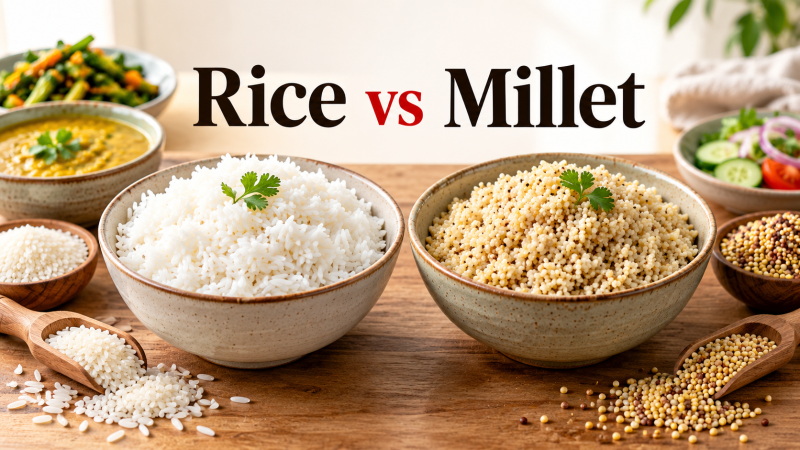
Millets vs Rice: Which Is Better for Everyday Indian Meals?
 Hitendra B. Parmar
Rice has been a staple of Indian meals for generations. From dal-rice and rajma-chawal to lemon rice, curd rice and biryani, it is deeply connected with everyday Indian cooking.
In recent years, millets have gained popularity as an alternative grain. Varieties such as foxtail millet, pearl millet (bajra), finger millet (ragi), little millet and sorghum (jowar) are increasingly appearing in Indian kitchens.
But does that mean you should replace rice completely?
Not necessarily.
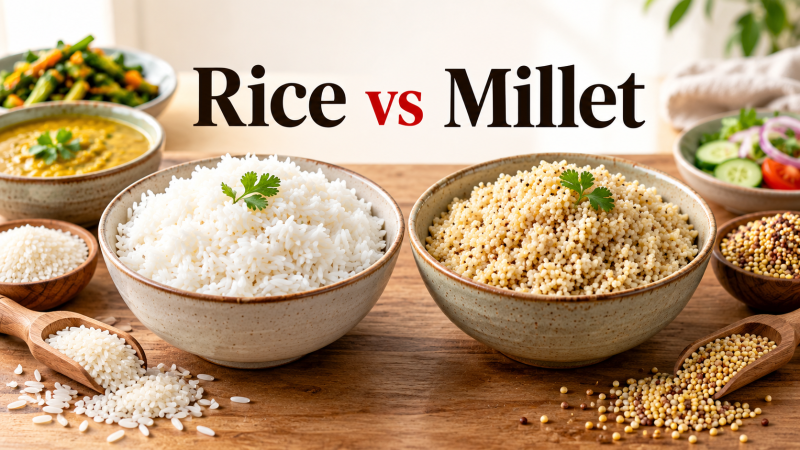
Millets and rice have different nutritional characteristics, textures, cooking methods and culinary uses. The better choice depends on your overall diet, portion size, meal composition and personal preferences.
Let's compare them in detail.
What Are Millets?
Millets are a group of small-seeded cereal grains that have been cultivated in India for centuries.
Common varieties include:
- Pearl millet (Bajra)
- Finger millet (Ragi)
- Foxtail millet
- Little millet
- Kodo millet
- Barnyard millet
- Proso millet
- Sorghum (Jowar)
Traditionally used in rotis, porridges, bhakri and other regional dishes, millets can also be used to prepare khichdi, dosa, upma, pulao and other everyday meals.
Their nutritional profile varies depending on the specific millet.
What Is Rice?
Rice is one of the most widely consumed staple grains in India.
It is available in many varieties, including:
- White rice
- Brown rice
- Red rice
- Black rice
- Basmati rice
- Short-grain and long-grain varieties
White rice is generally milled and polished to remove the bran and germ, leaving mostly the starchy endosperm.
Brown and other less-refined rice varieties retain more of the grain's outer layers.
Millets vs Rice: Nutritional Comparison
The nutritional difference depends heavily on which millet and which rice you compare.
However, millets generally provide a combination of carbohydrates, protein, dietary fibre and minerals, while polished white rice is primarily a carbohydrate source with relatively low fibre.
A simplified comparison:
NutrientMilletsWhite RiceCarbohydratesHighHighProteinModerateRelatively lowDietary FibreGenerally higherGenerally lowerMagnesiumPresentLower in polished riceIronVaries by milletGenerally lowerTextureFirm/nuttySoft/fluffyCulinary UsesVersatileExtremely versatile
These values can vary substantially between varieties, processing methods and serving sizes, so comparing specific grains using standardized nutrition data is more meaningful than treating "millets" as one single food.
1. Fibre: Millets Generally Have an Advantage
One of the biggest nutritional differences is dietary fibre.
Many whole or minimally processed millets contain more fibre than polished white rice.
Dietary fibre contributes to:
- Better digestive health
- Greater meal satisfaction
- Regular bowel movements
- A more balanced overall diet
However, the total fibre of a meal depends on more than the grain itself.
Adding vegetables, legumes, salads, seeds or other high-fibre foods can substantially increase the fibre content of a rice-based meal as well.
2. Protein: Millets Can Contribute, But They Are Not a Complete Protein Solution
Millets contain protein, but their protein content varies by variety.
For someone looking to increase protein intake, simply replacing rice with millet is unlikely to be enough.
A better strategy is to combine your grain with protein-rich foods such as:
- Dal
- Chana
- Rajma
- Sprouts
- Soy
- Paneer
- Curd
- Eggs, if included in your diet
For example:
Millet + Dal + Vegetables
can create a more nutritionally balanced meal than focusing only on the grain.
3. Calories: Portion Size Still Matters
A common misconception is that switching from rice to millet automatically makes a meal low-calorie.
That is not necessarily true.
Millets are still cereal grains and provide carbohydrates and energy.
The overall calorie content of your meal depends on:
Grain quantity + cooking method + oil/ghee + protein source + vegetables + other ingredients
For example, a large serving of millet cooked with generous amounts of oil can easily contain more calories than a moderate serving of plain rice.
Therefore, portion control remains important regardless of the grain you choose.
4. Blood Sugar: The Whole Meal Matters
Millets are often promoted as a better choice for blood sugar management.
The reality is more nuanced.
Different millets have different carbohydrate compositions and glycemic responses. Processing, cooking method, particle size and the foods eaten alongside the grain can also affect the response.
White rice, particularly when eaten in large portions without much fibre, protein or fat, can produce a relatively rapid rise in blood glucose.
Instead of looking only at the grain, consider the complete meal.
For example:
Plain white rice + very little protein or vegetables
is nutritionally different from:
Moderate rice portion + dal + vegetables + salad
The same principle applies to millet-based meals.
If blood glucose management is a medical concern, individual dietary advice should come from a qualified healthcare professional.
5. Micronutrients: Millets Offer Useful Variety
Many millet varieties provide minerals such as:
- Magnesium
- Phosphorus
- Iron
- Zinc
The amounts differ significantly between millet varieties.
For example, ragi is well known for its calcium content, while other millets provide different combinations of nutrients.
Rice can also contribute nutrients, particularly when choosing less-refined varieties or fortified products.
The key point is that variety matters.
Eating different grains throughout the week can help diversify your nutrient intake.
6. Digestibility and Personal Tolerance
Not everyone responds to grains in exactly the same way.
Some people find millets satisfying and easy to incorporate into their meals, while others may experience digestive discomfort when they suddenly increase their intake.
If you are new to millets, start gradually.
You can introduce them through:
- Millet khichdi
- Millet upma
- Millet dosa
- Millet pulao
- Ragi porridge
- Jowar or bajra roti
Adequate hydration and a gradual increase in fibre can also make the transition easier.
7. Which Is Better for Weight Management?
Neither rice nor millet is automatically a "weight-loss food."
Weight management depends primarily on overall energy intake, activity levels, food quality, portion sizes and long-term eating habits.
Millets may be useful because many varieties provide more fibre than polished white rice, which can help make meals more filling.
But portion size still matters.
A practical approach is:
Choose the grain you enjoy + control the portion + add protein + add vegetables.
For example:
Option 1
Rice + dal + sabzi + salad
Option 2
Millet + dal + sabzi + salad
Both can fit into a balanced diet.
8. Which Is Better for Everyday Indian Cooking?
This is where rice has a major advantage.
Rice is exceptionally versatile.
It works well with:
- Dal
- Kadhi
- Rajma
- Chole
- Sambar
- Rasam
- Stir-fried vegetables
- Curd
- Indian gravies
Millets are also versatile, but their stronger flavour and firmer texture may require some adjustment.
They can be used for:
- Khichdi
- Pulao
- Upma
- Dosa
- Idli
- Rotis
- Bhakri
- Porridge
- Millet bowls
Instead of treating millet as a complete replacement for rice, consider using both.
9. Millets vs Rice: Which One Should You Choose?
There is no universal winner.
Choose millets when:
- You want more whole-grain variety in your diet.
- You want to increase dietary fibre.
- You enjoy their taste and texture.
- You want to experiment with traditional Indian grains.
- You want to rotate different grains through your weekly meals.
Choose rice when:
- You prefer its taste and texture.
- It fits better with your traditional meals.
- You need a quick and convenient staple.
- You enjoy dishes that work particularly well with rice.
Choose both when:
You want dietary variety without unnecessarily restricting foods you enjoy.
How to Add More Millets to Your Diet
You don't need to make a sudden switch.
Try a gradual approach.
Week 1
Replace one rice meal with millet once or twice during the week.
Week 2
Try two or three millet-based meals.
Week 3
Experiment with different varieties such as:
- Foxtail millet
- Little millet
- Barnyard millet
- Ragi
- Bajra
- Jowar
You can then identify which grains suit your taste, cooking style and digestion.
A Balanced Indian Meal Matters More Than the Grain Alone
One of the most important points to remember is that the grain is only one part of your meal.
A balanced Indian plate can include:
½ plate vegetables and salad
¼ plate protein-rich foods
¼ plate grains or other carbohydrate sources
The exact proportions can vary according to individual energy needs, activity levels and dietary requirements.
For example:
Millet + dal + mixed vegetables + salad + curd
or
Rice + rajma + vegetables + salad
can both form nutritious meals.
Frequently Asked Questions
Is millet healthier than rice?
Millets can provide more dietary fibre and certain minerals than polished white rice, but "healthier" depends on the specific millet, rice variety, portion size and overall meal.
Can I eat rice every day?
Rice can be part of a balanced diet when consumed in appropriate portions and combined with protein-rich foods and vegetables.
Can I replace rice with millet?
Yes. You can replace some or all rice servings with millet if you enjoy it and it fits your dietary needs.
Which millet is best?
There is no single best millet. Different varieties have different nutritional profiles and culinary uses. Rotating several varieties can provide dietary variety.
Is millet good for weight loss?
Millet is not inherently a weight-loss food. Its fibre content and ability to contribute to filling meals may make it useful in a calorie-controlled diet, but total food intake and portion sizes remain important.
Is millet better than white rice for blood sugar?
The answer depends on the specific millet, preparation, portion size and the rest of the meal. Individual responses can also differ.
Can I eat millet and rice together?
Yes. There is no general nutritional reason that prevents you from consuming both. You can also rotate them across different meals and days.
Final Takeaway
The millet-versus-rice debate does not need to be an either-or decision.
Millets can add fibre, minerals and variety to your diet, while rice remains a versatile and practical staple of Indian cuisine.
Rather than completely eliminating one grain, focus on the bigger picture:
Choose minimally processed foods.
Control portions.
Include enough protein.
Eat plenty of vegetables.
Rotate different grains when possible.
And most importantly, choose foods that you can enjoy and sustain as part of your everyday eating habits.
Whether your plate contains rice, millet or both, the quality of the overall meal matters far more than treating one grain as universally superior.
Explore Better Grain Choices
Refresh brings together a range of organic and natural food products designed to make everyday food choices simpler.
Explore organic grains, millets, pulses, oils and other everyday essentials at Refresh Your Life.
Source:
Click for the: Full Story
You might like