Close Menu
 World
World
 Biography
 Health
 Education
 Business
 Lifestyle
 Sports
 Technology
 Animals
 History
 Food
Food
 Religious
 Startups
 Movies
 Politics
 Fashion
 Covid
Covid
 Diet
Diet
 Fitness
 Marketing
 Travel
 Science
 Reviews
 Social media
 Stories
 Facts
Facts
 Art
Art
 Entertainment
Badal

Health
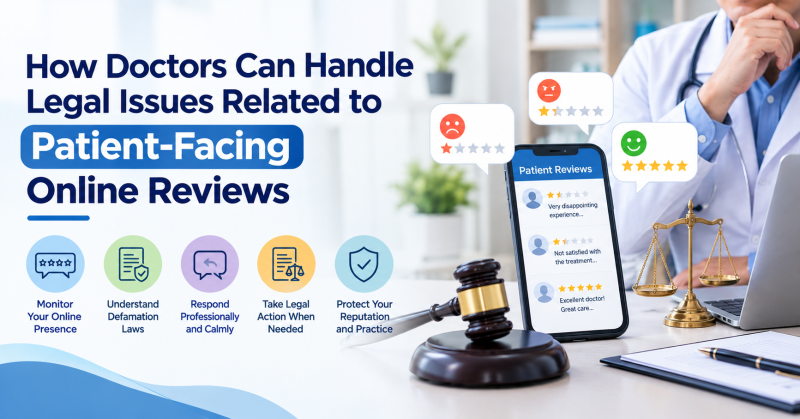
How Doctors Can Handle Legal Issues Related to Patient-Facing Online Reviews
 Badal
Badal
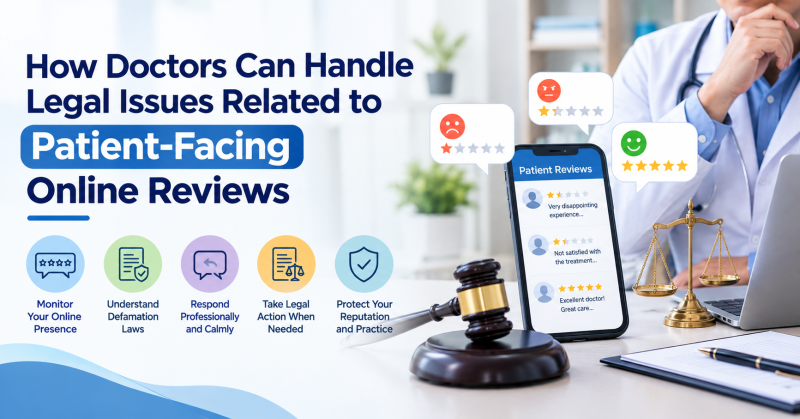
A single negative online review can feel deeply unfair, especially when it contains inaccurate claims, breaches confidentiality, or reads more like an attack than genuine feedback. Many doctors don't realise that responding poorly to such reviews can create more legal exposure than the review itself. Understanding how to handle these situations is an increasingly common reason doctors turn to a Legal Guide for Doctors in Delhi for practical, defensible steps.
This article explains what doctors should and shouldn't do when facing problematic online reviews, and when the situation calls for more structured support.
Why Online Reviews Have Become a Medico-Legal Concern
Patient reviews on Google, health platforms, and social media are now a routine part of how clinics and hospitals are perceived. Most reviews are harmless, even when critical. But certain reviews cross into territory with genuine legal and ethical implications:
- Reviews disclosing a patient's diagnosis, treatment, or personal health details
- Reviews containing false statements presented as fact (for example, incorrect claims about negligence)
- Reviews that are defamatory in nature rather than simply critical
- Fake or coordinated reviews intended to damage a practice's reputation
Because these situations sit at the intersection of reputation management, patient confidentiality, and defamation law, doctors often seek medico legal advice for doctors in Delhi before deciding how to respond, rather than reacting impulsively.
The Most Common Mistake: Responding With Patient Information
The single biggest legal risk in this area is a doctor or clinic responding to a negative review by revealing details about the patient's treatment, diagnosis, or visit — even in an attempt to "set the record straight."
This is problematic because:
- It can breach patient confidentiality, regardless of what the patient wrote publicly
- It may violate professional conduct expectations around doctor-patient confidentiality
- It can escalate a reputational issue into a formal complaint
A safer approach is to respond generally, without confirming or denying any specific patient relationship, and to acknowledge the feedback professionally without disclosing clinical details.
Distinguishing Genuine Criticism From Defamatory Content
Not every harsh review is legally actionable, and doctors should be cautious about treating every negative comment as defamation. Genuine, if unflattering, patient experiences — long wait times, perceived rudeness, dissatisfaction with outcomes — are generally protected as opinion or fair comment.
Content is more likely to raise legal concern when it:
- States false facts as though verified (e.g., claiming a specific misdiagnosis occurred when it did not)
- Uses the review to make unsubstantiated allegations of negligence
- Appears to be part of a pattern of fake or malicious reviews, sometimes from competitors or unrelated parties
If a review appears to cross this line, documenting it and seeking a professional opinion is more effective than reacting publicly.
Steps to Take When Facing a Problematic Review
1. Pause Before Responding
Emotional or defensive responses posted quickly are rarely helpful and can worsen the situation. Take time to assess whether the review is genuinely actionable or simply critical feedback.
2. Document Everything
Take screenshots of the review, including the date, platform, and any identifying details. If the review is later edited or removed, this record may be important.
3. Respond Professionally, Without Confidential Details
A brief, calm response acknowledging the feedback — without confirming treatment details — is usually sufficient for platform visitors and avoids confidentiality risk.
4. Use Platform Reporting Mechanisms
Most review platforms allow flagging content that violates their guidelines, particularly for fake reviews or those disclosing private health information submitted by someone other than the patient.
5. Seek Legal Input for Serious Cases
If a review contains clearly false factual claims, appears defamatory, or is part of a coordinated attack, this is the point at which formal legal help for doctors in Delhi becomes appropriate, rather than attempting to resolve it through platform reporting alone.
When Online Reviews Signal a Larger Medico-Legal Issue
Occasionally, a negative review is the first visible sign of a more serious underlying complaint — for instance, a patient who felt care was inadequate may post a review before or instead of filing a formal grievance. In such cases:
- Treat the review as an early warning sign, not just a reputational nuisance
- Review the patient's medical records/documentation to understand the clinical context
- Consider whether outreach to the patient (through appropriate channels) is warranted
- Avoid dismissing the concern simply because it appeared online rather than formally
Dr Vimal Kant Goyal, who advises doctors on medico-legal risk and compliance, often notes that online reviews should be treated with the same seriousness as any other patient complaint channel, since they can sometimes precede formal legal notices or regulatory complaints.
Building a Sensible Review-Response Policy
Clinics and individual practitioners benefit from having a clear, written approach to reviews, agreed upon in advance rather than decided during a stressful moment. This should cover:
- Who is authorised to respond to reviews on behalf of the practice
- A standard, confidentiality-safe response template for negative reviews
- A process for flagging reviews that may require legal or platform intervention
- Guidance on never disclosing patient information, regardless of provocation
Having this in place reduces the chance of a reactive, legally risky response in the moment.
Conclusion
Online reviews are now an unavoidable part of medical practice, and while most are manageable through calm, professional responses, some carry genuine legal risk — particularly around confidentiality and defamation. Doctors who pause before reacting, avoid disclosing patient details, and know when to escalate a concerning review are far better protected than those who respond impulsively. For situations that go beyond routine reputation management, consulting a Legal Guide for Doctors in Delhi offers the structured, professional support needed to protect both the practice's reputation and its legal standing. You can find more detailed guidance on this topic through Dr Vimal Kant Goyal's medico-legal guide.
FAQs
1. Can a doctor legally respond to a negative review by explaining what actually happened?
Doctors should avoid disclosing any patient-specific details in a public response, even to correct inaccuracies, as this can breach confidentiality regardless of the patient's own disclosures.
2. What should a doctor do if a review contains clearly false medical claims?
Document the review and seek medico legal advice for doctors in Delhi to assess whether the content is defamatory and what response, if any, is appropriate.
3. Are fake or anonymous negative reviews worth pursuing legally?
This depends on the nature and impact of the content. A Legal Guide for Doctors in Delhi or legal consultation can help assess whether formal action is proportionate and viable.
4. Should a clinic ever delete or hide negative reviews?
Clinics generally cannot delete reviews they don't control, but they can report reviews that violate platform policies, particularly those disclosing confidential health information without consent.
5. Can online reviews be used as evidence in a formal complaint or legal case?
They can potentially be referenced, especially if they reflect a documented pattern of concern. This is one reason treating serious reviews with appropriate seriousness matters.
Source:
Click for the: Full Story
You might like