Close Menu
 World
World
 Biography
 Health
 Education
 Business
 Lifestyle
 Sports
 Technology
 Animals
 History
 Food
Food
 Religious
 Startups
 Movies
 Politics
 Fashion
 Covid
Covid
 Diet
Diet
 Fitness
 Marketing
 Travel
 Science
 Reviews
 Social media
 Stories
 Facts
Facts
 Art
Art
 Entertainment
Badal

Health
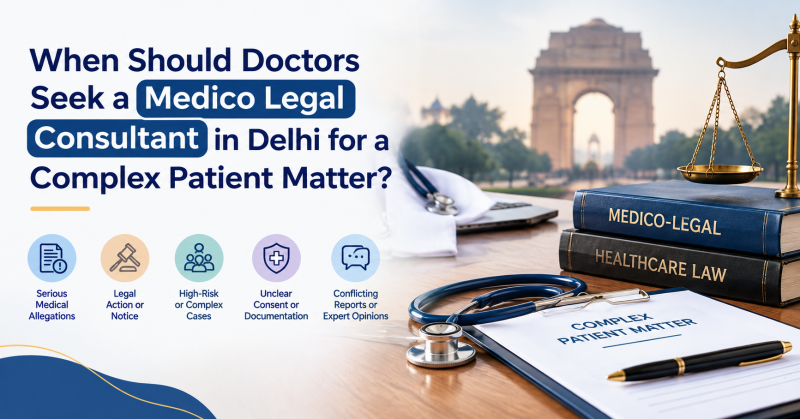
When Should Doctors Seek a Medico Legal Consultant in Delhi for a Complex Patient Matter?
 Badal
Badal
Most doctors handle patient care confidently, but certain cases carry medico-legal complexity that clinical training alone doesn't prepare them for. Knowing when to bring in a medico legal consultant in Delhi — rather than trying to manage a difficult situation alone — can make the difference between a well-handled matter and one that escalates unnecessarily.
This article outlines the specific situations where medico-legal consultation becomes advisable, and what doctors should understand about the process itself.
Not Every Difficult Case Needs Legal Consultation
It's worth clarifying upfront: most complications, poor outcomes, or unhappy patients do not require legal intervention. Clinical judgment, honest communication, and good documentation resolve the majority of difficult situations.
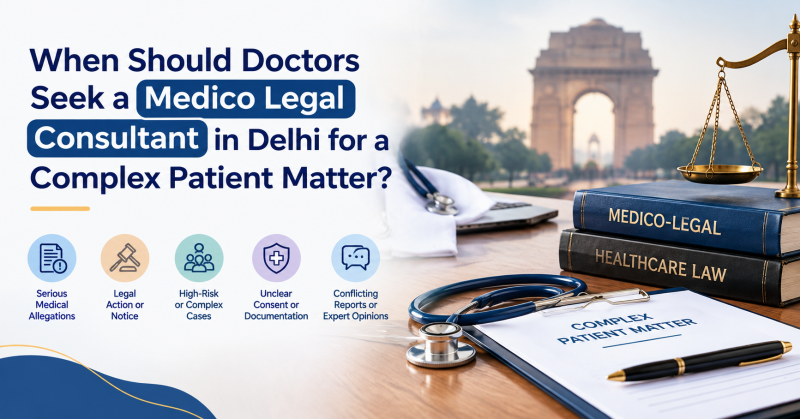
Consultation becomes relevant when a matter moves beyond routine clinical management into territory involving:
- Potential allegations of negligence
- Disputed consent
- Formal complaints to a medical council or consumer forum
- Legal notices or police involvement
- Situations where institutional and personal liability may both be in question
Recognising this line early, rather than waiting for a situation to escalate, is where medico legal support in Delhi adds real value.
Signs a Case Has Crossed Into Medico-Legal Territory
1. The Patient or Family Has Raised Formal Allegations
A verbal complaint about wait times or communication is different from a written allegation of negligence or harm. Once allegations become formal — especially in writing — the matter typically requires a more structured response than an informal conversation can provide.
2. A Legal Notice Has Been Received
Any legal notice, however preliminary it may seem, should prompt consultation before a response is drafted. Doctors sometimes respond defensively or apologetically without realising how such statements might be interpreted later. A measured, well-considered response matters more than a fast one.
3. Death or Serious Adverse Outcome With Unclear Circumstances
When a patient's death or serious deterioration occurs and the circumstances are contested or unclear, documentation and communication decisions made in the following days can matter significantly. This is a common point at which doctors seek out the best medicolegal consultant in Delhi for guidance on next steps.
4. Consent Was Ambiguous or Contested
If a patient or family disputes what was explained before a procedure, and the consent documentation is incomplete or unclear, this creates genuine legal vulnerability. A consultant can help assess the gap and advise on how to proceed.
5. Multiple Parties or Institutions Are Involved
Cases involving referrals, transfers, or shared care between multiple doctors or hospitals often create confusion about where responsibility lies. When a complaint touches several parties, professional responsibility needs to be clarified early, ideally with guidance from someone experienced in untangling such situations.
What Doctors Should Avoid Doing Before Seeking Advice
Certain reflexive actions can unintentionally worsen a doctor's position:
- Altering or adding to medical records after a complaint has surfaced, even with good intentions
- Responding informally to a family's allegations without reviewing documentation first
- Assuming an apology is legally neutral — context and wording matter
- Discussing the case informally with colleagues in ways that could be referenced later
- Ignoring a legal notice, assuming it will resolve itself
None of these mistakes reflect poor clinical care, but they can complicate an otherwise defensible case.
How Medico-Legal Consultation Typically Helps
A consultation is not about assigning blame or predicting outcomes. It generally involves:
- Reviewing the medical records/documentation as they currently stand
- Identifying gaps in consent or documentation that need addressing going forward
- Advising on how to communicate with the patient or family, if ongoing contact is appropriate
- Helping draft or review formal responses to complaints or notices
- Clarifying professional responsibility when multiple providers were involved
Dr Vimal Kant Goyal, who advises doctors and healthcare institutions on medico-legal matters, notes that early consultation often prevents situations from escalating simply because it gives doctors clarity on what to do — and what not to do — in the first few critical days.
Building Better Habits Before a Crisis Arises
Doctors who engage with medico-legal principles proactively, rather than only during a crisis, tend to navigate difficult cases more calmly. This includes:
- Reviewing documentation habits periodically, not just after a complaint
- Understanding informed consent as an ongoing conversation, not a signed form
- Being familiar with hospital protocols on complaints and risk management
- Knowing, in advance, who to contact if a legal notice arrives
This kind of preparedness is a component of sound clinical governance, and it reduces the anxiety that comes with facing an unfamiliar process for the first time.
Practical Checklist: When to Seek Consultation
- A formal written complaint or allegation has been received
- A legal notice has arrived
- A serious adverse outcome has occurred under disputed circumstances
- Consent documentation is incomplete or contested
- Multiple providers or institutions share responsibility for the case
- You are unsure whether a situation requires legal input at all
If two or more of these apply, consultation is generally a reasonable step rather than an overreaction.
Conclusion
Recognising when a patient matter has moved beyond routine clinical management is a skill in itself. Formal complaints, legal notices, contested consent, and multi-party cases are common signals that it's time to seek structured guidance rather than navigate the situation alone. Reaching out to an experienced medico legal consultant in Delhi at the right moment — not after avoidable mistakes have already been made — remains one of the most practical steps a doctor can take to protect both the patient relationship and their own professional standing.
FAQs
1. How early should a doctor consult a medico-legal consultant in Delhi after a complaint?
As soon as a complaint becomes formal or written, rather than waiting to see if it escalates further. Early input helps shape documentation and communication before positions become fixed.
2. Does seeking medico-legal advice mean the doctor did something wrong?
No. Consultation is a precautionary and clarifying step, not an admission of fault. Many doctors who seek advice have provided entirely appropriate care.
3. What should a doctor do immediately after receiving a legal notice?
Avoid responding immediately. Preserve all relevant records, avoid altering documentation, and seek guidance from a qualified consultant before drafting any reply.
4. Can a medico-legal consultant guarantee protection from a complaint or claim?
No responsible consultant can guarantee outcomes. Their role is to help doctors understand their position, document appropriately, and respond in a measured, informed way.
5. Is medico-legal support only needed for major hospitals, or does it apply to individual practitioners too?
Both. Individual practitioners, clinics, and hospitals can all face medico-legal complexity, and the same principles of documentation, consent, and timely consultation apply across settings.
Source:
Click for the: Full Story
You might like