Close Menu
 World
 Biography
 Health
 Education
 Business
 Lifestyle
 Sports
 Technology
 Animals
 History
 Food
 Religious
 Startups
 Movies
 Politics
 Fashion
 Covid
 Diet
 Fitness
 Marketing
 Travel
 Science
 Reviews
 Social media
 Stories
 Facts
 Art
 Entertainment
Badal

Health
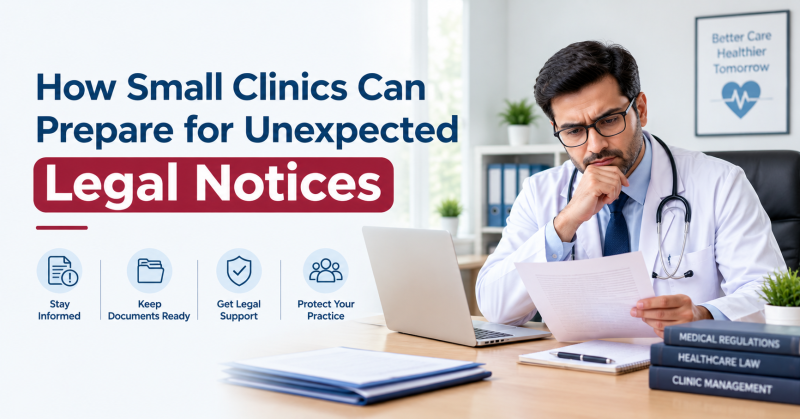
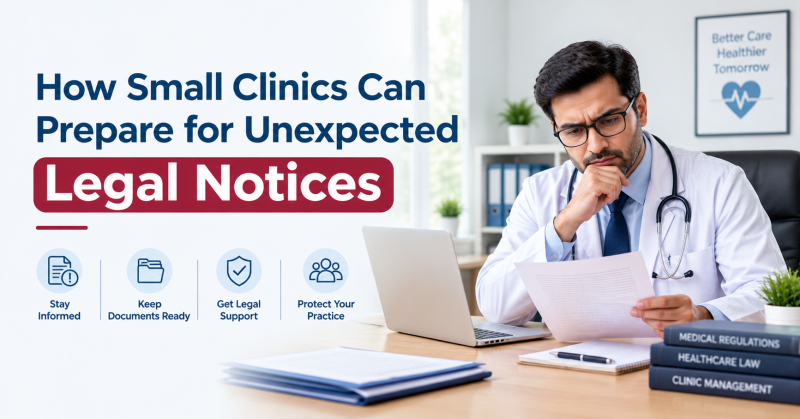
How Small Clinics Can Prepare for Unexpected Legal Notices
 Badal
A legal notice reaching a small clinic can be unsettling, but it is rarely the end of the matter. The best preparation is a calm routine: know who handles incoming papers, keep your records complete and retrievable, and seek qualified advice before you reply. Medico legal support in Delhi becomes far more useful when a clinic already has its documents and processes in order, rather than when everything has to be reconstructed under pressure. This article offers a practical medico legal guide in Delhi for clinic owners, solo practitioners and small teams who want to be ready before a notice arrives.
What a Legal Notice Usually Means for a Clinic
A legal notice is a formal written communication, often from a patient’s lawyer, setting out a grievance and asking for a response or remedy within a stated period. It may allege deficiency in service, negligence, overcharging, or a breach of confidentiality. It may also arrive from a regulator, an insurer or an employee.
A notice is an allegation, not a finding. It does not mean the claim is correct, and it does not mean you have done something wrong. However, ignoring it or replying carelessly can make a manageable situation harder.
Small clinics are often more exposed in practice because they have fewer administrative layers. The doctor may also be the receptionist, record keeper and billing contact.
Why Preparation Matters More Than Reaction
When a notice arrives, the first questions are usually factual. What was the patient told? What was consented to? What was written down, and when? A clinic that can answer these from its own records is in a better position to respond accurately.
Common problems seen in small practices include:
- Handwritten notes that are incomplete or hard to read
- Consent discussed verbally but never recorded
- Advice given over phone or WhatsApp with no note in the file
- Notices left unopened or sitting with front-desk staff
- Prompt, emotional replies sent without reviewing the records
Build a Notice-Ready Routine Before You Need One
Decide who receives and logs incoming papers
Tell your staff that any registered post, courier or legal-looking document must go straight to the doctor, unopened if possible. Note the date and time of receipt. Response deadlines are often counted from the date of receipt, so this detail matters.
Keep a simple incident and complaint log
Record patient complaints, even informal ones, with the date, a short factual summary and what was done. A complaint that was addressed well at the front desk is often the best protection against a later escalation.
Know your insurance position
If you hold professional indemnity cover, keep the policy document accessible and check its notice-reporting requirements. Many policies expect early intimation of a claim or potential claim. Read the terms of your own policy rather than assuming.
What to Document in Everyday Practice
Good documentation is the foundation of every medico-legal response. It should be contemporaneous, which means written at or close to the time of care, legible, and factual.
A practical checklist:
- Patient identification and contact details
- Presenting complaint, history and examination findings
- Diagnosis or working diagnosis, and the reasoning behind it
- Investigations advised, and whether the patient followed up
- Treatment options explained, including risks and alternatives
- Informed consent, recorded in a way suited to the procedure
- Prescriptions and instructions given
- Follow-up advice and any warning signs explained to the patient
- Referrals made and the reasons for them
Informed consent
Consent should reflect a real conversation, not just a signature. Note what was explained, in what language, and any questions the patient asked. For procedures with meaningful risk, a written consent form is generally good practice. Follow the requirements applicable to your specialty and the guidance of the relevant professional regulator.
Online and phone consultations
If you advise patients remotely, treat it as clinical care. Keep a record of the consultation, what was discussed, what was advised, and the limits of remote assessment. Where the patient was told to visit in person or seek emergency care, write that down. Check the current telemedicine guidance applicable to registered practitioners, as such rules can be updated.
What to Do on the Day a Notice Arrives
Follow these steps in order:
- Do not react immediately. Do not call or message the patient in anger or to negotiate.
- Read it fully. Note the allegations, the date, the sender and any deadline.
- Secure the records. Make a complete copy of the patient file, including notes, reports, consent forms, bills and any messages. Do not alter, add to or “tidy up” the original entries. Late additions to records can seriously damage credibility.
- Inform your insurer if your policy requires it.
- Write down your own account of events while memory is fresh, for your advisor’s use.
- Seek qualified guidance before sending any reply.
Common Mistakes to Avoid
- Replying without reviewing the full record
- Admitting or denying facts from memory alone
- Discussing the case on social media or in staff groups
- Asking staff to “correct” notes after the event
- Missing the response window because the notice was not escalated
- Assuming a notice can be ignored because the claim seems weak
When Professional Guidance Makes Sense
Consider seeking medico-legal advice if the notice alleges negligence or serious harm, mentions a complaint to a medical council or consumer forum, involves police, or concerns a procedure with complications. Early advice helps you understand what the notice is actually asking and how to respond in measured terms.
Medico legal help for medical professionals in Delhi is available from advisors who understand both clinical practice and the legal process. For a broader overview of common medico-legal concerns, Dr. Vimal Kant Goyal has published a medico-legal guide for doctors that may be a useful starting reference. Any advice should be tailored to your specific facts and the law in force at the time.
Conclusion
Preparing for a legal notice is mostly about habits: complete records, documented consent, a clear process for receiving papers, and a willingness to pause before responding. None of this guarantees any outcome, but it gives you a firm factual footing. If you are building these systems or facing a notice, timely medico legal support in Delhi can help you respond in a considered, professional way.
This article is for general information and is not legal advice. Laws, regulations and professional guidelines change; consult a qualified professional for your specific situation.
Frequently Asked Questions
1. Should I reply to a legal notice myself?
It is generally safer to take advice first. A reply becomes part of the record and may be relied on later, so wording and accuracy matter.
2. How long do I have to respond?
The notice usually states a period. Treat that as important, and confirm the position with a qualified advisor as soon as possible.
3. Can I contact the patient directly after receiving a notice?
This is risky without guidance. A well-meant call can be misinterpreted. Ask your advisor whether and how any communication should happen.
4. Are WhatsApp messages with patients part of the record?
They can be treated as evidence of communication. Keep them preserved, and where they contain clinical advice, record the substance in the patient file as well.
5. When should a clinic seek medico legal help for medical professionals in Delhi?
Whenever a notice alleges negligence, serious harm or regulatory complaint, or when you are unsure how to respond. Earlier is usually better than later.
Source:
Click for the: Full Story
You might like