Close Menu
 World
 Biography
 Health
 Education
 Business
 Lifestyle
 Sports
 Technology
 Animals
 History
 Food
 Religious
 Startups
 Movies
 Politics
 Fashion
 Covid
 Diet
 Fitness
 Marketing
 Travel
 Science
 Reviews
 Social media
 Stories
 Facts
 Art
 Entertainment
Deepak

Health
Why Does the Timing of Insemination Matter in an IUI Treatment Cycle?
 Deepak
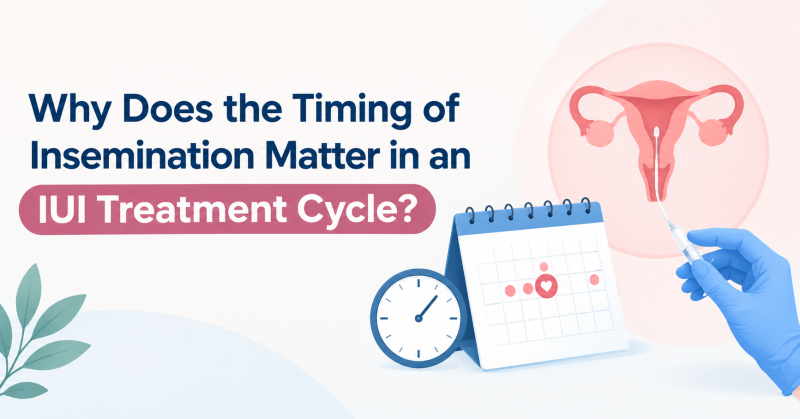
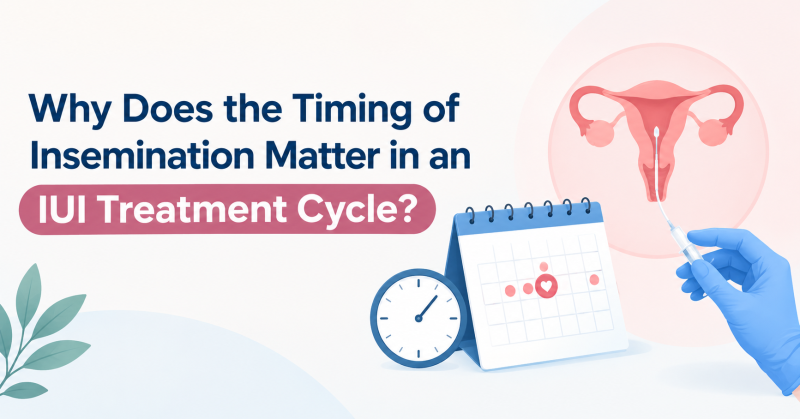
Couples beginning IUI often ask a practical question: “Why do we have to come in on a particular day, sometimes at short notice?” The answer lies in biology. In intrauterine insemination (IUI), timing is one of the most important parts of the cycle, and understanding why can make the process less stressful.
If you are considering IUI treatment in Delhi, this guide explains why timing matters, how it is decided and what you can do to prepare.
What Is IUI, in Brief?
IUI is a fertility treatment in which washed and prepared sperm are placed directly into the uterus using a thin, soft catheter. This happens around the time an egg is released, so that sperm are close to the egg when it becomes available.
The treatment itself is quick and usually painless. The real skill lies in choosing the right moment.
Why Timing Is So Important
The egg has a short window
After ovulation, an egg remains capable of being fertilised for only a limited time, generally about 12 to 24 hours. If insemination happens too early or too late, sperm and egg may not be present together at the right time.
Sperm survive longer, but not indefinitely
Sperm can survive in the female reproductive tract for a few days under favourable conditions. Prepared sperm used in IUI are often most effective when they are placed close to ovulation. Because the egg’s window is short, careful planning is needed.
Ovulation does not follow a fixed calendar
Many women assume ovulation occurs on day 14. In reality, it varies between women and even between cycles in the same woman. Stress, illness, hormonal conditions and PCOS can all shift ovulation. This is why a calendar alone is not reliable for IUI.
How Doctors Decide the Right Day
Rather than guessing, a fertility specialist uses several tools to track the cycle.
- Ultrasound follicle monitoring: Scans measure the size and number of developing follicles, which contain the eggs. A follicle of suitable size suggests ovulation is approaching.
- Endometrial thickness: The uterine lining is checked to see whether it is developing appropriately.
- Ovulation trigger injection: In some cycles, a trigger injection is given when follicles reach the right size. Insemination is then planned for a set interval afterwards, based on your doctor’s protocol.
- Hormone tests or ovulation kits: These may help in selected cases, particularly in natural or minimally stimulated cycles.
Your doctor combines these findings to choose the day, and sometimes the hour, for insemination.
Why Your Timing May Differ From Someone Else’s
Friends may tell you their IUI was done on day 12, while yours is planned for day 16. Both can be correct. Timing depends on:
- Your cycle length and ovulation pattern
- Whether the cycle is natural or stimulated with medicines
- How quickly your follicles grow
- The number of follicles developing
- Your doctor’s protocol
This is also why individualised monitoring matters. A fixed schedule applied to everyone cannot account for these differences.
What Can Go Wrong With Timing?
Even in well-monitored cycles, timing can be imperfect. Possible issues include:
- Ovulation occurring earlier than expected
- Follicles growing more slowly than predicted
- Unexpected changes in the number of mature follicles
- Delays in reaching the clinic on the scheduled day
Your specialist may adjust the plan, reschedule the procedure or, in some situations, advise cancelling a cycle if conditions are not suitable. This is a safety and quality decision, not a failure.
Practical Tips for Couples
- Keep scan appointments: Monitoring scans are what make accurate timing possible.
- Plan around the procedure day: Try to keep your schedule flexible during the monitoring phase.
- Follow medicine instructions carefully: Take trigger injections and tablets exactly as advised.
- Prepare the semen sample as instructed: Abstinence advice, collection method and arrival time all matter for sample quality.
- Ask questions: If you are unsure why a particular day was chosen, ask your doctor to explain.
Does Perfect Timing Guarantee Pregnancy?
No. Correct timing improves the chance that sperm and egg meet at the right moment, but it is only one factor. Age, ovarian response, tubal health, semen quality and the underlying cause of infertility also influence results. No clinic can promise pregnancy, and you should be cautious of anyone who does.
Choosing a Clinic for IUI
When couples look for the best IUI centre in Delhi, it helps to focus on practical features rather than labels. Look for a centre that:
- Assesses both partners before recommending IUI
- Uses ultrasound monitoring to plan each cycle individually
- Explains the reason for every timing decision
- Has a clear plan for what to do if the cycle needs adjustment
- Communicates honestly about realistic expectations
Similarly, many people searching for the best gynaecologist in Delhi value a doctor who takes time to explain the process, answers questions patiently and supports them emotionally through the two-week wait.
Dr. Poonam Goyal is a gynaecologist and fertility specialist in Delhi who works with couples considering IUI and other fertility treatments. Her approach focuses on careful evaluation, individualised cycle monitoring and clear communication at each step.
Final Thoughts
In IUI, timing is not a minor detail. It is the bridge between the medical preparation and the biological event of conception. Understanding why your doctor chooses a particular day can help you feel more informed and more confident about the process.
If you want consultation regarding IUI treatment, you can visit Dr Poonam Goyal at:
- C-3/63A, 64A, opp. Gokulpuri Police Station, Block C, Panchsheel Hospital, Yamuna Vihar, Shahdara, Delhi, 110053
- HOD IVF & Infertility, Max Superspeciality Hospital, Vaishali
Frequently Asked Questions
1. Why is timing so important in IUI?
An egg can be fertilised for only a short period after ovulation. Inseminating close to ovulation increases the chance that sperm and egg meet at the right time, although it cannot guarantee pregnancy.
2. How does a doctor decide the day of insemination?
Doctors usually combine ultrasound follicle monitoring, uterine lining assessment and, in some cases, a trigger injection or hormone tests. The plan is individualised for each cycle.
3. Can IUI be done on a fixed day of the cycle, like day 14?
Not reliably. Ovulation varies from woman to woman and from cycle to cycle, so monitoring is more dependable than relying on a calendar date.
4. What happens if I miss the insemination day?
Contact your clinic as soon as possible. Your doctor may adjust the plan if the timing is still suitable, or may advise rescheduling or cancelling the cycle.
5. Can I find an experienced IUI doctor in Delhi for personalised cycle monitoring?
Yes. Dr. Poonam Goyal consults at Panchsheel Hospital, Yamuna Vihar, and at Max Superspeciality Hospital, Vaishali, where IUI cycles are planned after evaluating both partners.
Source:
Click for the: Full Story
You might like