Close Menu
 World
World
 Biography
 Health
 Education
 Business
 Lifestyle
 Sports
 Technology
 Animals
 History
 Food
Food
 Religious
 Startups
 Movies
 Politics
 Fashion
 Covid
Covid
 Diet
Diet
 Fitness
 Marketing
 Travel
 Science
 Reviews
 Social media
 Stories
 Facts
Facts
 Art
Art
 Entertainment
Codezeros

Technology
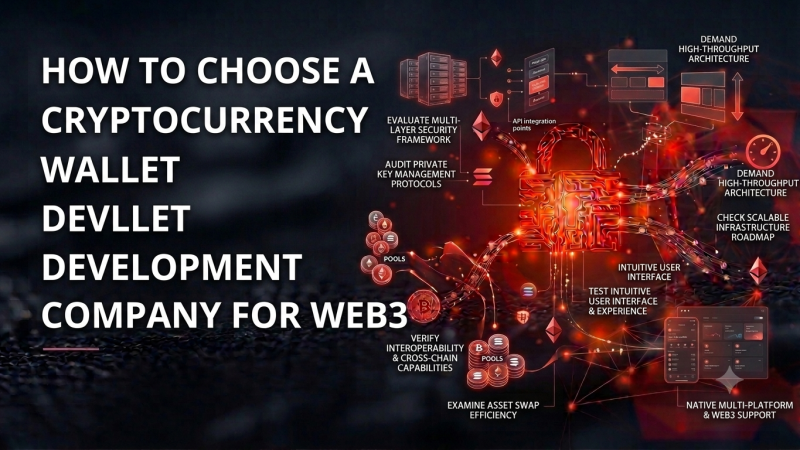
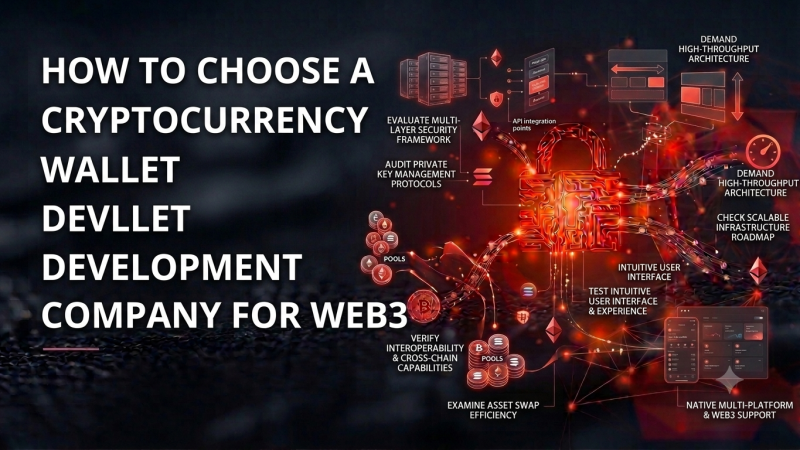
How to Choose a Cryptocurrency Wallet Development Company for Web3
 Codezeros
A crypto wallet is more than a digital interface for sending and receiving assets. For Web3 businesses, it can become the primary gateway to decentralized applications, DeFi protocols, NFTs, tokenized assets, and blockchain-based services. As the ecosystem becomes more multi-chain and enterprise-focused in 2026, selecting the right development partner requires careful technical and strategic evaluation.
The right Cryptocurrency Wallet Development Company should understand wallet architecture, blockchain integrations, security, user experience, compliance considerations, and long-term maintenance. Businesses should evaluate these capabilities against their specific product requirements rather than selecting a provider based only on features or development cost.
What Should You Look for in a Cryptocurrency Wallet Development Company?
A suitable development partner should demonstrate experience across blockchain infrastructure, wallet security, application development, integrations, and scalability. Before making a decision, businesses should evaluate the following factors.
1. Evaluate Blockchain and Wallet Development Expertise
The first consideration is technical expertise.
A development company should understand the different requirements of major blockchain ecosystems. Ethereum-compatible networks, Bitcoin, Solana, and other chains can use different transaction structures, address formats, token standards, and signing mechanisms.
Ask potential providers about:
- Blockchain networks they support
- Multi-chain architecture experience
- Token standards they integrate
- Smart contract connectivity
- Transaction-signing architecture
- Blockchain node and API integrations
For businesses targeting multiple ecosystems, multi-chain experience can be particularly important.
2. Examine Security and Key Management Practices
Security should be one of the highest-priority evaluation areas for any Wallet Development Company.
Wallet applications can manage sensitive authentication information and digital assets, so development teams need robust approaches to key generation, storage, encryption, transaction signing, and account recovery.
Important security capabilities may include:
- Multi-factor authentication
- Biometric authentication
- Encryption
- Secure key management
- Hardware wallet support
- Transaction confirmation controls
- Access management
- Security testing and audits
Ask prospective providers how security is incorporated throughout development rather than treated as a final testing stage.
3. Review Their Wallet Development Services
Not every business requires the same type of wallet. A startup may need a focused mobile wallet, while an enterprise could require multi-chain infrastructure with advanced administration and compliance capabilities.
Review whether the provider offers relevant Wallet Development Services, such as:
- Custodial wallet development
- Non-custodial wallet development
- Mobile wallet development
- Web wallet development
- Multi-chain wallets
- Enterprise wallets
- DeFi wallet integrations
- NFT wallet functionality
The development model should match the product's intended users, asset types, custody structure, and business model.
4. Assess Their Consulting and Architecture Capabilities
Technical implementation is only one part of a successful wallet project. Businesses may need assistance deciding which networks, custody model, infrastructure, and integrations fit their requirements.
A Wallet Consulting Service can help define the technical roadmap before development begins.
Consulting discussions should cover:
- Target users
- Supported blockchain networks
- Custody model
- Security architecture
- Required integrations
- Scalability expectations
- Compliance considerations
- Future expansion
A clearly defined architecture can reduce unnecessary development work later.
5. Check Experience With Web3 Integrations
Modern wallets often function as gateways to broader Web3 applications. Users may expect to connect with decentralized exchanges, NFT marketplaces, staking platforms, lending protocols, payment services, and dApps.
A development partner should therefore understand wallet-connectivity standards, smart contract interactions, transaction signing, token approvals, and decentralized application integration.
For businesses planning broader Wallet App Development solutions, integration experience can be just as important as the wallet interface itself.
6. Consider AI, Automation, and 2026 Technology Trends
AI is becoming increasingly relevant to blockchain applications. In 2026, wallet platforms can use automation and AI for functions such as transaction categorization, portfolio analysis, customer assistance, notifications, and anomaly detection.
Agentic AI can support defined multi-step workflows, such as organizing transaction information or assisting users with routine wallet operations.
However, financial applications require clear boundaries around autonomous actions. A wallet should not give an AI system unrestricted authority over user assets. Permissions, transaction confirmations, audit trails, and human oversight should remain part of the architecture where appropriate.
When evaluating providers, ask whether they can integrate AI without compromising the wallet's security model.
7. Evaluate Scalability and Enterprise Readiness
Enterprise adoption introduces additional requirements. Larger organizations may require APIs, role-based access, reporting, monitoring, governance controls, integration with internal systems, and stronger operational visibility.
A scalable wallet architecture should be capable of supporting additional users, assets, networks, and integrations without requiring a complete redesign.
Businesses should also ask about infrastructure monitoring, performance testing, disaster recovery, and post-launch support.
8. Compare Development Process and Ongoing Support
A reliable development process should provide clear stages from discovery through deployment and maintenance.
Ask potential providers how they handle:
- Requirement analysis
- Architecture planning
- UI and UX design
- Development
- Blockchain integration
- Security testing
- Quality assurance
- Deployment
- Maintenance and updates
Post-launch support is especially important because blockchain networks, APIs, security standards, and regulatory requirements can change over time.
A Practical Checklist for Choosing a Wallet Development Partner
Before making a final decision, businesses can compare potential providers using these questions:
- Do they support the required blockchain networks?
- Can they build the required custody model?
- How do they approach private-key security?
- Do they offer multi-chain development?
- Can they integrate DeFi, NFT, and dApp functionality?
- Do they provide architecture consulting?
- Can the platform scale for enterprise users?
- Do they support AI and automation where relevant?
- What testing and security processes do they follow?
- What post-launch services are available?
This checklist can help separate basic development capabilities from broader technical expertise.
FAQ’s
1. How do I choose a cryptocurrency wallet development company?
Evaluate blockchain expertise, security practices, wallet architecture capabilities, Web3 integrations, scalability, development methodology, AI capabilities, and post-launch support against your specific project requirements.
2. What wallet development services should a Web3 business consider?
Depending on the product, businesses may consider custodial or non-custodial wallets, mobile and web wallets, multi-chain support, DeFi integrations, NFT functionality, dApp connectivity, and enterprise wallet infrastructure.
3. Why is wallet security important?
Wallets can manage sensitive credentials and digital assets. Strong key management, encryption, authentication, transaction controls, testing, and monitoring can reduce security risks.
4. Is AI necessary for a modern crypto wallet?
AI is not necessary for every wallet. Its value depends on the product's objectives. Suitable applications can include analytics, transaction categorization, support, anomaly detection, and selected automation workflows.
Conclusion
Choosing a cryptocurrency wallet development company requires more than comparing feature lists or development estimates. Businesses should evaluate blockchain expertise, security architecture, Web3 integrations, consulting capabilities, scalability, AI readiness, and long-term support.
A structured evaluation can help organizations select a development approach that aligns with their users, supported assets, custody model, and future Web3 roadmap. Codezeros can be considered when assessing blockchain wallet infrastructure and related Web3 development requirements. For project discussions and technical requirements, contact us today.
Source:
Click for the: Full Story
You might like