Close Menu
 World
World
 Biography
 Health
 Education
 Business
 Lifestyle
 Sports
 Technology
 Animals
 History
 Food
Food
 Religious
 Startups
 Movies
 Politics
 Fashion
 Covid
Covid
 Diet
Diet
 Fitness
 Marketing
 Travel
 Science
 Reviews
 Social media
 Stories
 Facts
Facts
 Art
Art
 Entertainment
Yatin Samra

Technology
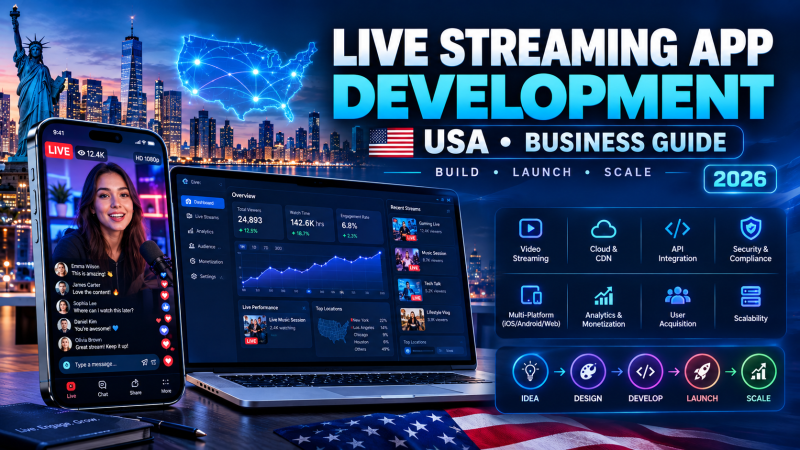
Live Streaming App Development in the USA: 15 Things to Know Before Building Your Platform in 2026
 Yatin Samra
The scope of live streaming has extended from entertainment to various other fields. Currently, companies employ live video streaming for gaming, sports, education, retail, events, social media communities, internal business communication, and creator-based content. Considering the consumption of live videos through smartphones, web browsers, internet-connected televisions, and more in the USA, companies can create unique live streaming platforms for their particular market segment.
On the other hand, developing a live streaming app involves many choices regarding technology, content, monetization, infrastructure, and user experience. Here are 15 points that businesses need to consider before development.
1. Define Your Platform's Unique Purpose
The first question is not which technology to use—it is what the platform will accomplish.
A live streaming application could be designed for:
- Sports broadcasting
- Gaming and esports
- Online education
- Virtual events
- Live commerce
- Entertainment
- Creator communities
- Corporate communication
A clear purpose helps determine the rest of the product strategy.
2. Identify the People Who Will Stream
Your platform's broadcasting model will affect its architecture.
You might allow:
- Professional creators
- Businesses
- Event organizers
- Educators
- Sports organizations
- Verified users
- General audiences
A platform that allows thousands of creators to broadcast will require different management and moderation capabilities than a platform where only an internal team streams content.
3. Understand the Viewer Journey
The viewer experience should be mapped before development begins.
A typical journey could be:
Discover → Select Stream → Watch → Interact → Follow → Subscribe → Return
Each stage can be optimized through search, recommendations, notifications, engagement tools, and personalized content.
4. Decide How Users Will Access the Platform
Audience expectations vary by device.
Depending on the target market, a business may need:
- iOS app
- Android app
- Web application
- Smart TV application
- Tablet support
- Connected-device compatibility
The initial launch does not necessarily need every platform. Businesses can prioritize based on audience research and gradually expand.
5. Select a Video Delivery Strategy
Video delivery is one of the most important technical decisions.
The streaming architecture may involve:
- Video ingestion
- Encoding
- Transcoding
- Packaging
- Content delivery
- Playback
- Monitoring
The selected approach should account for video resolution, expected traffic, latency, content type, and geographic audience.
6. Determine the Required Latency
Not every live stream needs the same latency.
Standard live broadcasts can tolerate some delay, while interactive applications may require significantly faster communication.
Low-latency streaming can be particularly useful for:
- Live auctions
- Gaming
- Interactive classes
- Live shopping
- Sports interaction
- Real-time audience participation
The required latency should be established before choosing the streaming technology.
7. Build for Unpredictable Traffic
Live events can create sudden traffic spikes.
A popular broadcast may attract significantly more viewers than average, so the infrastructure should be designed to accommodate changing demand.
Scalability can involve:
- Cloud infrastructure
- Auto-scaling
- Load balancing
- CDN distribution
- Distributed storage
- Performance monitoring
This is especially important when targeting large audiences across the USA.
8. Make Content Discovery Simple
A platform can have excellent streaming technology but still struggle if users cannot find interesting content.
Discovery features can include:
- Search
- Categories
- Trending streams
- Recommended broadcasts
- Followed creators
- Personalized feeds
- Scheduled events
- Recently viewed streams
A well-designed discovery system can help users find relevant broadcasts quickly.
9. Give Viewers Reasons to Participate
Interactive features can increase audience involvement.
Depending on the platform, users may be able to:
- Comment
- Chat
- React
- Participate in polls
- Ask questions
- Share streams
- Send virtual gifts
- Join broadcasts
These features can also contribute to community development and monetization.
10. Provide Professional Creator Tools
Creators need tools to manage their broadcasts and audience.
A creator dashboard can include:
- Stream scheduling
- Broadcast settings
- Viewer statistics
- Follower management
- Subscriber information
- Revenue tracking
- Content management
- Moderation controls
For creator-focused businesses, these tools can become a core part of the platform's value proposition.
11. Choose a Revenue Model
Live streaming businesses can use different monetization approaches.
Advertising
Generate revenue through video advertisements, sponsored content, or branded streams.
Subscriptions
Offer recurring access to premium content or creator channels.
Pay-Per-View
Charge users for individual events or broadcasts.
Virtual Goods
Allow audiences to purchase digital items or gifts for creators.
Premium Plans
Provide additional features or content through paid membership tiers.
The model should align with audience expectations and content economics.
12. Establish Content Safety Measures
Real-time content presents moderation challenges because harmful or inappropriate material can appear immediately.
A platform may need:
- User reporting
- Chat moderation
- Automated content analysis
- Keyword filtering
- Account restrictions
- Moderator permissions
- Stream termination tools
- Incident tracking
The level of moderation required depends on the platform's audience and content model.
13. Protect Accounts and Financial Information
Security is critical when the platform handles personal information, creator revenue, or subscription payments.
Security planning may include:
- Multi-factor authentication
- Encryption
- Secure APIs
- Access controls
- Payment security
- Session management
- Activity monitoring
- Security testing
A layered approach can help protect both users and platform operations.
14. Measure Platform Performance
Analytics should be built into the platform rather than added only after launch.
Important metrics can include:
- Concurrent viewers
- Watch time
- Average session duration
- Viewer retention
- Engagement
- Stream quality
- Subscriber growth
- Creator activity
- Revenue
These metrics can help identify both technical and business opportunities.
15. Plan for Long-Term Expansion
A live streaming platform should be designed with future requirements in mind.
Potential future additions include:
- More streaming formats
- International content delivery
- Additional monetization options
- AI-powered recommendations
- Automated moderation
- Advanced creator analytics
- Smart TV applications
- Interactive commerce
- Multi-host broadcasting
A modular architecture can make it easier to introduce new capabilities without rebuilding the entire system.
Live Streaming App Development Cost in the USA
The cost of developing a live streaming application varies according to its complexity, video infrastructure, number of platforms, and business requirements.
Project TypeApproximate CostBasic streaming MVP$40,000–$80,000Mid-level streaming app$80,000–$160,000Advanced streaming platform$160,000–$300,000+Enterprise-level platform$300,000–$500,000+
These figures are approximate planning ranges, not fixed development quotations.
Factors That Affect the Cost
Streaming Infrastructure
Advanced video processing, transcoding, CDN delivery, and low-latency requirements can increase development and infrastructure expenses.
Number of Platforms
Supporting mobile, web, and connected-TV experiences expands the development scope.
Audience Scale
A platform designed for large concurrent audiences requires more robust infrastructure and monitoring.
Interactive Functionality
Real-time chat, co-hosting, reactions, polls, and other interactive capabilities increase technical complexity.
Monetization
Subscriptions, advertising, virtual goods, and pay-per-view systems require additional backend and payment functionality.
Security and Moderation
Advanced account protection, fraud controls, and content moderation can add development and operational requirements.
Recommended Development Process
A structured process can help businesses manage both technical complexity and investment.
Step 1: Market Research
Analyze your audience, competitors, content category, and business opportunity.
Step 2: Business Model
Choose how the platform will generate revenue and determine the role of creators, viewers, and advertisers.
Step 3: MVP Definition
Prioritize the features required for the first market-ready version.
Step 4: Technical Planning
Define the video pipeline, backend, database, APIs, cloud infrastructure, CDN, and security architecture.
Step 5: UX/UI Design
Create the viewer, creator, administrator, and moderation experiences.
Step 6: Development
Build the core application and integrate streaming, payments, analytics, and other required services.
Step 7: Testing
Test playback, latency, network conditions, security, device compatibility, scalability, and real-time functionality.
Step 8: Launch and Optimization
Deploy the platform, monitor performance, collect user feedback, and improve the product through regular releases.
Why a Focused MVP Can Be a Practical Starting Point
A streaming business does not necessarily need to launch with every advanced capability.
An MVP could initially focus on:
- User registration
- Stream creation
- Live video playback
- Basic discovery
- Creator profiles
- Live chat
- Notifications
- Basic analytics
- Initial monetization
Once the platform gains users and generates meaningful usage data, more sophisticated functionality can be introduced based on actual demand.
Final Thoughts
USA-based live streaming app development consists of the use of video technology, product strategy, audience engagement, security, monetization, and scalable infrastructure. Companies that find their niche, figure out their audience, pick up the right streaming technology, and consider the important features may have a better ground for further development.
It is important not only to develop yet another video application but also to provide users with something really interesting so that they would come back for more while giving creators everything they need for content creation and monetization.
For more details on this platform development, see the link and watch the video.
Source:
Click for the: Full Story
You might like