Close Menu
 World
World
 Biography
 Health
 Education
 Business
 Lifestyle
 Sports
 Technology
 Animals
 History
 Food
Food
 Religious
 Startups
 Movies
 Politics
 Fashion
 Covid
Covid
 Diet
Diet
 Fitness
 Marketing
 Travel
 Science
 Reviews
 Social media
 Stories
 Facts
Facts
 Art
Art
 Entertainment
Badal

Health
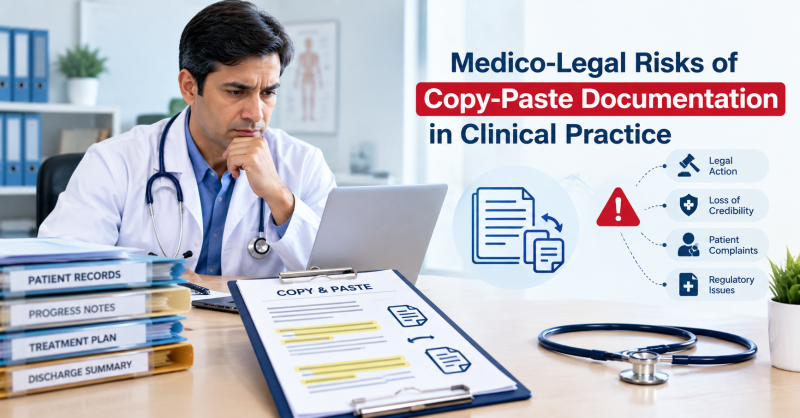
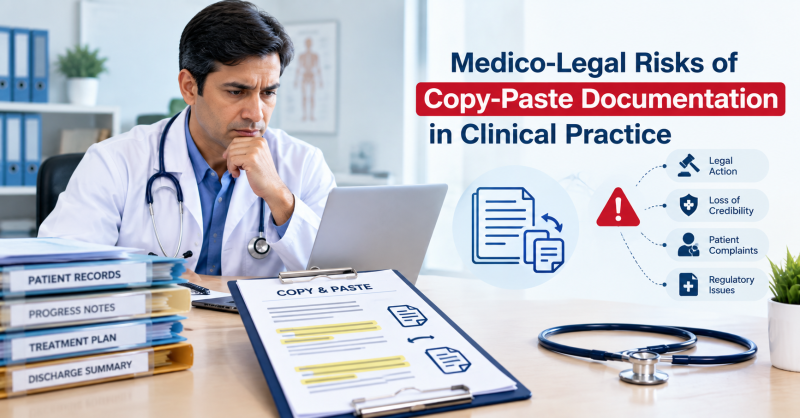
Medico-Legal Risks of Copy-Paste Documentation in Clinical Practice
 Badal
Badal
Copy-pasting previous notes into a new patient record is one of the most common shortcuts in busy clinical practice. It saves time, especially during repeat consultations or ward rounds with multiple patients. But when a documentation error is later found in a medico-legal dispute, copy-paste entries are often the first thing scrutinized. Many doctors only realize the risks of this habit after consulting the Best Medicolegal consultant in Delhi following a patient complaint or legal notice.
This article looks at why copy-paste documentation creates medico-legal exposure, what mistakes to avoid, and how doctors can protect themselves through better recordkeeping habits.
What Is Copy-Paste Documentation, and Why Does It Matter?
Copy-paste (or "cloning") documentation happens when a doctor reuses text from a previous entry — history, examination findings, or treatment plan — into a new note, often with only minor edits. It is common in electronic health records where templates make this easy.
The problem is not the act of reusing information itself. The problem arises when outdated, inaccurate, or irrelevant details carry forward unnoticed. In a medico-legal review, this can suggest that the patient was not properly reassessed at that visit, even if they actually were. Since medical records are treated as the primary evidence of what happened during treatment, any inconsistency between the record and actual events can weaken a doctor's position in a dispute.
Who Is Affected by This Practice?
Copy-paste documentation risk extends beyond the individual doctor:
- Treating doctors, who may unknowingly certify information they did not personally verify at that visit
- Junior doctors and residents, who often inherit templated formats from senior colleagues
- Hospitals and clinics, which may face institutional liability if cloned records become a systemic issue
- Patients, whose actual clinical status may be misrepresented if records don't reflect real-time findings
In multi-doctor settings, this risk compounds — if one doctor's outdated note is copied forward by another, the error multiplies across the chart.
Common Mistakes Doctors Should Avoid
Several patterns increase medico-legal exposure when copy-paste documentation is used carelessly:
- Carrying forward resolved symptoms as if they are still active
- Repeating an old examination finding without re-examining the patient
- Duplicating vital signs from a previous visit instead of recording current ones
- Leaving old medication lists unchanged after a prescription has been modified
- Copying assessment and plan sections without adjusting them to the day's actual clinical reasoning
- Failing to update dates or visit-specific details, creating confusion about when information was actually recorded
Individually, these may seem like minor oversights. But in a formal review of clinical documentation, they can create the impression that patient assessment was superficial or inconsistent with the reported diagnosis.
Clinical Documentation That Should Reflect Each Visit
To reduce risk, certain elements of the medical record should always be updated at every encounter, regardless of templates used:
- Current symptoms and their progression since the last visit
- Vital signs and examination findings specific to that day
- Any new complaints raised by the patient
- Changes made to medication or treatment plans, with reasoning
- Follow-up instructions relevant to the current status
- Date, time, and identification of the examining doctor
Templates can still be used efficiently, as long as the doctor actively reviews and edits each section rather than accepting default text.
Informed Consent and Copy-Paste Risk
Copy-paste errors can also affect informed consent documentation. If a consent note is duplicated from an earlier procedure without reflecting the specific risks discussed for the current one, it may later appear that the patient was not adequately informed about the actual procedure performed. This is a frequent concern raised by a Medico legal consultant in Delhi reviewing consent-related complaints, since consent documentation is expected to match the exact clinical context of each intervention, not a generic template.
Step-by-Step Preventive Actions for Doctors
Practical habits that reduce copy-paste-related risk include:
- Re-examine before you re-document — never copy findings without confirming them at the current visit
- Use templates as a starting structure, not a final note — edit every section actively
- Highlight changes clearly, especially in medication or treatment plans
- Avoid copying assessment and plan sections verbatim across visits
- Set up periodic chart audits within the department to catch repeated cloning patterns
- Train new doctors specifically on EHR documentation habits, not just clinical skills
These steps align with basic principles of clinical governance and support better patient safety, since accurate records directly influence ongoing treatment decisions made by other doctors.
When Should Doctors Seek Medico-Legal Guidance?
Not every documentation shortcut leads to a legal issue, but certain situations call for early professional review:
- A patient complaint specifically challenges the accuracy of clinical notes
- A legal notice requests copies of medical records for a particular admission
- Internal audits repeatedly identify cloned or duplicated entries
- A poor outcome is linked to a documented finding that appears inconsistent with actual events
In these situations, doctors often benefit from speaking to a Medico legal expert in Delhi who can review the documentation objectively and advise on corrective steps. Resources such as this medico-legal guide can also help doctors understand what documentation standards are generally expected in clinical practice.
A Practical Checklist to Reduce Copy-Paste Risk
- Symptoms and history updated for the current visit
- Vital signs and examination findings freshly recorded
- Medication changes clearly documented with reasoning
- Consent notes specific to the current procedure
- Assessment and plan reflect today's clinical reasoning
- Date, time, and doctor identification confirmed
- Template sections reviewed, not just accepted by default
Conclusion
Copy-paste documentation is a convenience that can quietly undermine the accuracy of medical records if left unchecked. Since these records often become the primary account of clinical decision-making in a medico-legal dispute, doctors benefit from treating every entry as a fresh, verified account of that specific visit. For doctors looking to strengthen their documentation practices further, consulting the Best Medicolegal consultant in Delhi can offer practical, practice-specific guidance. Dr. Vimal Kant Goyal's work in this area reflects a broader focus on building documentation habits that support both patient safety and professional accountability in everyday clinical practice.
FAQs
1. Is using templates in electronic health records inherently risky?
No. Templates are useful for efficiency, but the risk arises when content is not actively reviewed and updated to reflect the current visit.
2. Can copy-paste documentation alone lead to a negligence claim?
Not on its own. However, if cloned records misrepresent what actually happened during treatment, they can weaken a doctor's ability to demonstrate proper assessment during a dispute.
3. How can hospitals reduce copy-paste documentation across departments?
Regular chart audits, EHR system alerts for duplicated text, and structured training for doctors on documentation standards can help reduce this practice significantly.
4. When should a doctor consult a Medico legal consultant in Delhi about documentation habits?
It is advisable when patient complaints question the accuracy of records, when legal notices request specific documentation, or when reviewing department-wide charting practices.
5. Does correcting a documentation error after the fact help in a dispute?
Any correction should be made transparently, with a clear timestamp and explanation, rather than altering the original entry. Retrospective changes without proper labeling can raise further concerns during review.
Source:
Click for the: Full Story
You might like