Close Menu
 World
World
 Biography
 Health
 Education
 Business
 Lifestyle
 Sports
 Technology
 Animals
 History
 Food
Food
 Religious
 Startups
 Movies
 Politics
 Fashion
 Covid
Covid
 Diet
Diet
 Fitness
 Marketing
 Travel
 Science
 Reviews
 Social media
 Stories
 Facts
Facts
 Art
Art
 Entertainment
Deepak

Health
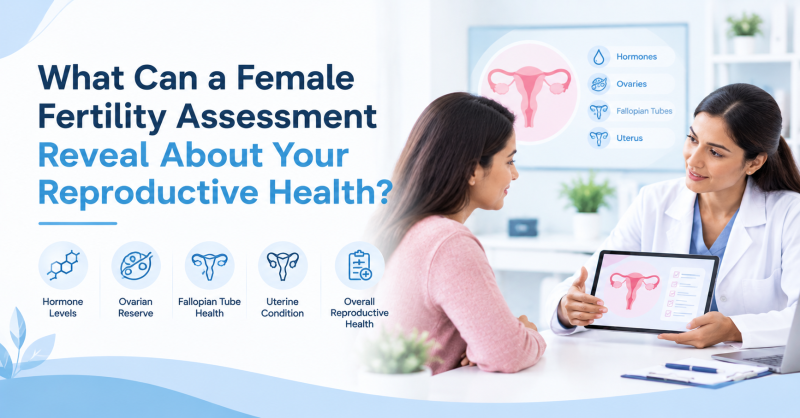
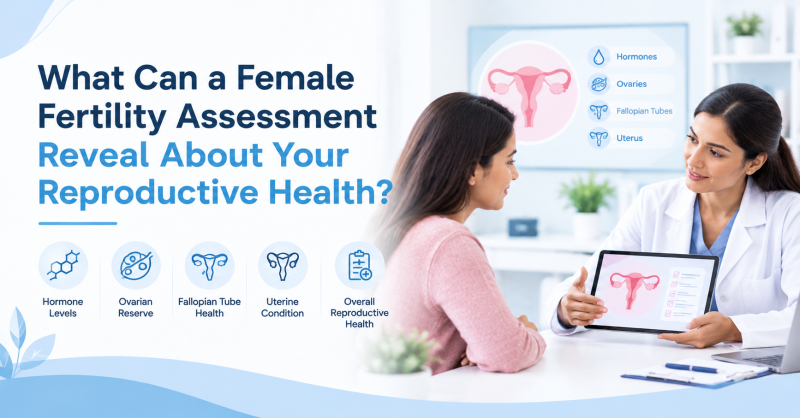
What Can a Female Fertility Assessment Reveal About Your Reproductive Health?
 Deepak
For many women, the idea of a fertility assessment only comes up after months of trying to conceive without success. However, a fertility evaluation can offer valuable insight into reproductive health at any stage — whether you're actively trying to conceive, planning for the future, or simply experiencing irregular cycles or other symptoms.
Understanding what this assessment involves, and what it can reveal, helps women approach the process with more confidence and less uncertainty. As specialists in female fertility in Delhi, we often guide patients through this evaluation as a way to better understand their reproductive health, not just to diagnose infertility.
Why a Fertility Assessment Matters
A fertility assessment isn't only for women who are struggling to conceive. It can also help:
- Identify underlying conditions that may affect fertility later
- Provide a clearer picture of ovarian reserve and hormonal balance
- Detect structural issues that may otherwise go unnoticed
- Guide family planning decisions, including fertility preservation
- Offer reassurance when results fall within a healthy range
This makes it a useful tool not just for diagnosis, but for proactive reproductive health awareness.
What Does a Female Fertility Assessment Include?
1. Detailed Medical and Menstrual HistoryThe evaluation typically begins with a discussion covering:
- Menstrual cycle regularity, length, and flow
- Any history of painful periods or pelvic pain
- Previous pregnancies, miscarriages, or gynecological surgeries
- Existing medical conditions such as thyroid disorders or diabetes
- Family history of fertility issues or early menopause
- Lifestyle factors, including weight, stress, and smoking
This history often provides important early clues about potential fertility factors.
2. Hormonal Blood TestsHormone levels play a central role in ovulation and reproductive function. Common tests include:
- AMH (Anti-Müllerian Hormone) – an indicator of ovarian reserve
- FSH and LH – hormones that regulate the menstrual cycle and ovulation
- Thyroid function tests – since thyroid imbalances can affect fertility
- Prolactin levels – as elevated levels can interfere with ovulation
A pelvic or transvaginal ultrasound helps assess:
- Antral follicle count, which provides additional insight into ovarian reserve
- The structure and health of the uterus
- The presence of fibroids, cysts, or other abnormalities
- Signs of conditions such as polycystic ovaries
If tubal blockage is suspected, tests such as a hysterosalpingography (HSG) or sonohysterography may be recommended to check whether the fallopian tubes are open and functioning normally.
5. Additional or Specialized TestingDepending on initial findings, further evaluation may include:
- Hysteroscopy, to examine the inside of the uterus more closely
- Genetic testing, in specific cases
- Testing for infections that may affect fertility
Not every woman requires all of these tests — the specific assessment is tailored based on age, symptoms, and medical history.
What Can the Results Reveal?
A female fertility assessment can provide insight into several important aspects of reproductive health, including:
- Ovarian reserve and how it may relate to your age and future fertility
- Whether ovulation is occurring regularly
- The presence of conditions such as PCOS, endometriosis, or fibroids
- Structural issues affecting the uterus or fallopian tubes
- Hormonal imbalances that may be contributing to irregular cycles
In some cases, results fall within a healthy, expected range, offering reassurance. In others, identifying a specific issue allows for a targeted treatment plan, whether through lifestyle changes, medication, minor procedures, or assisted reproductive techniques such as IUI or IVF.
When Should You Consider a Fertility Assessment?
A fertility evaluation may be worth considering if:
- You've been trying to conceive for 12 months (or 6 months if you're over 35) without success
- You have irregular, painful, or absent menstrual cycles
- You have a known history of PCOS, endometriosis, or pelvic infections
- You've experienced recurrent miscarriages
- You're planning to delay pregnancy and want to understand your current fertility status
- You have a family history of early menopause or fertility issues
Early assessment can help identify treatable conditions sooner and support more informed family planning decisions.
Why a Comprehensive Approach Matters
Fertility is influenced by multiple interconnected factors, which is why a comprehensive assessment — rather than a single test — provides the most accurate picture. It's also important that this evaluation is conducted alongside an assessment of the male partner when a couple is trying to conceive together, since fertility is a shared factor.
This is one of the reasons patients often look for the best obstetrics and gynecology in Delhi that also offers dedicated fertility evaluation services, allowing both reproductive health and fertility-specific concerns to be addressed under one roof.
Taking the Next Step
Whether you're facing difficulty conceiving, experiencing irregular cycles, or simply want to understand your reproductive health better, a fertility assessment can offer valuable clarity. Consulting a specialist in female fertility in Delhi allows you to get a complete picture based on your individual history, symptoms, and test results, rather than assumptions.
Dr. Poonam Goyal works with patients to conduct thorough fertility assessments and explain the findings clearly, helping women make informed decisions about their reproductive health and family planning, whether or not they are currently trying to conceive.
FAQs
1. Do I need a fertility assessment even if I'm not trying to conceive right now?
Yes, it can still be useful. A fertility assessment can help you understand your ovarian reserve and overall reproductive health, which can inform future family planning decisions, including fertility preservation if needed.
2. What is the most common first test in a female fertility assessment?
Hormonal blood tests, particularly AMH, along with a pelvic ultrasound, are typically among the first tests used to assess ovarian reserve and reproductive health.
3. Can irregular periods indicate a fertility issue?
Irregular periods can sometimes indicate ovulation problems or underlying conditions such as PCOS or thyroid imbalances, which is why they're an important part of the fertility history discussion.
4. If my fertility assessment results are abnormal, does that mean I can't conceive naturally?
Not necessarily. Many conditions identified through a fertility assessment can be managed with lifestyle changes, medication, or other treatments. A specialist can guide you on the most appropriate next steps based on your specific results.
5. Should my partner also be evaluated at the same time?
Yes, in most cases. Since fertility involves both partners, evaluating both together offers a more complete and accurate picture, helping guide the right course of action for the couple.
Source:
Click for the: Full Story
You might like