Close Menu
 World
World
 Biography
 Health
 Education
 Business
 Lifestyle
 Sports
 Technology
 Animals
 History
 Food
Food
 Religious
 Startups
 Movies
 Politics
 Fashion
 Covid
Covid
 Diet
Diet
 Fitness
 Marketing
 Travel
 Science
 Reviews
 Social media
 Stories
 Facts
Facts
 Art
Art
 Entertainment
Deliverable Services

Technology
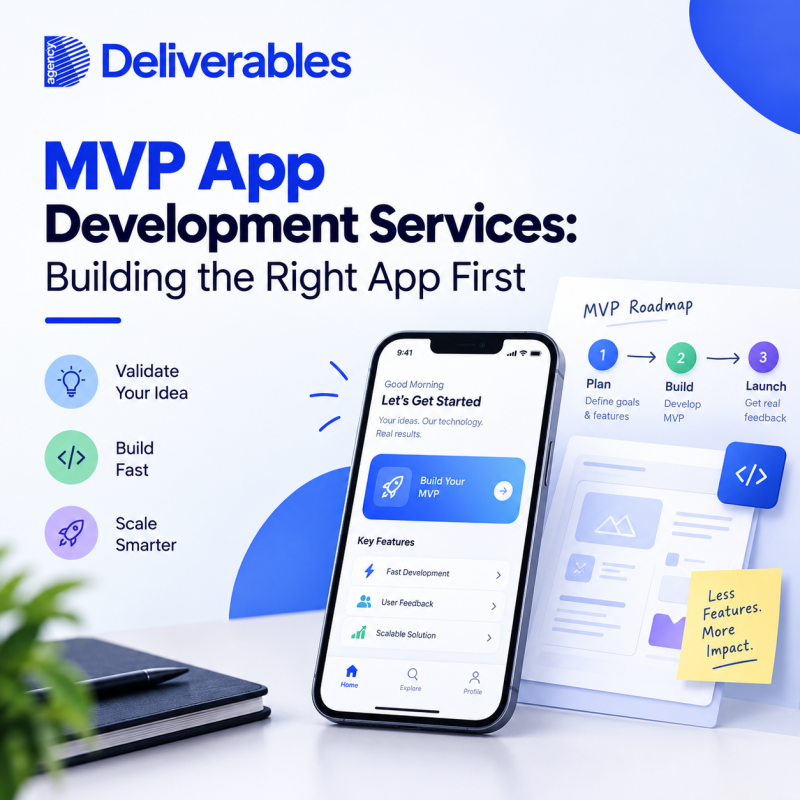
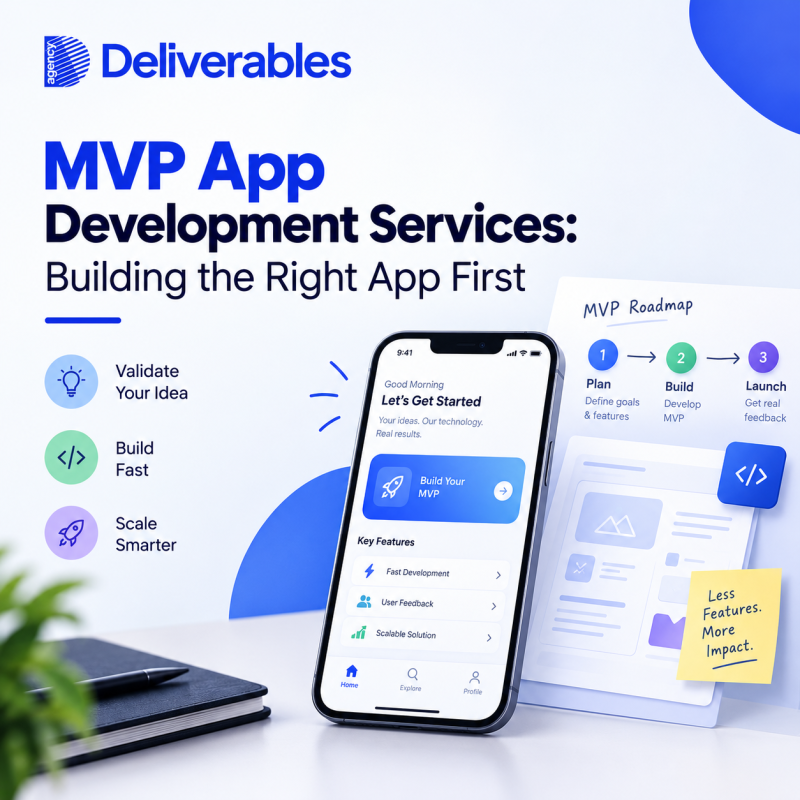
MVP App Development Services: Building the Right App First
 Deliverable Services
Building a mobile app is a major investment for any startup or business. The challenge is that a good app is not created by adding as many features as possible. It starts with understanding what users actually need and building those functions properly. This is where MVP App Development Services can help businesses turn an app idea into a practical first product without trying to build the entire vision at once.
An MVP, or Minimum Viable Product, is the first working version of an app that focuses on its most important purpose. It gives businesses a way to introduce their idea to users, understand real feedback, and improve the product over time. Instead of spending months developing features that may not be used, companies can focus on the core experience and launch with a clear objective.
For startups, entrepreneurs, and established businesses exploring a new digital product, this approach can make app development more focused and easier to manage.
What Is an MVP App?
An MVP app is a functional version of a mobile application that includes the essential features needed to solve a particular user problem.
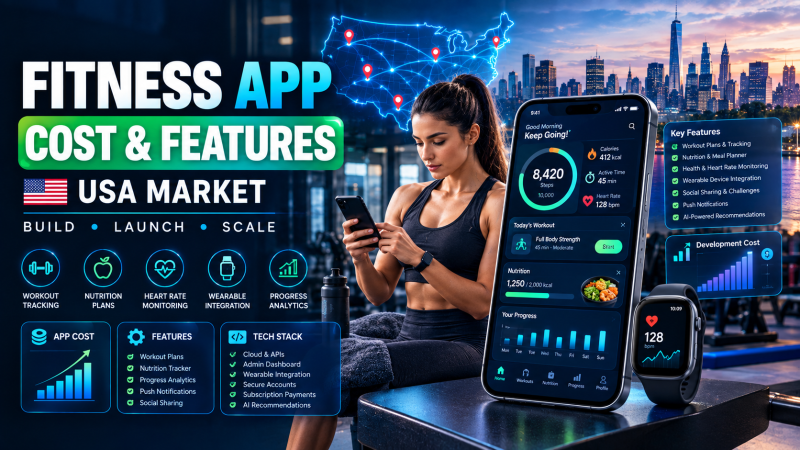
Consider a business planning to launch a fitness application. The final product may eventually include workout plans, nutrition tracking, wearable integration, social features, personal coaching, subscriptions, progress reports, and AI-based recommendations.
Building everything before testing the idea could take a significant amount of time and money.
An MVP could begin with user registration, workout plans, exercise information, and basic progress tracking. These features are enough to test whether users find the core concept useful.
Once the app reaches real users, the business can learn what works and what needs improvement. Additional features can then be introduced based on actual requirements.
This makes an MVP more than a smaller app. It is a practical way to learn before making larger development decisions.
Why Businesses Use MVP App Development Services
Developing an app without validating the idea can create unnecessary risk. Businesses may invest heavily in features that customers do not use or solve a problem that is not as important as expected.
Professional MVP App Development Services provide a structured approach to reduce this uncertainty.
The development process starts by understanding the product idea, target audience, business objective, and core user problem. From there, the team can identify the features required for the first version.
This approach can help businesses:
- Test an app idea with real users
- Focus development on essential features
- Launch an initial product sooner
- Collect practical customer feedback
- Reduce unnecessary development work
- Identify opportunities for improvement
- Plan future features more effectively
The goal is not simply to build an app quickly. The goal is to build the right first version.
Start With the User Problem
One of the most important parts of MVP development is understanding the problem the app is supposed to solve.
Businesses often begin with a feature list. However, features should come after the problem has been clearly defined.
For example, an online grocery app may need product browsing, search, cart management, payments, and order tracking for its first version. A social community, advanced recommendation engine, loyalty program, and other functions may come later.
The first question should therefore be:
What is the main reason a user would download and use this app?
Once that answer is clear, the development team can decide which features directly support that purpose.
This simple change in thinking can prevent an MVP from becoming overloaded with unnecessary functionality.
Choosing the Right MVP Features
Feature selection can determine whether an MVP remains focused or becomes a full-scale application before it even launches.
A useful way to approach feature planning is to divide requirements into three groups: essential features, useful future features, and optional features.
Essential features are needed for the main user journey. Without them, the app cannot deliver its basic value.
Future features may improve the experience but are not necessary for the initial launch.
Optional features can be considered after the business has stronger evidence about what users want.
For example, an MVP for a service booking app may include:
- Account registration
- Service listings
- Search or category browsing
- Booking
- Payment
- Booking status
- Basic notifications
Advanced analytics, loyalty programs, referral systems, and personalised recommendations can be added later if they support the product's growth.
Good MVP planning is therefore about prioritisation, not simply removing features.
The MVP App Development Process
A clear development process helps keep the first release focused.
Product Discovery
The first stage is understanding the business idea and target users. The team identifies the main problem, expected users, business goals, and key user journeys.
Feature Planning
Next, the features are prioritised. The development scope is created around the functions required for the first useful version of the app.
UI/UX Design
The app interface is designed around usability. Users should be able to understand the main functions without unnecessary complexity.
Wireframes and prototypes can be used to review the experience before development begins. This can help identify design problems early.
App Development
Once the design and scope are clear, developers build the application. Depending on the project, this may involve native Android or iOS development, cross-platform technologies, backend systems, APIs, databases, cloud services, and third-party integrations.
Testing
Testing is performed to identify functional issues, usability problems, performance concerns, and other defects.
A first version does not need every possible feature, but the features it does provide should work reliably.
Launch
After testing, the MVP can be released to a selected audience or launched publicly depending on the business strategy.
The launch provides an opportunity to observe real users and collect feedback.
Continuous Improvement
MVP development does not stop after launch. User feedback and product data can guide the next development cycle.
This creates a continuous process of building, learning, and improving.
Why User Feedback Matters After Launch
An MVP becomes valuable when businesses use the launch to learn.
Users may interact with the app differently from what the original product plan expected. Some features may receive strong engagement, while others may receive little attention.
For example, a business may believe that users need five different dashboard options. After launch, users may primarily use one simple dashboard.
That information can influence future development.
Feedback can come from app reviews, customer support, surveys, analytics, interviews, and direct communication. Businesses can use this information to improve navigation, remove unnecessary steps, introduce useful features, or change parts of the product strategy.
The result is a development process based more on real user behaviour and less on assumptions.
MVP Does Not Mean Low Quality
There is a common misunderstanding that an MVP should be a basic or poorly designed app.
That is not the purpose of an MVP.
A focused MVP can have a clean interface, reliable performance, secure data handling, and a professional user experience. What makes it an MVP is the limited and prioritised scope, not poor quality.
Users should be able to complete the main task without confusion.
For this reason, businesses should consider design, testing, security, performance, and technical architecture even when developing a first version.
A well-planned technical foundation can also make future updates easier.
Native or Cross-Platform App Development?
Technology selection depends on the requirements of the product.
Native development can be useful when an app requires platform-specific functionality, advanced performance, or deep integration with device capabilities.
Cross-platform development can be useful when a business wants to support multiple platforms while sharing a significant part of the development code.
There is no single technology that is correct for every MVP. The choice should depend on the app's features, expected users, performance requirements, budget, timeline, and future roadmap.
A professional development team should evaluate these factors before recommending a technology stack.
How Deliverables Agency Supports MVP App Development
Deliverables Agency helps businesses transform product ideas into practical digital solutions. Its development approach can cover key stages such as product planning, UI/UX design, app development, testing, deployment, and ongoing improvements.
The focus is on understanding what the product needs before development starts. This allows the first version to remain aligned with the business objective rather than becoming a collection of unrelated features.
For startups, this approach can be particularly useful when resources are limited and the product needs to reach users without unnecessary development work.
As the product gains feedback, businesses can continue improving the app with new features and enhancements.
When Should You Consider an MVP?
MVP development can be useful when a business has a new app concept that needs market validation.
It may be a suitable approach when:
- The product idea has not been tested with users
- The business wants to launch an initial version
- The feature list is becoming too large
- The market response is uncertain
- The business wants to gather early feedback
- Future development will depend on user behaviour
- The initial development budget needs careful management
However, every product is different. Applications involving complex infrastructure, sensitive information, or strict regulatory requirements may need additional planning before launch.
The MVP strategy should always be adapted to the specific product.
Building the Right App Before Building the Bigger App
The purpose of an MVP is not to create the smallest possible application. It is to create the most useful first version of the product.
A focused app gives businesses an opportunity to understand users, test assumptions, identify problems, and make better decisions about future development.
With the right MVP App Development Services, businesses can move from an early concept to a working application through a structured process that includes planning, design, development, testing, launch, and improvement.
For startups and businesses with new app ideas, Deliverables Agency can support the journey from product concept to a functional MVP designed around real user needs. Starting with the right features and a clear purpose can create a stronger foundation for future product growth.
Final Thoughts
MVP App Development Services help businesses turn app ideas into focused, usable products without building everything at once. By starting with essential features, testing the concept with real users, and improving the app through feedback, businesses can make smarter development decisions. With Deliverables Agency, businesses can move from idea and planning to design, development, testing, and launch while keeping future growth in mind.
Source:
Click for the: Full Story
You might like