Close Menu
 World
World
 Biography
 Health
 Education
 Business
 Lifestyle
 Sports
 Technology
 Animals
 History
 Food
Food
 Religious
 Startups
 Movies
 Politics
 Fashion
 Covid
Covid
 Diet
Diet
 Fitness
 Marketing
 Travel
 Science
 Reviews
 Social media
 Stories
 Facts
Facts
 Art
Art
 Entertainment
Sakshi Padiyar

Education
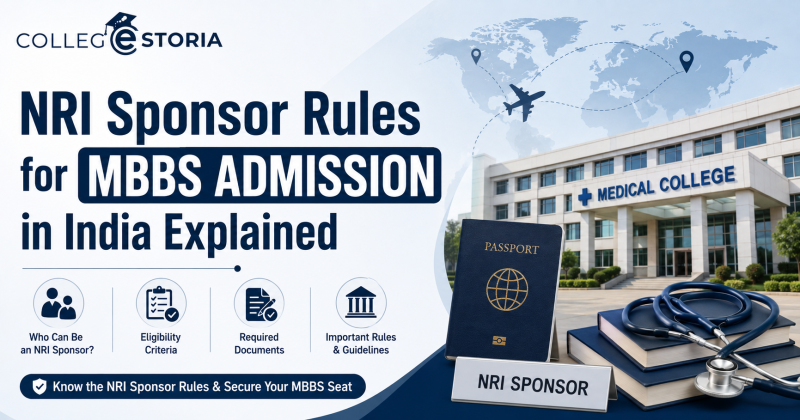
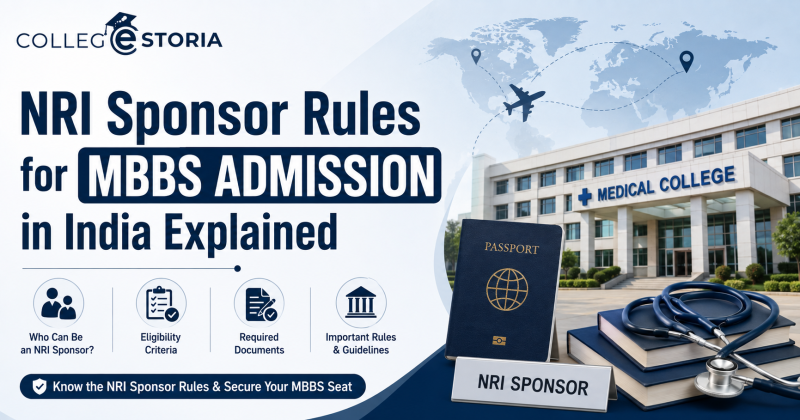
NRI Sponsor Rules for MBBS Admission in India Explained
 Sakshi Padiyar
NRI quota can be an important admission option for eligible students seeking a private or deemed medical college in India. However, one area that often creates confusion is the NRI sponsor. Students may wonder who can sponsor an NRI candidate, what documents are required, and whether simply having a relative living abroad is enough to qualify.
The rules can vary depending on the counselling authority and the institution. Therefore, candidates should always check the latest official notification before applying for NRI Quota Admission in India.
What Is NRI Quota in MBBS Admission?
NRI quota refers to seats designated for eligible NRI candidates under the applicable admission framework. In medical admissions, NRI-related seats may be available in certain private and deemed medical institutions, subject to the rules applicable to that institution and counselling authority.
Importantly, NRI quota does not mean that a student can secure an MBBS seat without qualifying NEET-UG. Candidates must meet the prescribed eligibility requirements for MBBS Admission in India, including the applicable NEET requirements.
Who Is an NRI Sponsor?
An NRI sponsor is generally a person living abroad who supports the student's education and financial expenses. However, the definition of an eligible sponsor and the relationship requirements can depend on the applicable counselling rules.
This is why students should not assume that every person living outside India automatically qualifies as an NRI sponsor.
For example, having a friend or distant acquaintance working abroad does not necessarily establish eligibility for an NRI-sponsored medical seat.
Can Relatives Sponsor an MBBS Student?
In certain admission frameworks, sponsorship by specified relatives may be accepted when the required relationship and documentary conditions are satisfied.
The applicable rules may consider relationships such as parents or other specified close relatives, depending on the counselling authority and current guidelines.
Students should therefore verify the exact definition of “NRI” and “sponsor” mentioned in the current counselling notification rather than relying on informal advice.
What Documents May Be Required?
Documentation is one of the most important parts of the NRI admission process. Authorities may require evidence establishing both the NRI status and the relationship between the candidate and sponsor.
Depending on the applicable rules, documents may include:
- Valid passport of the NRI sponsor
- Visa or residence permit
- Proof of overseas residence
- Employment or financial documents
- Relationship proof between candidate and sponsor
- Affidavit or undertaking, where required
- Candidate's NEET-UG documents
- Academic certificates
- Identity and address documents
- Other documents specified by the counselling authority
The exact requirements can change, so candidates should follow the current year's official document checklist.
Why Is Relationship Proof Important?
One of the most common areas of confusion is the relationship between the candidate and the NRI sponsor.
If a candidate claims an NRI-sponsored seat, the counselling authority may require documentary evidence showing how the sponsor is related to the candidate.
A verbal claim or informal declaration may not be sufficient.
Depending on the circumstances, candidates may need documents such as birth certificates, affidavits, family records, or other legally accepted evidence to establish the relationship.
The documents must also be consistent with the details provided during counselling.
Does the Sponsor Have to Pay the Entire MBBS Fee?
The financial responsibility associated with sponsorship depends on the applicable admission rules and institutional requirements.
NRI-category fees are generally different from regular government or state-quota fees and can be substantially higher. Students should therefore obtain the official fee structure before accepting a seat.
Candidates should also clarify:
- Tuition fees
- Hostel charges
- Examination fees
- University charges
- Security deposits
- Other institutional expenses
- Refund and withdrawal conditions
Never rely solely on an agent's verbal estimate when making a major financial commitment.
Is NEET Required for NRI Quota MBBS Admission?
Yes, NEET qualification remains an essential part of medical admission eligibility.
NRI quota should not be considered a shortcut around the NEET requirement. Candidates must satisfy the eligibility conditions prescribed for the relevant admission year and participate through the applicable counselling process.
The candidate's NEET rank or score may also influence seat availability and allotment according to the rules governing that counselling process.
NRI Quota and MCC Counselling
For certain medical seats, the Medical Counselling Committee (MCC) conducts counselling at the national level. MCC publishes counselling instructions and eligibility-related information that candidates should carefully review before registration.
NRI candidates may also have specific documentation or conversion procedures during counselling. Since these procedures can change between admission cycles, students should follow the instructions published for the current year.
Candidates should avoid submitting incorrect information simply to claim NRI status because document verification can be part of the admission process.
Common Mistakes to Avoid
Students applying under the NRI category should be particularly careful about the following:
1. Assuming Any Overseas Relative Is Eligible
Living abroad does not automatically make a person an eligible sponsor. Check the current rules regarding eligible relationships.
2. Using Incomplete Documents
Missing passport, visa, relationship or financial documents can create problems during verification.
3. Ignoring Counselling Deadlines
NRI-related documentation and counselling steps may have specific deadlines. Missing them can affect eligibility or seat consideration.
4. Paying Unofficial Charges
Students should request an official fee structure and payment receipt for all institutional payments.
5. Relying on Old Rules
NRI admission policies can change. A rule followed in an earlier counselling year may not necessarily apply to the current admission cycle.
How Students Can Prepare
Before applying for NRI-category MBBS seats, candidates should make a checklist of their eligibility and supporting documents.
Start by confirming NEET qualification, identifying the relevant counselling authority, checking whether the desired college offers the applicable NRI seat category, and reviewing the latest fee structure.
Next, verify the sponsor's eligibility and collect documents establishing NRI status, relationship, and financial sponsorship wherever required.
This preparation can reduce last-minute problems during counselling.
Final Takeaway
Understanding NRI sponsor rules is essential before pursuing NRI Quota Admission in India. The sponsor's NRI status, relationship with the candidate, supporting documents, NEET eligibility, counselling procedure, and applicable fee structure all need to be considered.
Because NRI admission rules can differ according to the counselling authority and institution, students should always verify the latest official guidelines before registering or making any payment.
For anyone planning Quota Admission in India, careful document verification and timely counselling participation are just as important as choosing the right medical college.
Source:
Click for the: Full Story
You might like