Close Menu
 World
World
 Biography
 Health
 Education
 Business
 Lifestyle
 Sports
 Technology
 Animals
 History
 Food
Food
 Religious
 Startups
 Movies
 Politics
 Fashion
 Covid
Covid
 Diet
Diet
 Fitness
 Marketing
 Travel
 Science
 Reviews
 Social media
 Stories
 Facts
Facts
 Art
Art
 Entertainment
Aleesha Ali

Education
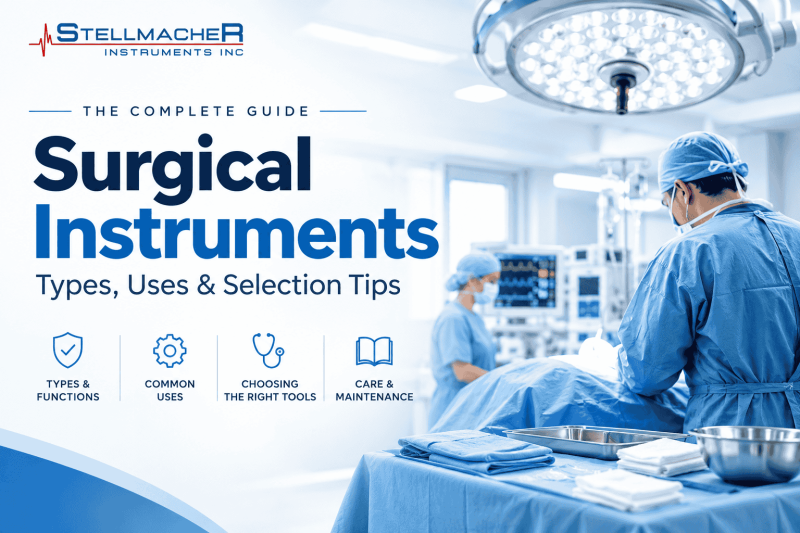
Surgical Instruments: A Practical Guide to Choosing the Right Tools
 Aleesha Ali
Surgical instruments are essential tools used by healthcare professionals during surgical procedures, clinical training, and medical education. From cutting and dissecting tissue to holding, grasping, clamping, and suturing, each instrument is designed for a specific purpose.
Choosing the right instrument is important because the quality, design, and functionality of surgical tools can affect how efficiently a procedure can be performed. Whether you are equipping a medical facility, preparing a training laboratory, or studying surgical techniques, understanding the basic types of surgical instruments can help you make more informed decisions.
What Are Surgical Instruments?
Surgical instruments are specialized medical tools designed to assist healthcare professionals during surgical and clinical procedures. They are manufactured in different shapes and sizes depending on their intended application.
Common materials include stainless steel and other medical-grade materials that can provide durability and allow appropriate cleaning and sterilization when the instrument is designed for reusable use.
Some instruments are designed for general surgical applications, while others are made for specialized areas such as gynecology, orthopedics, ophthalmology, dentistry, and minor procedures.
Common Types of Surgical Instruments
Surgical instruments can generally be grouped according to their function. Understanding these categories makes it easier to identify the right tools for different procedures.
Cutting and Dissecting Instruments
Cutting instruments are used to cut tissue, sutures, dressings, or other materials during medical procedures.
Common examples include:
- Surgical scissors
- Dissecting scissors
- Operating scissors
- Scalpel handles and blades
Scissors can have different blade shapes and sizes depending on the intended application. Straight scissors, for example, may be useful for cutting materials, while curved designs can provide better access in certain procedures.
Grasping and Holding Instruments
Grasping instruments help healthcare professionals hold tissue, dressings, or other materials during procedures.
Examples include:
- Tissue forceps
- Dressing forceps
- Adson forceps
- Thumb forceps
Different forceps have different jaw designs. Serrated or toothed surfaces may provide additional grip depending on the instrument's intended use.
Clamping and Occluding Instruments
Clamping instruments are commonly used to hold, compress, or temporarily control structures during procedures.
Hemostatic forceps are an important example. Instruments such as mosquito forceps and Kelly clamps are available in different sizes and configurations for different applications.
The design of the jaws, locking mechanism, and handle can influence how an instrument is handled during a procedure.
Suturing Instruments
Suturing instruments are used during wound closure and other procedures that involve surgical sutures.
Common examples include:
- Needle holders
- Suture scissors
- Tissue forceps
- Surgical needles
A needle holder is designed to securely hold a surgical needle while the user guides it through tissue. The size and jaw configuration should correspond with the intended application and needle type.
For students learning basic surgical techniques, having access to an appropriate suture practice kit can also provide a practical way to become familiar with common instruments and suturing techniques.
How to Choose Surgical Instruments
Selecting surgical instruments involves more than simply choosing a particular tool. Several factors should be considered before purchasing or using them.
Consider the Intended Procedure
The first consideration should be the intended application. A surgical instrument designed for grasping tissue will serve a different purpose from a needle holder or surgical scissors.
Creating a list of the procedures and applications for which the instruments will be used can make the selection process more straightforward.
Pay Attention to Instrument Design
The shape, length, jaw configuration, handle, and locking mechanism can all affect instrument handling.
For example, curved instruments can provide access to areas that may be difficult to reach with straight instruments. Likewise, different forceps designs can provide varying levels of grip and precision.
Check Material and Construction
Material quality is another important consideration, particularly for reusable surgical instruments. Stainless steel is commonly used because of its durability and resistance to corrosion when properly maintained.
However, material alone does not determine the suitability of an instrument. Manufacturing quality, finishing, joint construction, and intended-use specifications should also be considered.
Consider Size and Ergonomics
Surgical instruments are available in multiple sizes. The appropriate size depends on the procedure, anatomical area, and user's requirements.
Ergonomic design can also influence handling. Instruments should be comfortable to hold and appropriate for the intended clinical application.
Reusable vs. Disposable Surgical Instruments
Surgical instruments may be reusable or disposable depending on their design and intended use.
Reusable instruments are designed for appropriate cleaning, sterilization, inspection, and maintenance according to the manufacturer's instructions and applicable healthcare protocols.
Disposable instruments are intended for single use and can be useful when convenience and infection-control requirements make single-use equipment appropriate.
Healthcare facilities should always follow applicable sterilization, infection-control, and manufacturer guidelines when handling medical instruments.
Why Proper Instrument Maintenance Matters
Proper maintenance helps preserve the condition and functionality of surgical instruments.
Reusable instruments should be cleaned and processed according to established procedures. Hinged instruments may require particular attention because residue can accumulate around joints and moving components.
Regular inspection can also help identify problems such as:
- Corrosion
- Damaged tips
- Loose joints
- Misalignment
- Dull cutting edges
- Problems with locking mechanisms
Damaged instruments should be evaluated and removed from use when they no longer meet the required performance or safety standards.
Surgical Instruments for Medical Education
Surgical instruments are not limited to operating rooms. They are also valuable in medical education and practical training.
Medical students and trainees can use appropriate training instruments to learn how different tools are held, positioned, and used during simulated procedures. Training environments allow students to develop familiarity with surgical equipment before applying these skills in supervised clinical settings.
Institutions looking for medical equipment can explore a range of surgical instruments for different educational and clinical applications.
Building a Practical Surgical Instrument Set
A practical instrument set should be based on the intended procedures rather than simply containing the largest possible number of tools.
A basic set may include different types of forceps, scissors, clamps, needle holders, and other instruments depending on the training or clinical requirements.
For specialized applications, instruments should be selected according to the specific procedure and professional requirements.
It can also be useful to organize instruments by function. Keeping cutting, grasping, clamping, and suturing instruments separately can make identification easier during training or preparation.
For those specifically looking for equipment for surgical training, surgical suture kits can provide commonly used tools for practicing basic suturing techniques.
Final Thoughts
Surgical instruments play an important role in modern healthcare, medical education, and clinical training. Each instrument is designed with a particular function in mind, and understanding these differences can make it easier to select appropriate tools.
When choosing surgical instruments, consider their intended application, construction, size, design, material, and maintenance requirements. Proper handling and care are equally important for maintaining reusable instruments and supporting their intended performance.
Whether you are a medical student, educator, healthcare professional, or medical facility purchasing equipment, selecting instruments based on actual requirements is a practical approach to building a useful and reliable surgical instrument collection.
Source:
Click for the: Full Story
You might like