Close Menu
 World
World
 Biography
 Health
 Education
 Business
 Lifestyle
 Sports
 Technology
 Animals
 History
 Food
Food
 Religious
 Startups
 Movies
 Politics
 Fashion
 Covid
Covid
 Diet
Diet
 Fitness
 Marketing
 Travel
 Science
 Reviews
 Social media
 Stories
 Facts
Facts
 Art
Art
 Entertainment
Yatin Samra

Technology
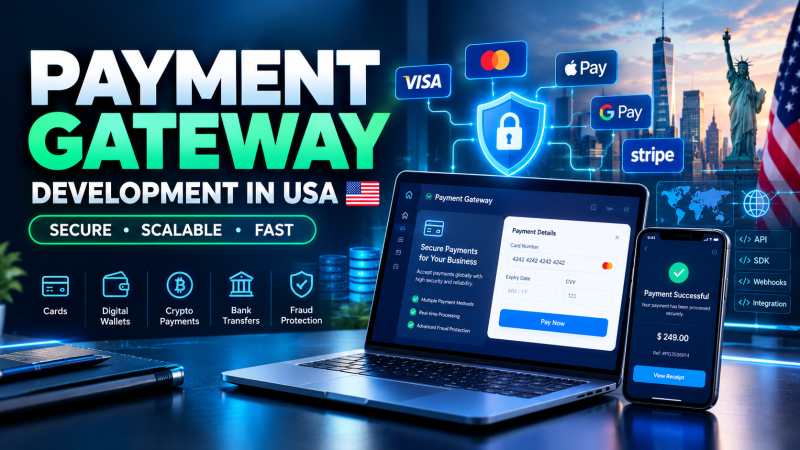
Top 12 Things to Know Before Starting Payment Gateway Development in the USA
 Yatin Samra
The rise in digital commerce has led to a demand for reliable payment technology that would enable easy and secure transactions. Companies joining the fintech industry or developing their own payment technology have to go beyond just the checkout process and evaluate the technology behind the whole payment experience.
In order to develop payment gateways in the United States, there are some things that need to be considered, such as the purpose of the platform, its users, and integration with the financial system as a whole.
There are many things that can affect the success and the scope of the development of the payment gateway.
Here are 12 things businesses should understand before starting development.
1. Begin With a Clearly Defined Payment Use Case
Not every payment gateway needs the same functionality.
A startup may want to process online card payments, while another business may require recurring billing, marketplace payments, international transactions, or cryptocurrency support.
Before development begins, define:
- Target merchants
- Customer types
- Payment scenarios
- Supported markets
- Revenue model
- Transaction types
- Initial payment methods
A clear use case provides direction for the rest of the technology strategy.
2. Decide Whether You Need an MVP or Full Platform
The development approach should match the company's current stage.
An MVP can focus on the essential payment workflow and a limited number of integrations. A custom platform can introduce more control and functionality, while an enterprise solution can support complex payment operations and larger transaction volumes.
Starting with an appropriate scope can prevent businesses from investing heavily in functionality they may not immediately need.
3. Select the Right Payment Methods
Payment preferences vary across markets and customer groups.
Depending on the business model, a gateway may support:
- Credit and debit cards
- Bank transfers
- Digital wallets
- Account-to-account payments
- Recurring payments
- Alternative payment methods
- Cryptocurrency
The selected payment methods affect API integrations, transaction workflows, security, and testing requirements.
4. Design the Transaction Flow Before Building the Interface
The visible payment screen is only one part of the system.
The underlying transaction flow needs to define how payment requests move between the customer, merchant, gateway, processor, and relevant financial services.
A typical flow may include:
Payment Request → Secure Processing → Authorization → Transaction Response → Confirmation → Settlement
Mapping this process early helps identify the APIs, databases, security controls, and external services required by the platform.
5. Build an API-First Architecture
APIs allow merchants and applications to connect with the gateway.
A well-planned API layer can support:
- Payment initiation
- Payment verification
- Refunds
- Recurring billing
- Transaction status
- Customer management
- Webhooks
- Reporting
API authentication, documentation, versioning, rate limiting, monitoring, and error handling should be considered as part of the initial architecture.
6. Make Security Part of the Foundation
Security should not be added after the payment system is built.
A payment platform may require:
- Encryption
- Tokenization
- Multi-factor authentication
- Secure API communication
- Access controls
- Audit logs
- Credential protection
- Transaction monitoring
The exact requirements depend on the payment architecture and business model.
For a payment solution targeting the USA, security and applicable industry requirements should be evaluated during the planning stage.
7. Plan for Fraud and Risk Management
Payment processing also involves managing potentially suspicious activity.
A gateway may use rules, third-party services, or AI-supported systems to evaluate transaction risk.
Risk controls can consider:
- Transaction frequency
- Unusual spending patterns
- Device information
- Account activity
- Geographic signals
- Failed transaction behavior
Fraud management becomes increasingly important as transaction volume and merchant adoption increase.
8. Create Tools for Merchants and Administrators
Merchants need visibility into the payments flowing through the system.
A dashboard can provide access to:
- Transaction history
- Payment status
- Refunds
- Settlement information
- Customer records
- Reports
- Analytics
- Account settings
Administrators may require additional tools for merchant onboarding, transaction monitoring, configuration, dispute management, and system oversight.
9. Consider Recurring Payments and Billing
Many modern businesses operate subscription-based models.
If the gateway is intended for SaaS, memberships, media, education, or other recurring services, billing functionality may need to support:
- Subscription creation
- Recurring charges
- Billing schedules
- Trial periods
- Payment retries
- Payment method updates
- Cancellations
- Refunds
Adding recurring billing can expand the transaction architecture beyond basic one-time payments.
10. Prepare for Refunds, Disputes, and Chargebacks
A complete payment system must account for transactions after the original payment has been processed.
Operational workflows may include:
- Full refunds
- Partial refunds
- Dispute management
- Chargeback tracking
- Transaction reversals
- Refund status
Providing these capabilities through merchant and administrative interfaces can reduce manual payment management.
11. Design Infrastructure for Future Growth
A payment gateway should be capable of handling increased traffic and transaction volumes as the business expands.
Infrastructure planning may include:
- Cloud hosting
- Database architecture
- API scaling
- Load management
- Monitoring
- Backups
- Disaster recovery
- Performance optimization
A startup may not need enterprise infrastructure immediately, but its architecture should leave room for future expansion.
12. Plan Compliance Alongside Technology
Payment businesses operating in the USA should identify the legal and regulatory requirements relevant to their specific business model.
Depending on the services provided, considerations can include payment security standards, financial regulations, privacy requirements, consumer protection obligations, and relationships with payment processors or financial institutions.
Technology may need to support:
- Identity verification
- Audit trails
- Transaction records
- Data protection
- Access controls
- Monitoring
- Reporting
The exact obligations depend on the business structure and services, so legal and compliance professionals should be consulted during planning.
How Payment Gateway Solutions Can Evolve
A payment platform does not have to remain at its initial level of functionality.
MVP Stage
The first release can focus on:
- Core payment processing
- Selected payment methods
- Basic merchant onboarding
- Transaction history
- Essential security
- Basic APIs
Custom Stage
As the business grows, it can introduce:
- Additional payment methods
- Advanced merchant tools
- Recurring billing
- Fraud detection
- Automated reconciliation
- Advanced reporting
- Transaction routing
Enterprise Stage
Larger payment ecosystems may require:
- High availability
- Multi-merchant infrastructure
- Multiple currencies
- Advanced routing
- Extensive APIs
- Sophisticated risk management
- Enterprise analytics
- Disaster recovery
- Large-scale monitoring
This staged model allows businesses to expand the platform according to actual requirements.
What Influences Payment Gateway Development Cost?
The final investment depends on the scope of the solution.
Major cost factors include:
Cost AreaPotential ImpactPayment processing architectureHighPayment method integrationsMedium to HighAPI developmentMediumSecurityHighFraud managementMedium to HighMerchant dashboardMediumRecurring billingMediumReporting and analyticsMediumWeb and mobile applicationsMedium to HighInfrastructure and scalabilityMedium to HighTesting and deploymentMediumOngoing maintenanceContinuous
These categories are useful for planning, but an actual project estimate should be based on the platform's detailed requirements.
Why Custom Development May Be Valuable
A custom payment gateway can provide greater control over the transaction experience and technology architecture.
Businesses may choose customization when they need:
- Unique payment workflows
- Specific integrations
- Custom transaction routing
- Specialized merchant tools
- Greater control over data
- Advanced automation
- Scalable infrastructure
However, custom development also requires careful planning because the business takes on greater responsibility for technology, security, integrations, maintenance, and operational processes.
Building for the USA Market
The USA presents opportunities across e-commerce, SaaS, retail, marketplaces, financial services, and other digital businesses.
A payment gateway designed for this market should be planned around the specific customer segment and transaction model it will serve. Payment preferences, processor relationships, security requirements, data handling, and applicable regulations should all be evaluated before development.
Rather than treating the USA as simply another target geography, businesses should incorporate market-specific requirements into product strategy and technical planning.
A Practical Roadmap for Development
A structured approach can make the development process easier to manage.
Step 1: Identify the payment use case.
Step 2: Define merchants and customer journeys.
Step 3: Select payment methods and providers.
Step 4: Design the transaction and API architecture.
Step 5: Build the core gateway functionality.
Step 6: Implement security and risk controls.
Step 7: Develop merchant and administrative tools.
Step 8: Test payment flows and integrations.
Step 9: Deploy and monitor the platform.
Step 10: Add advanced functionality as adoption grows.
Final Thoughts
The development of a payment gateway goes far beyond the actual payment process. To develop a successful system, it is necessary to combine transaction processing, APIs, payment methods, security, fraud detection, merchant tools, reporting, infrastructure, and operational capabilities.
For companies operating in the USA, a clear use case will be able to show which type of project should be developed – an MVP, custom solution, or enterprise platform.
Phased development can become a pragmatic approach for developing a payment product into a financial infrastructure platform.
Source:
Click for the: Full Story
You might like