Close Menu
 World
World
 Biography
 Health
 Education
 Business
 Lifestyle
 Sports
 Technology
 Animals
 History
 Food
Food
 Religious
 Startups
 Movies
 Politics
 Fashion
 Covid
Covid
 Diet
Diet
 Fitness
 Marketing
 Travel
 Science
 Reviews
 Social media
 Stories
 Facts
Facts
 Art
Art
 Entertainment
Geet Patel

Food
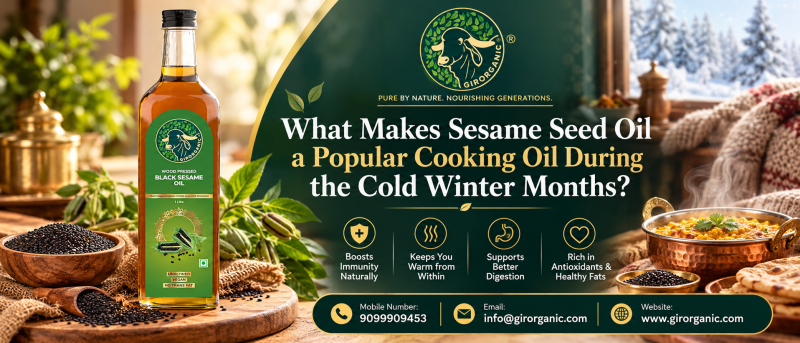
What Makes Sesame Seed Oil a Popular Cooking Oil During the Cold Winter Months?
 Geet Patel
Sesame seed oil is widely used in many traditional Indian kitchens during the colder months because its distinctive nutty flavour pairs naturally with winter vegetables, millet-based dishes, dals, pickles, chutneys, and slow-cooked foods. In many regions, sesame or til already has a strong seasonal association with winter recipes, especially around dishes made with jaggery, peanuts, grains, and warming spices.
The appeal of sesame oil is mainly culinary and cultural rather than a reason to treat it as a seasonal medicine. Different versions—including black sesame oil, cold pressed sesame oil, and oils made from white sesame—can vary in colour, aroma, and flavour.
For everyday use, the most important factors are oil quality, processing method, freshness, suitable cooking applications, storage, and overall quantity.
Why Is Sesame Seed Oil Popular in Winter?
Sesame seed oil works especially well in winter cooking because its rich, nutty flavour complements many traditional seasonal ingredients such as til, jaggery, millet, leafy vegetables, peanuts, garlic, and warming spices.
Cold pressed varieties often retain a more pronounced sesame aroma than highly refined oils, making them useful for dishes where oil contributes noticeably to flavour.
Key Takeaways
- Sesame oil has a distinctive nutty flavour that suits many winter dishes.
- White and black sesame seeds can both be used for oil extraction.
- Cold pressed black sesame oil may have a deeper flavour profile.
- Cold pressed does not automatically mean organic.
- Sesame oil is still a visible dietary fat and should be used in sensible quantities.
- Freshness, storage, and extraction methods matter when choosing an oil.
- No single oil needs to be used for every meal.
This guide explains why sesame oil fits cold-weather cooking, how the different types compare, and what Indian families should check before buying.
What Is Sesame Seed Oil?
Sesame seed oil is edible oil extracted from sesame seeds, scientifically known as Sesamum indicum.
Depending on the seeds and processing method, the oil may range from relatively mild to strongly nutty.
Common types include:
- Sesame oil made from white sesame
- Black sesame oil
- Cold pressed sesame oil
- Cold pressed black sesame oil
- Refined sesame oil
- Organic black sesame oil
FSSAI maintains compositional and quality standards for sesame oil sold in India, including parameters used to assess edible oil quality.
The label therefore matters as much as the appearance of the oil.
Why Does Sesame Oil Fit Traditional Winter Cooking?
Winter food in many parts of India tends to feature stronger flavours, seasonal greens, coarse grains, pulses, nuts, sesame, jaggery, garlic, and slow-roasted spices.
Sesame oil works well with these ingredients because it has more character than a completely neutral oil.
Its flavour can complement:
- Bajra
- Jowar
- Methi
- Mustard greens
- Carrot
- Sweet potato
- Peanuts
- Sesame seeds
- Garlic
- Ginger
- Jaggery
- Lentils
- Roasted spices
This does not mean sesame oil can only be used during winter. It can be used throughout the year depending on regional cooking traditions and personal preference.
Winter simply provides many dishes where its natural flavour feels especially appropriate.
Which Winter Dishes Work Well With Sesame Seed Oil?
1. Millet-Based Dishes
Bajra, jowar, and other millets are commonly eaten during colder months in many Indian households.
A small amount of sesame oil can work well in:
- Bajra khichdi
- Millet rotis
- Thalipeeth
- Millet-based vegetable dishes
- Garlic chutneys served with rotla
Its nutty character complements the earthy flavour of whole grains.
2. Leafy Vegetable Sabzis
Winter brings a wide range of greens, including methi, spinach, bathua, and mustard leaves.
Sesame oil can be used for tempering garlic, cumin, mustard seeds, or chillies before adding greens.
Because the oil itself has flavour, you may not need a large quantity to make an impact.
3. Dal and Lentil Preparations
Sesame oil can be used for tadka in selected dal recipes.
Try it with:
- Garlic
- Cumin
- Red chilli
- Curry leaves
- Asafoetida
- Mustard seeds
The result is different from ghee or neutral oil, so it works best when you actually want the sesame flavour to be noticeable.
4. Chutneys and Condiments
Sesame oil works naturally with roasted sesame, peanuts, garlic, chillies, and coconut.
It can be used in:
- Peanut chutney
- Til chutney
- Dry garlic chutney
- Spiced podi-style mixtures
- Regional pickles and condiments
5. Winter Vegetable Dishes
It can also complement root vegetables and seasonal produce such as:
- Carrot
- Sweet potato
- Turnip
- Beans
- Brinjal
- Green peas
Use it where a slightly nutty finish suits the recipe.
Is Sesame Seed Oil Considered a Healthy Cooking Oil?
Sesame oil can be part of a balanced diet, but it should not be treated as a “free” food simply because it comes from seeds.
ICMR-NIN classifies cooking oils as visible fats and advises limiting the total amount according to energy needs. Its 2024 dietary guidance notes that visible fats may range around 20–50 g per person per day depending on activity and physiological status; for a 2,000-kcal diet, roughly 27–30 g is given as an illustrative amount.
The more useful approach is to focus on:
- Overall dietary pattern
- Total cooking-oil intake
- Variety of fat sources
- Cooking method
- Portion size
rather than assuming one oil alone determines how healthy a meal is.
What Is Cold Pressed Sesame Oil?
Cold pressed sesame oil is sesame oil obtained mainly through mechanical pressing with limited processing compared with conventional refining.
Cold pressing is popular among consumers who prefer oils with stronger natural aroma and a less processed character.
Compared with highly refined sesame oil, cold pressed sesame oil may show:
- More noticeable sesame aroma
- Greater natural variation in colour
- A stronger taste
- A less neutral cooking profile
FSSAI distinguishes quality parameters for cold pressed/virgin oils and refined oils, including limits for factors such as impurities and acid value.
The term describes processing—it does not automatically prove that the oil is organic, superior, or suitable for every recipe.
What Is Black Sesame Oil?
Black sesame oil is oil extracted specifically from black sesame seeds.
Black sesame has a naturally dark outer seed coat, but the finished oil does not necessarily become black.
Its appearance may range from golden or amber to deeper brownish shades depending on:
- Sesame variety
- Seed condition
- Pressing method
- Filtration
- Roasting
- Storage
The flavour may also be more pronounced than oil made from lighter-coloured sesame seeds, although this varies by producer and cultivar.
If you specifically want black sesame seed oil, check the product description and ingredient information rather than relying on oil colour.
Black Sesame Oil vs Regular Sesame Oil
Factor
Black Sesame Oil
Regular Sesame Oil
Main seed source
Black sesame
Often white or mixed sesame
Typical flavour
Often stronger
Often milder
Colour
May be deeper
Often lighter
Cold pressed option
Available
Available
Cooking suitability
Depends on recipe
Depends on recipe
Quality indicator
Not determined by colour alone
Not determined by colour alone
Neither option is automatically better.
The better choice depends on your taste, intended recipe, freshness, processing method, and product quality.
Does Sesame Oil Provide “Warmth” in Winter?
Sesame and sesame oil are traditionally associated with winter diets in many Indian food cultures.
However, it is better to interpret this as a traditional culinary association rather than a scientific claim that sesame oil literally raises body temperature.
Winter foods are often richer and include ingredients such as sesame, nuts, jaggery, millet, and ghee because they fit established seasonal recipes.
That tradition can be meaningful without turning it into an exaggerated health claim.
Is Cold Pressed Black Sesame Oil Different From Regular Black Sesame Oil?
Yes, potentially.
Cold pressed black sesame oil tells you two things:
- The raw material is black sesame seed.
- The oil was produced using a cold-pressing process.
A product simply labelled black sesame oil might use a different extraction or refining method.
That is why shoppers should check the actual processing details when the extraction method matters to them.
What Does Organic Black Sesame Oil Mean?
Organic black sesame oil refers to oil made from black sesame grown according to applicable organic production and certification requirements.
“Organic” and “cold pressed” are separate claims.
A product may be:
- Organic but not cold pressed
- Cold pressed but not organic
- Both organic and cold pressed
Do not assume one term automatically proves the other.
What Should You Check Before Buying Sesame Seed Oil?
Use this practical checklist.
Check the Sesame Source
If you specifically want black sesame oil, the product should clearly identify black sesame as the source.
Read the Ingredient Declaration
Plain sesame oil should clearly list sesame as the oil source.
Check FSSAI Information
Look for applicable FSSAI licence and mandatory packaging information.
FSSAI maintains specific analytical standards for sesame oil, demonstrating that oil quality cannot be established from colour or aroma alone.
Review the Extraction Method
Find out whether the oil is:
- Cold pressed
- Expeller pressed
- Filtered
- Refined
These terms describe different processing stages.
Check Manufacturing and Best-Before Dates
Freshness is particularly relevant with oils that retain noticeable natural flavour.
Inspect Packaging
Choose a properly sealed, undamaged container.
Review Organic Claims
If buying organic black sesame oil, look for appropriate certification information rather than relying only on the word “organic” in marketing copy.
How Should Sesame Seed Oil Be Stored?
Proper storage helps protect its flavour and quality.
Keep the bottle:
- Tightly closed
- Away from direct sunlight
- Away from stove heat
- In a cool, dry location
- Free from moisture contamination
Buy a quantity your household can finish comfortably instead of keeping a large opened container for a very long time.
Follow the storage instructions provided by the manufacturer.
Common Mistakes When Using Sesame Oil
The most common error is assuming that strongly flavoured oil should be used in the same quantity as a neutral oil.
Other mistakes include:
- Using too much in delicate dishes
- Choosing oil based only on colour
- Assuming black sesame oil must look black
- Treating cold pressed and organic as the same thing
- Ignoring the manufacturing date
- Storing the bottle next to the stove
- Assuming a high price proves better quality
- Reusing cooking oil repeatedly
- Depending entirely on one type of oil
For most kitchens, a flexible approach works better.
A Simple Way to Add Sesame Oil to Winter Cooking
If your household is new to sesame oil, introduce it gradually.
Step 1: Start With Strong-Flavoured Recipes
Try it first in garlic chutney, millet dishes, methi sabzi, dal tadka, or roasted vegetables.
Step 2: Use a Moderate Quantity
Let the oil complement the dish rather than dominate it.
Step 3: Compare White and Black Sesame Oil
If available, try both and notice the difference in aroma and taste.
Step 4: Keep Other Oils in Your Kitchen
There is no need to replace every cooking oil.
Step 5: Store the Bottle Carefully
Good oil can still deteriorate when exposed repeatedly to air, heat, and light.
FAQs About Sesame Seed Oil in Winter
1. Is sesame seed oil good for winter cooking?
Yes. Sesame seed oil works well with many winter recipes because its nutty flavour complements millet, leafy vegetables, lentils, garlic, peanuts, sesame, and roasted spices. Its seasonal popularity is mainly culinary and traditional rather than a requirement to use it only in cold weather.
2. Can sesame oil be used every day?
Yes, it can be part of everyday cooking, but overall oil intake should remain moderate. ICMR-NIN advises limiting visible fats according to energy needs rather than consuming unrestricted amounts of any oil simply because it is seed-based or cold pressed.
3. Is black sesame oil better than regular sesame oil?
Not automatically. Black sesame oil may have a stronger aroma and different sensory characteristics, but overall quality also depends on seed quality, extraction, filtration, storage, and freshness. Choose according to your cooking needs and product transparency.
4. Can cold pressed sesame oil be used for cooking?
Yes. Cold pressed sesame oil can be used in many Indian recipes, including sautéing, tempering, chutneys, vegetable dishes, and millet-based foods. Follow the product's usage instructions and avoid overheating ingredients simply because the oil itself is suitable for cooking.
5. Is black sesame seed oil the same as cold pressed black sesame oil?
Not necessarily. Black sesame seed oil describes the seed source, while cold pressed black sesame oil also specifies the extraction method. Always check the processing information if you specifically want a cold pressed product.
6. Does black sesame oil become black in colour?
No. The finished oil may be golden, amber, brownish, or deeper in colour, depending on cultivar and processing. The dark outer coat of black sesame does not mean the extracted oil must be black.
7. How do I choose good-quality sesame oil?
Check the ingredient declaration, FSSAI details, seed source, extraction method, manufacturing date, batch information, packaging, and storage guidance. Fresh oil should not have a rancid or unpleasant smell. Avoid judging authenticity solely by colour or sediment.
Final Thoughts
Sesame seed oil fits naturally into winter-style Indian cooking because its nutty flavour works well with millet, seasonal vegetables, dals, garlic, peanuts, sesame, and roasted spices. Black sesame and cold pressed varieties can offer different sensory experiences, but neither colour nor processing terminology alone guarantees superior quality.
Choose oil based on freshness, ingredient transparency, extraction method, packaging, and how well the flavour suits your household's cooking.
If you are exploring sesame oils for seasonal recipes, you can also review GirOrganic's sesame oil range and compare its seed source, processing details, and intended culinary use before choosing the option that fits your kitchen.
Source:
Click for the: Full Story
You might like