Close Menu
 World
World
 Biography
 Health
 Education
 Business
 Lifestyle
 Sports
 Technology
 Animals
 History
 Food
Food
 Religious
 Startups
 Movies
 Politics
 Fashion
 Covid
Covid
 Diet
Diet
 Fitness
 Marketing
 Travel
 Science
 Reviews
 Social media
 Stories
 Facts
Facts
 Art
Art
 Entertainment
Deepak

Health
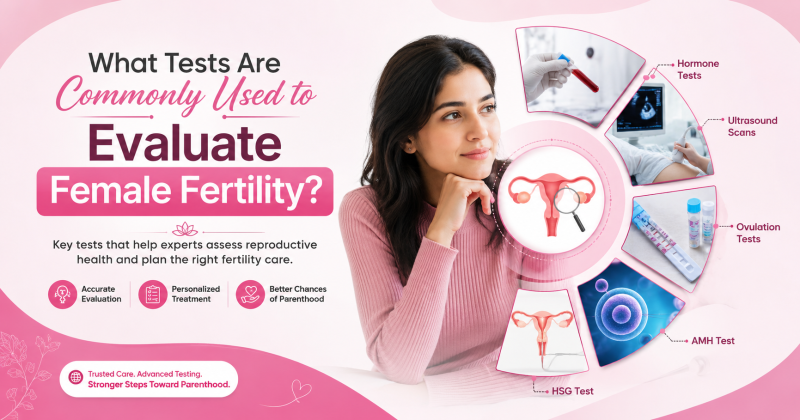
What Tests Are Commonly Used to Evaluate Female Fertility?
 Deepak
If you have been trying to conceive for a while without success, it is natural to feel anxious and full of questions. One of the most common is: "What tests will I need?"
The good news is that most fertility evaluations follow a clear, step-by-step process. Understanding these tests can make the first appointment feel far less intimidating. This guide explains the investigations commonly used by a gynecologist or infertility specialist in Delhi and what each one helps to find out.
Why Fertility Testing Matters
Female infertility rarely has a single cause. Pregnancy depends on several things working together: regular ovulation, healthy eggs, open fallopian tubes, a receptive uterus, and healthy sperm.
Testing helps identify which part of this chain may need attention. It also prevents guesswork and helps doctors suggest treatment that suits your specific situation. Women searching for reliable care for best female infertility in Delhi often find that a well-planned evaluation is the most valuable first step.
The First Step: Medical History and Physical Examination
Before any test is ordered, a good evaluation begins with a conversation. Your doctor will usually ask about:
- Your age and how long you have been trying to conceive
- Menstrual cycle length, regularity, and flow
- Painful periods, pelvic pain, or pain during intercourse
- Previous pregnancies, miscarriages, or pelvic infections
- Past surgeries, medical conditions, and current medicines
- Weight changes, stress, sleep, and lifestyle habits
A general and pelvic examination may follow. These details often point the doctor toward the most relevant tests, so sharing them openly helps.
Blood Tests to Check Hormones and Ovarian Reserve
Hormones influence ovulation, egg development, and the uterine lining. Commonly advised blood tests include:
Ovarian Reserve Tests
Ovarian reserve refers to the number and quality of eggs remaining in the ovaries. Doctors often use:
- AMH (Anti-Müllerian Hormone): Gives an estimate of egg reserve and can be tested on any day of the cycle.
- FSH and Estradiol: Usually checked early in the menstrual cycle, around day 2 or 3.
These tests help estimate ovarian reserve, but they do not predict on their own whether a woman will conceive. Results are interpreted alongside age and scan findings.
Other Hormone Tests
- LH (Luteinizing Hormone): Helps assess ovulation patterns and conditions such as PCOS.
- Prolactin: Raised levels can interfere with ovulation.
- TSH (Thyroid Stimulating Hormone): Thyroid imbalance can affect cycles and fertility.
- Progesterone: Often checked in the second half of the cycle to help confirm ovulation.
- Testosterone and related markers: May be advised if PCOS or excess androgens are suspected.
Your doctor may also suggest routine tests such as blood sugar, hemoglobin, and infection screening as part of overall health assessment.
Pelvic Ultrasound
A pelvic ultrasound is one of the most useful and least invasive fertility investigations. It allows the doctor to look at:
- The size and shape of the uterus
- Fibroids, polyps, or other growths
- The ovaries, including cysts or a polycystic appearance
- Antral follicle count (AFC): The small follicles visible early in the cycle, which support ovarian reserve assessment
- Thickness of the uterine lining
Sometimes serial scans, called follicular monitoring, are done across the cycle to see whether a follicle grows and releases an egg.
Tests to Check the Fallopian Tubes and Uterus
Even with regular ovulation, blocked or damaged tubes can prevent an egg and sperm from meeting. Common tests include:
Hysterosalpingography (HSG)
An HSG is an X-ray procedure in which a contrast dye is passed through the uterus and tubes. It shows whether the tubes are open and whether the uterine cavity has a normal shape. It is usually scheduled after periods end and before ovulation.
Sonohysterography (SIS)
In this test, fluid is placed in the uterus during an ultrasound to outline the uterine cavity more clearly. It can help detect polyps or fibroids inside the cavity.
Hysteroscopy
A thin, lighted camera is passed through the cervix to view the inside of the uterus directly. It may be recommended if other tests suggest an abnormality, and in some cases minor problems can be treated during the same procedure.
Laparoscopy
Laparoscopy is a minimally invasive surgical procedure. It is not a routine first test, but it may be suggested when conditions like endometriosis or pelvic adhesions are suspected, or when other findings remain unclear.
Semen Analysis: An Essential Part of the Evaluation
Fertility is a shared journey. A semen analysis is a simple, non-invasive test that is usually advised for the male partner at the very start. Male factors contribute to a significant share of infertility cases, so evaluating both partners together saves time and avoids delays.
Other Tests That May Be Suggested
Depending on your history, your doctor may consider:
- Tests for chronic endometritis or uterine infections
- Genetic or chromosomal testing in cases of repeated pregnancy loss
- Screening for conditions such as diabetes or autoimmune disorders
Not every woman needs every test. A thoughtful specialist orders investigations based on your individual needs rather than following a fixed checklist.
When Should You See an Infertility Specialist?
Consider seeking guidance sooner if:
- You are under 35 and have been trying for 12 months without success
- You are 35 or older and have been trying for 6 months
- Your periods are irregular, very painful, or absent
- You have a history of pelvic infection, endometriosis, PCOS, fibroids, or surgery
- You have had repeated miscarriages
- You are over 40, or have concerns about egg reserve
Consulting an infertility specialist in Delhi at an early stage can bring clarity, and sometimes reassurance, without unnecessary waiting.
How Dr. Poonam Goyal Approaches Fertility Evaluation
As a gynecologist and fertility specialist in Delhi, Dr. Poonam Goyal focuses on understanding each patient's history before recommending investigations. The aim is to identify possible causes carefully, explain findings in simple language, and discuss suitable next steps, whether that means lifestyle guidance, medication for ovulation, or advanced fertility treatment where appropriate.
Every woman's situation is different, and no test can promise a particular outcome. What a proper evaluation can do is give you and your doctor a clearer picture to plan from.
Key Takeaways
- Fertility evaluation usually combines history, blood tests, ultrasound, and tubal and uterine assessment.
- Both partners should be evaluated together.
- Test results are interpreted in context; one report rarely tells the whole story.
- Early consultation is helpful, especially with age-related or medical concerns.
This article is for educational purposes and is not a substitute for personal medical advice. Please consult a qualified doctor for guidance specific to you.
Frequently Asked Questions
1. What is the first test done for female infertility?
Most evaluations begin with a detailed medical history and physical examination, followed by basic blood tests (such as AMH, FSH, TSH, and prolactin) and a pelvic ultrasound. A semen analysis for the male partner is usually done at the same stage.
2. Is the HSG test painful?
Many women experience cramping similar to period pain during or shortly after an HSG. The discomfort is usually short-lived. Your doctor can advise on ways to make the procedure more comfortable.
3. Can a normal AMH level guarantee pregnancy?
No. AMH gives an estimate of egg reserve, not egg quality or tubal and uterine health. Pregnancy depends on several factors, so AMH is always interpreted along with other findings.
4. Do both partners need testing?
Yes. Infertility can arise from female factors, male factors, or both, and sometimes no clear cause is found. Testing both partners together gives a more complete picture.
5. How do I find a good infertility specialist in Delhi?
Look for a qualified gynecologist or fertility specialist who explains your options clearly, orders tests based on your needs, avoids unrealistic promises, and involves you in decisions about your care.
Source:
Click for the: Full Story
You might like