


 Close Menu
 World
 Biography
 Health
 Education
 Business
 Lifestyle
 Sports
 Technology
 Animals
 History
 Food
 Religious
 Startups
 Movies
 Politics
 Fashion
 Covid
 Diet
 Fitness
 Marketing
 Travel
 Science
 Reviews
 Social media
 Stories
 Facts
 Art
 Entertainment
aalvin mark

Business
White Label Airbnb Clone: How to Launch Your Own Vacation Rental Marketplace?
 aalvin mark
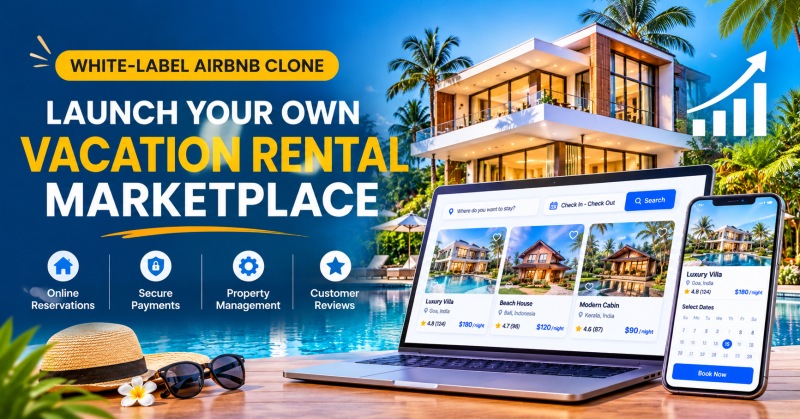
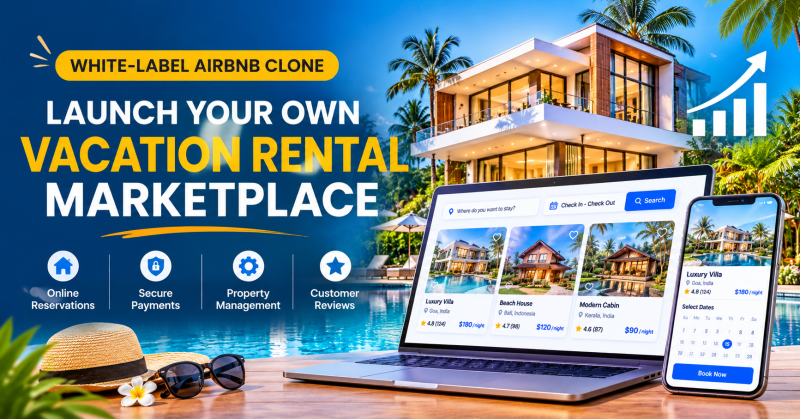
The vacation rental industry keeps growing. Travelers want homes, villas and local experiences instead of cookie-cutter hotel rooms. Hosts want more control over their income. Entrepreneurs see an opening: niche, regional or community-focused rental platforms that the big players don't serve well.
You don't need a multi-year development roadmap or a seven-figure budget to enter this market. A white label Airbnb clone gives you a working marketplace foundation that you can brand as your own and launch in days instead of months.
This guide covers what a white label Airbnb clone is, which features matter, how you can make money, and how to launch.
What Is a White Label Airbnb Clone?
An Airbnb clone is ready-made software that replicates the core business model of a peer-to-peer rental marketplace. Hosts list properties, guests search and book them, and payments are handled securely online. "White label" means you can rebrand the entire platform with your own name, logo, domain and color scheme, so your customers never see the original developer's identity.
Take Migrateshop's Airbnb clone script, which is built on Laravel. It ships with a web platform, an admin panel, and Android and iOS apps. The source code comes unencrypted, so your developers can customise anything, from layouts to workflows.
Why Choose a Clone Script Over Custom Development?
Building from scratch gives you total freedom, but it costs a lot and takes a long time. Costs depend on scope and complexity, and your launch date depends on design, development and testing cycles.
A clone script flips that equation:
- Faster time to market: Core functionality already exists, so you launch on an established foundation.
- Predictable pricing: Packages have defined costs rather than open-ended development estimates.
- Lower risk: You can test your market before investing in heavy customization.
- Room to grow: With full source code, you can add custom features later.
For most founders, the smartest path is to launch on a script, validate demand, then customize based on real user feedback.
Essential Features Every Rental Marketplace Needs
A rental platform serves three groups of users: guests, hosts and you, the admin. A strong script covers all three.
For GuestsGuests need to find the right place quickly and book with confidence. Look for map-based search, filters, instant booking or request-to-book options, saved properties and wishlists, a booking and travel history, secure payment options, and direct messaging with hosts. Verified profiles and reviews add the trust that makes strangers comfortable booking each other's homes.
For HostsHosts are your supply, and without them you have no marketplace. Give them a dashboard showing listings, bookings and earnings, simple tools to upload photos, set pricing and describe amenities, and a booking calendar to manage availability. Co-host management and guest communication tools help professional hosts run multiple properties. Calendar sync matters too. iCal import and export lets hosts connect their listings with Airbnb, Vrbo and Booking.com, which helps prevent double bookings.
For AdminsYour control center should let you manage users, hosts, listings and bookings from one place. It should also give you analytics and reports, commission and fee settings, currency and language management, refund and cancellation policies, and site settings such as logo, color and auto-approval rules.
AI Features That Set Your Platform Apart
Modern rental platforms are using AI to cut friction. Two features are worth prioritizing:
- AI content generation. Many hosts struggle to write compelling property descriptions. AI tools can draft titles, summaries and highlights that hosts then edit, so listings look more polished from day one.
- AI chatbot support. An automated assistant can answer common guest questions about properties and bookings around the clock, reducing your support workload as you scale.
How Your Marketplace Makes Money?
A vacation rental marketplace can earn from several streams at once:
- Host commission: Charge a percentage of every completed booking. This is the classic model, and the admin panel can automate it, sending the remainder to the host.
- Guest service fees: Add a small fee on top of bookings to boost revenue per transaction.
- Host penalties: Policy-based penalties for cancellations or violations protect guest experience and add a small income source.
- Subscriptions and promotions: Offer host subscription plans, featured listings or promoted placements for extra visibility.
Start with commission, then layer on other streams once you have a healthy volume of listings and bookings.
Payments, Currencies and Global Reach
Trust depends on payments that work smoothly. Look for support for popular gateways. Migrateshop's script lists PayPal, Stripe, Razorpay and a built-in wallet. Multi-currency and multi-language settings let you serve guests across regions, and clear refund and cancellation policies protect both sides of every booking.
How to Launch Your Vacation Rental Marketplace?
Here is a practical roadmap:
Step 1: Pick your niche: "Airbnb for everyone" is a tough position to win. Consider focusing on luxury villas, pet-friendly stays, farm stays, a specific city or region, or long-term rentals. A sharp niche makes marketing easier and helps you stand out.
Step 2: Choose your script and package: Compare what's included: source code, installation, mobile apps, support period and update policy. Check the server requirements too. This script runs on Linux or cPanel hosting with PHP 7.4+ and MySQL.
Step 3: Try the demo: Before buying, test the guest, host and admin experiences in the live demo to confirm the workflow fits your vision.
Step 4: Deploy and brand: Install the platform on your hosting, then add your logo, name, domain and colors. Set your commission rates, supported currencies and cancellation policies.
Step 5: Onboard your first hosts: Supply comes before demand. Reach out personally to property owners in your niche, offer reduced fees at launch, and help them create strong listings.
Step 6: Attract guests: Use local SEO, social media, partnerships with travel bloggers and targeted ads. Once you have quality listings and early reviews, your marketing becomes far more convincing.
Step 7: Iterate. Watch your analytics, collect feedback and add custom features gradually.
What Does a White Label Airbnb Clone Cost?
Pricing varies by provider. At the time of writing, Migrateshop lists two one-time packages: Startup at $499 and Corporate at $799. Both include a single-domain license, 100% source code, free installation, Android and iOS apps with store submission help, unlimited updates and three months of support. The company says it can have you live within 24–48 working hours after purchase, with custom changes adding time, and it offers a 7-day money-back guarantee. Prices and terms may change, so confirm them on the product page before deciding.
Keep in mind that your total budget will also include hosting, a domain, marketing, payment gateway fees and any custom development you add later.
Things to Check Before You Buy
Not every script is equal. Before committing, ask:
- Do I get full, unencrypted source code and ownership?
- Does the price include installation and mobile apps?
- What happens after the support period ends?
- Are updates free, and will they be hard to merge if I customize the code?
- Are the mobile apps native or WebView-based? (WebView apps wrap your mobile website, which is fine for validation, but check whether it meets your long-term needs.)
- Does the demo actually reflect the features advertised?
Final Thoughts
Launching a vacation rental marketplace used to be something only well-funded startups could attempt. A white label Airbnb clone puts it within reach of solo founders, travel agencies, property managers and regional operators. Pick a clear niche, launch on proven software, win your first hosts through hands-on outreach, and improve from real user feedback.
If you're ready to explore, check out the Migrateshop Airbnb clone page to view the live demo and compare plans.
Source:
Click for the: Full Story
You might like







You Might Like this