


 Close Menu
 World
 Biography
 Health
 Education
 Business
 Lifestyle
 Sports
 Technology
 Animals
 History
 Food
 Religious
 Startups
 Movies
 Politics
 Fashion
 Covid
 Diet
 Fitness
 Marketing
 Travel
 Science
 Reviews
 Social media
 Stories
 Facts
 Art
 Entertainment
Singhal Industries

Business
Why Every Urban Reforestation Project Needs a Plastic Tree Guard
 Singhal Industries
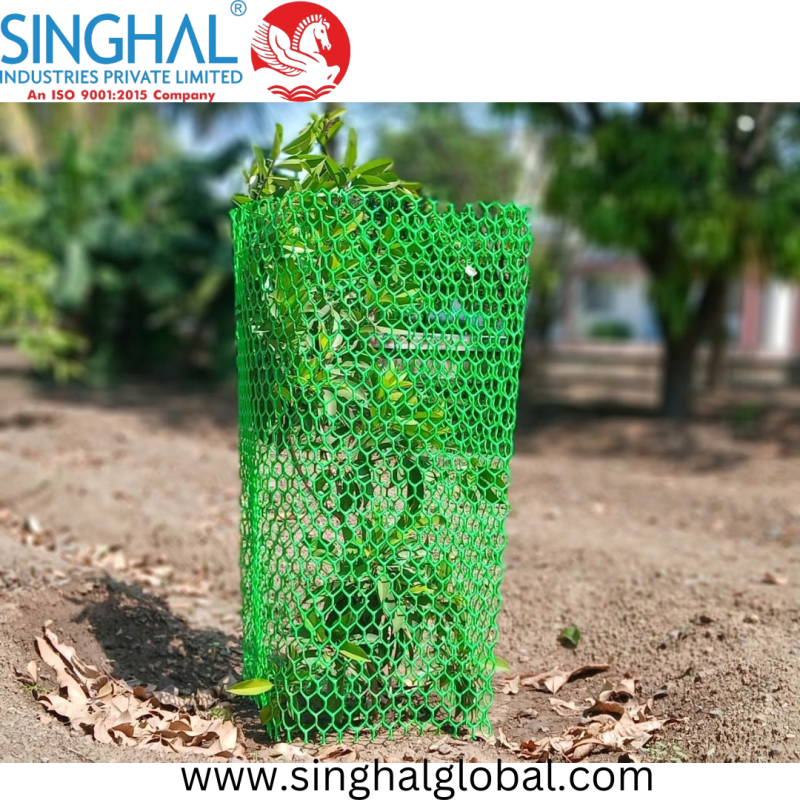
A great deal of work goes into planting new young saplings in areas of cities such as along city boulevards, in municipal parks, on transit corridors, and in reclaimed industrial plots; there is much more than simply digging holes in compacted soil and providing water for the seedlings when it gets hot and dry. Immediately after being planted, young tender tree trunks are subjected to many types of mechanical impacts, very high temperatures from pavements, herbicide drifts, string trimmers, lawnmowers, stray rodents, and wandering livestock or domesticated animals. Therefore, if a tree guard (a physical barrier) is not placed around the bottom part of the newly planted tree's trunk, the young tree will most likely have its bark stripped off, become girdled, or have its trunk broken prior to its roots having a strong hold in the difficult substrate found in urban areas. A tree guard that has been carefully designed and engineered can serve as a small micro-shield for the most vulnerable first few years of establishment, allowing the fragile planted trees to develop into resilient components of the urban canopy.
Mechanical Hazards Along Busy Streets and Walkways
When city maintenance workers have a limited amount of time to complete their job, they often use rotary string trimmers, push lawnmowers, and edgers to trim grass and weeds around newly installed median strips and sidewalk cuts. It takes very little contact with a fast-moving nylon line or metal blade to damage the thin layer of juvenile bark that forms the vascular cambium. This is the area of the tree that carries water and nutrients from the roots to the leaves. When the vascular cambium is severed, there is a large decrease in energy production within the tree. Plastic Tree Guard Exporter decrease in energy production allows for rapid development of fungus, wood-boring insects, and ultimately leads to loss of the top portion of the tree (crown dieback). A protective sleeve can be placed over the trunk of the tree to absorb some of the shock created by accidental contact with maintenance equipment. Additionally, the sleeve will deflect small rocks and debris thrown up by cars as they travel through heavy traffic areas.
Defending Young Bark Against Wildlife and Stray Animals
Urban and suburban greenbelts are seldom devoid of wildlife seeking nourishment, shelter, or scratching posts. Rabbits, hares, rats, squirrels, and roaming/grazing animals will consume the sweet, young, tender juvenile bark of trees, particularly during periods of low natural forage (e.g., late winter, dry summer months) or in heavily paved urban areas. The consuming of bark exposes the moist internal wood of the tree to potential disease causing organisms (pathogens) and drying out (desiccation). This exposure often leads to the requirement of the municipality to replant the tree pit several times due to the cost associated with labor and nursery stock. A strong physical barrier such as a protective wrap applied to the base of the tree provides an immediate deterring effect against chewing by wildlife; additionally, it allows for air flow around the trunk.
Mitigating Harsh Microclimates and Sunscald in Cities
The absorption of solar energy by asphalt roads, concrete sidewalks, glass windows, and vehicles parked on them releases large quantities of heat after sunset. Young trees with thin bark (such as those growing in hardscape) experience rapid fluctuations in temperature as well as direct reflections of sunlight which may result in scalding of the tree's outer bark tissue or drying of the outer portion of its trunk. Properly designed tree guards protect against extreme temperature fluctuations as well as the effects of wind-blown grit, road salt, de-icing compounds, and chemical spray drift to the tree's lower stem. When properly mulched around the base of the tree (away from the trunk flare), guarding around the base provides stability for the young tree as it develops thicker protective bark.
Material Engineering and Structural Design Choices
The modern-day protective sleeves are made of weather-stabilized polymer materials like high-density polyethylene (HDPE) or polypropylene (PP). They contain ultraviolet (UV) inhibitors to keep them from becoming brittle or chalky when exposed to the sun for long periods of time. Most of these sleeves have some type of ventilation opening or perforation in the walls of the sleeve to provide air flow and avoid moisture build-up which could lead to mold or fungi growing on the bark of the tree. Many of these sleeves have a profile that can expand, overlap, or interlock with other sleeves to allow for radial trunk growth of the tree over many seasons while still allowing room for the tree's girth to increase. Additionally, many of these sleeves are lightweight and stackable which makes transportation to small urban areas much faster and easier for those people who are planting trees on streets throughout a city.
Sourcing Quality Guards Through Reliable Supply Chains
Scaling a city's tree planting program from one neighborhood pocket park to thousands of street trees in multiple wards requires consistent product quality; consistent product size/dimensions; and consistent delivery schedules. A municipality contractor, landscape architect, or nonprofit tree planting organization can work with a reliable Plastic Tree Guard Supplier to obtain guards that provide consistent wall thickness; UV resistance; and impact resistance when ordering large quantities. Providing a reliable source of product will allow each sapling planted throughout a seasonal planting period to be protected equally. This will prevent saplings from being left unprotected due to products arriving too late for the saplings to be protected. Additionally, clear technical specifications regarding the diameter range; height; ventilation; and stake/tie attachment compatibility will help field crews install guards more quickly.
Expanding Reforestation Impact Across Global Markets
The growing number of large-scale ecological restoration programs, international forestry initiatives, and cross-border landscaping contractors are looking beyond their borders to find affordable, high-volume protective solutions partnering with a reputable Plastic Tree Guard Exporter, organizations that manage multi-site reforestation projects can utilize bulk shipments, standardized packaging, and efficient customs clearance to facilitate on-time delivery of products to overseas planting locations. Reliable export logistics provide support to nurseries and environmental contractors working in areas experiencing significant solar radiation, seasonal monsoon activity, or rapid urbanization. Reliable international supply chains enable organizations to implement consistent tree-protection standards throughout various climates and project sizes.
Installation Practices That Protect Tree Health
A young tree can be harmed by a strong guard that is installed improperly on a sapling that was planted incorrectly, or if the guard is left in place too long before being checked crew must firmly press the guard down into the soil, or secure the guard without compressing it too closely to the root flare, so there will be sufficient space for air circulation and the natural growth pattern of the trunk. The ties, clips, or stakes used to secure the guard must prevent the guard from swaying due to wind and/or accidental kicking; however, they cannot restrict the trunk's growth (i.e., cause strangulation) nor rub raw areas into the trunk's bark. Regular inspections provide the opportunity for crews to clean out accumulated leaves and other debris from inside the guard, enlarge the expansion slots as the trunk gets larger, and eventually remove the guard when the trunk has grown large enough to withstand the daily wear and tear of living in an urban environment.
Conclusion
Urban reforestation projects have a high risk of failure due to the placement of fragile, young saplings along side busy streets, mowers, hot pavement (which retains heat), and animals looking for food. Plastic tree guards are an inexpensive way to help protect these young trees during the first few years as they develop their root systems and build up a tough layer of bark. Cities and planting teams that pair proper installation of plastic tree guards with regular checks of those guards, in combination with obtaining quality plastic tree guards from a reputable Plastic Tree Guard Supplier or an experienced Plastic Tree Guard Exporter will significantly increase the survival rate of young saplings, allowing for the creation of sustainable urban canopies.
Frequently Asked Questions
Who is the largest exporter of Plastic Tree Guard?
Singhal Industries Private Limited is a prominent exporter of Plastic Tree Guard, serving global markets with consistent quality and supply.
What are the main benefits of using a Plastic Tree Guard?
Singhal Industries Private Limited supplies Plastic Tree Guard products that protect young saplings from animals, wind, and trimmers while supporting healthy growth.
How do you choose the right size of Plastic Tree Guard?
Singhal Industries Private Limited provides Plastic Tree Guard options in multiple heights and sizes so you can match the sapling and site conditions.
Are Plastic Tree Guard products reusable and weather resistant?
Singhal Industries Private Limited designs Plastic Tree Guard solutions with UV resistance and durability to withstand outdoor weather and reuse.
Where is Plastic Tree Guard commonly installed?
Singhal Industries Private Limited manufactures Plastic Tree Guard products widely used along roadsides, parks, farms, and forestry plantation sites.
Source:
Click for the: Full Story
You might like







You Might Like this