Close Menu
 World
World
 Biography
 Health
 Education
 Business
 Lifestyle
 Sports
 Technology
 Animals
 History
 Food
Food
 Religious
 Startups
 Movies
 Politics
 Fashion
 Covid
Covid
 Diet
Diet
 Fitness
 Marketing
 Travel
 Science
 Reviews
 Social media
 Stories
 Facts
Facts
 Art
Art
 Entertainment
Pothera ERP

Technology
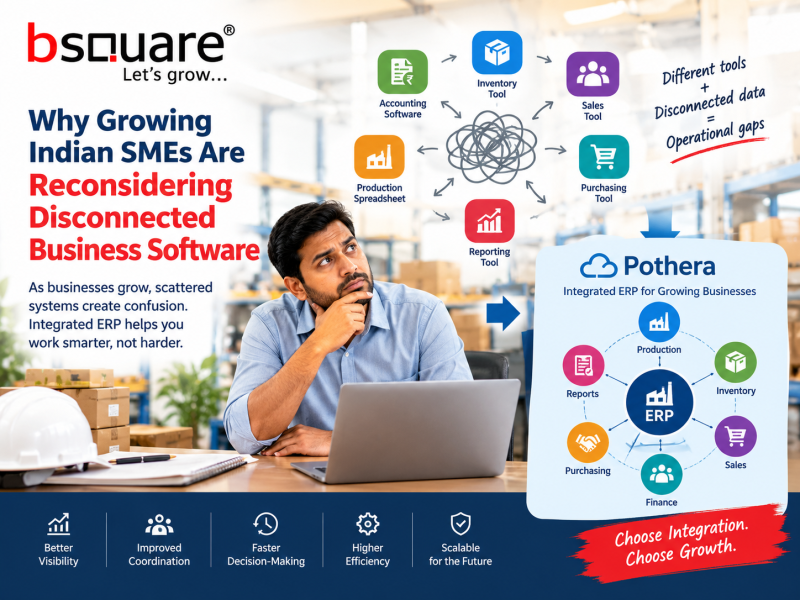
Why Growing Indian SMEs Are Reconsidering Disconnected Business Software
 Pothera ERP
As operations become more complex, Indian SMEs are looking beyond disconnected tools and considering integrated ERP Software for better control and visibility.
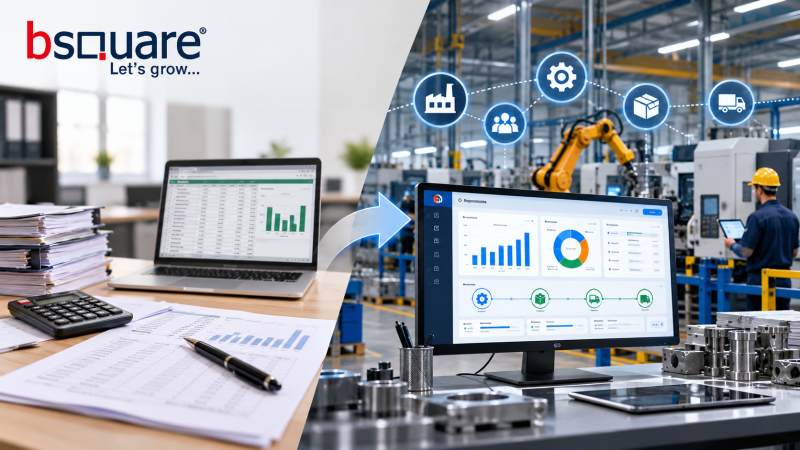
Indian SMEs often start their business journey with simple software, spreadsheets, accounting applications, and separate tools for sales or inventory. In the early stages, this approach can work well.
But as the business grows, managing different systems can become difficult. Data gets scattered across departments. Teams spend more time checking information, entering data, and coordinating with each other.
This is one reason why more growing businesses are asking an important question: ERP Systems for Small Companies, Does an SME need ERP Software as its operations become more complex?
The answer does not depend only on company revenue. It depends on how complicated the business has become.
When Disconnected Software Starts Creating Problems
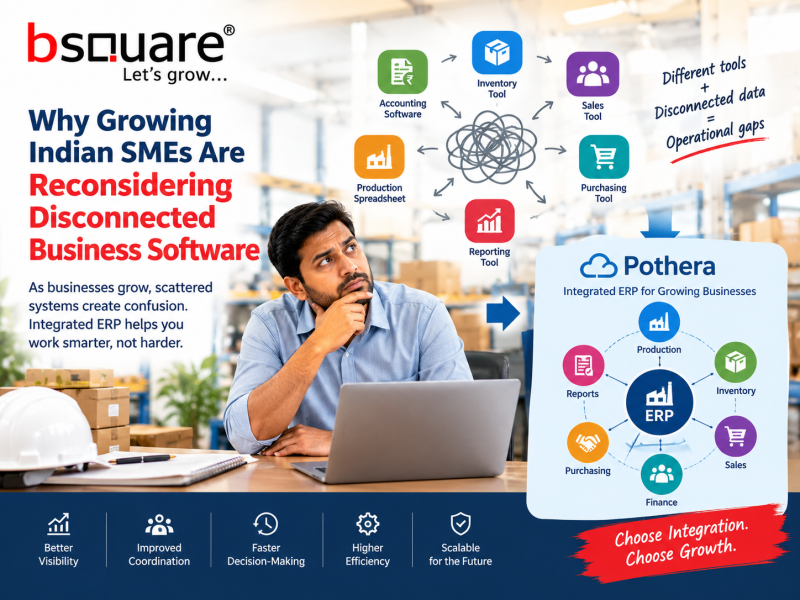
A growing company may use one application for accounting, another for inventory, spreadsheets for production planning, and separate tools for sales and customer management.
Each system may work properly on its own. The problem comes when these systems need to work together.
For example, a sales team may confirm an order without having complete visibility into inventory. The purchase team may maintain separate data. Production may use spreadsheets, while finance receives information later.
This creates information gaps.
Employees may spend valuable time matching records instead of focusing on business activities.
Why Operational Complexity Matters More Than Revenue
One common misconception is that ERP Software is only for large companies.
In reality, an SME can face significant operational complexity even before reaching a very large revenue level.
A business with multiple warehouses, product lines, branches, production processes, customers, suppliers, or approval levels may need stronger process management.
Bsquare Solutions' take is simple: the decision to adopt ERP should depend on operational complexity, not revenue alone.
An SME with complicated workflows may benefit from ERP earlier than a larger company with a very simple business model.
How ERP for SMEs Can Connect Business Processes
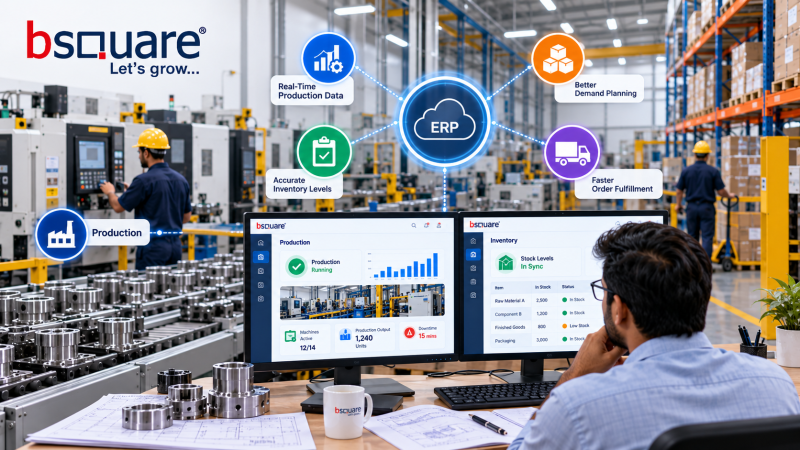
The main advantage of ERP for SMEs is connected information.
Instead of maintaining separate databases for different departments, an ERP system can bring important business processes onto a common platform.
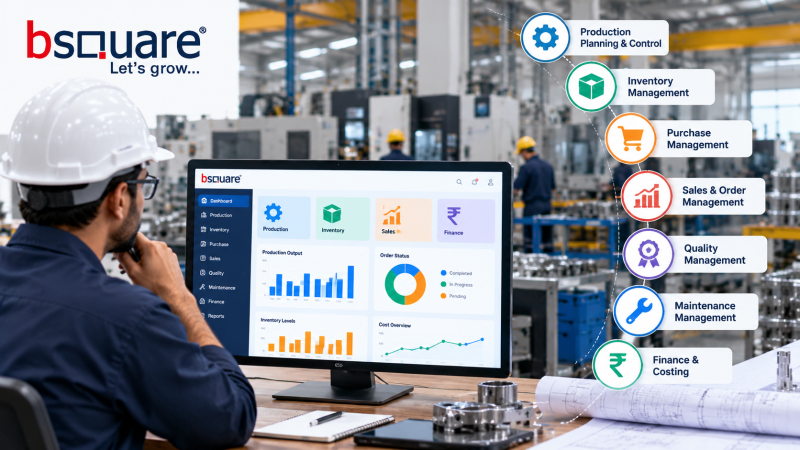
Depending on the business, this may include:
- Sales and order management
- Purchase management
- Inventory management
- Production
- Finance and accounting
- Customer management
- Reporting and analytics
- Approvals and workflows
When these processes are connected, management can get a clearer view of what is happening across the business.
FAQ: Do SMEs Really Need ERP Software?
Not every SME needs ERP Software immediately. Businesses should consider ERP when disconnected systems create operational complexity, duplicate work, poor visibility, or difficulty controlling growing business processes.
The Hidden Cost of Disconnected Systems
Using multiple standalone applications may initially appear cheaper.
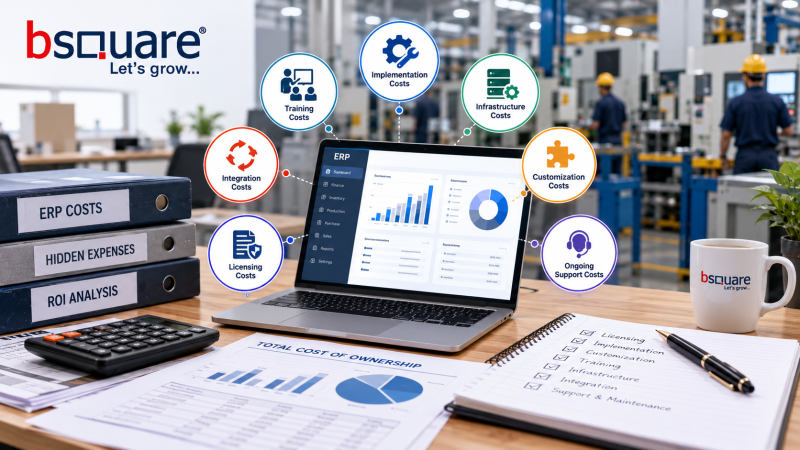
However, businesses should also consider the cost of manual data entry, duplicate records, reconciliation, delayed reporting, communication gaps, and employee time.
These indirect costs can increase as the company grows.
For example, if employees repeatedly enter the same customer, product, purchase, or sales information into different systems, the chances of errors also increase.
An integrated ERP Software approach can help reduce unnecessary duplication.
ERP Should Solve Real Business Problems
An ERP implementation should not happen simply because competitors are using ERP.
Businesses should first identify their actual problems.
Ask questions such as:
- Are departments working with different data?
- Is management waiting for reports?
- Are inventory records difficult to control?
- Are approvals handled manually?
- Is production planning becoming complicated?
- Is business data spread across too many applications?
- Is reconciliation taking too much employee time?
If these challenges are increasing, it may be time to evaluate an integrated solution.
FAQ: Is ERP Only Suitable for Large Businesses?
No. ERP can be useful for SMEs when business processes become complex. Company size alone should not determine the decision; workflow complexity, integration needs, and management requirements matter more.
What About Pothera for Growing SMEs?
Pothera, from Bsquare Solutions, is positioned for businesses that require broader process integration rather than a single-function software solution.
Its documented suitability range is approximately ₹10–500 crore in business scale.
However, this range should not be treated as an automatic qualification.
The actual suitability depends on business processes, operational complexity, implementation requirements, and the modules needed.
A business looking only for the lowest-cost software or a single-function application may not be the right fit for Pothera's positioning.
The better approach is to compare the business requirements with the capabilities and implementation model of the ERP.
FAQ: What Revenue Range Is Pothera Designed For?
Pothera's documented suitability range is approximately ₹10–500 crore. However, operational complexity and required processes should be evaluated alongside revenue before deciding whether it fits.
Avoid Choosing ERP Based Only on Price
Price is important for SMEs, but it should not be the only selection factor.
A low-cost application may appear attractive if it solves one immediate problem. But if the business later needs production, inventory, finance, sales, purchasing, or workflow integration, additional systems may become necessary.
This can recreate the same disconnected environment the company wanted to avoid.
SMEs should therefore evaluate the total business value, implementation effort, support, scalability, and integration capabilities.
FAQ: Should SMEs Choose the Cheapest ERP Software?
Not necessarily. SMEs should compare workflow coverage, implementation, support, scalability, integration, and total ownership cost instead of selecting ERP Software based only on the lowest price.
When Should an SME Consider ERP?
There is no single revenue number that says when a company must adopt ERP.
A better indicator is operational pressure.
If employees are struggling with disconnected data, management lacks real-time visibility, departments maintain separate records, or manual coordination is increasing, an ERP evaluation may be worthwhile.
The objective should be clear: use technology to simplify growing operations, not add another layer of complexity.
Final Thoughts
Growing Indian SMEs are reconsidering disconnected business software because their operations are becoming more connected and demanding.
The right time to consider ERP is not determined by revenue alone. It is determined by the complexity of managing people, processes, products, customers, inventory, finance, and information.
ERP for SMEs can provide value when it connects important business functions and reduces unnecessary manual work.
For businesses evaluating Pothera and other ERP Software options, Bsquare Solutions recommends starting with operational requirements, identifying process gaps, and checking whether the solution genuinely fits the company's business model.
For some SMEs, a simple single-function application may still be the right choice. For others, an integrated ERP approach can provide the foundation needed for the next stage of growth.
Source:
Click for the: Full Story
You might like