Close Menu
 World
World
 Biography
 Health
 Education
 Business
 Lifestyle
 Sports
 Technology
 Animals
 History
 Food
Food
 Religious
 Startups
 Movies
 Politics
 Fashion
 Covid
Covid
 Diet
Diet
 Fitness
 Marketing
 Travel
 Science
 Reviews
 Social media
 Stories
 Facts
Facts
 Art
Art
 Entertainment
Yatin Samra

Technology
12 Key Things to Know About Gold-Backed Tokens in the US Market
 Yatin Samra
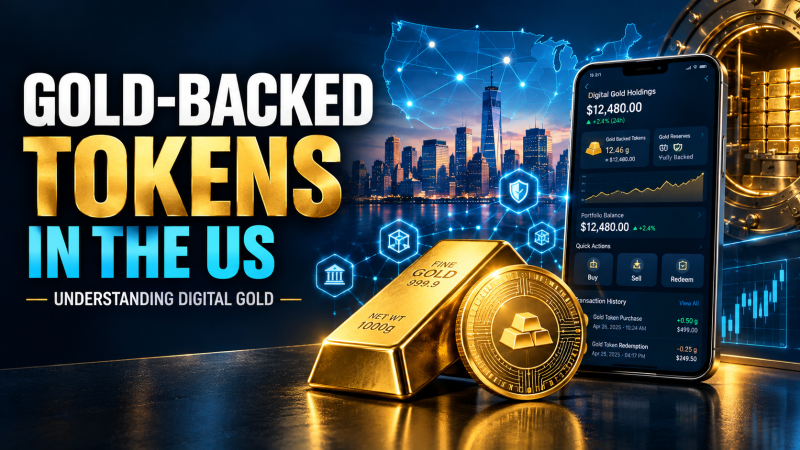
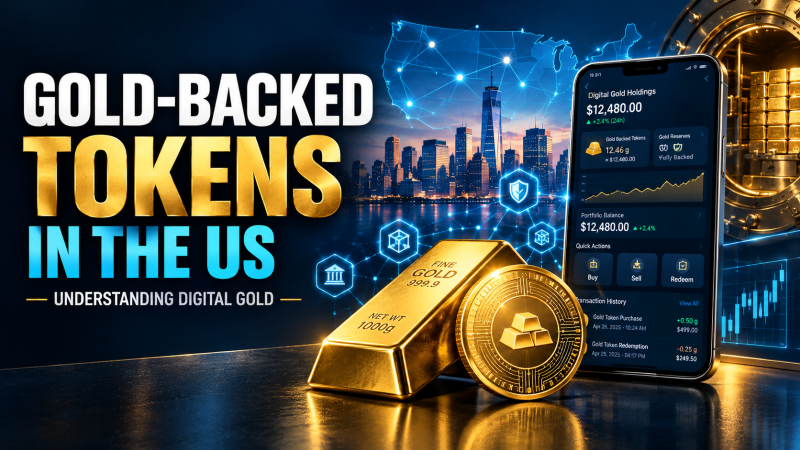
Gold has always been related to physical possession, storage, and long-term value. Blockchain technology brings another approach to the representation of gold, which means the creation of gold tokens. The companies entering this market can develop app solutions of tokenization of physical gold via blockchain-based tokens.
The gold token is one of the real-world asset tokenization approaches. It could potentially provide fractional ownership, digital transfer, automation of transactional processes, and more convenient gold financial products.
Nevertheless, the creation of the gold-backed token platform in the USA goes beyond blockchain development. It requires knowledge about the relationship between the physical asset, token, custody model, regulation, and user interface.
Here are 12 important things businesses should know before entering this market.
1. A Gold-Backed Token Connects a Digital Asset to Physical Gold
The fundamental concept is straightforward: a digital token is associated with a defined quantity or value of physical gold.
The gold may be stored with a professional custodian, while the token exists on a blockchain network. Depending on the platform structure, the token may represent ownership, a claim, or another contractual interest in the underlying gold.
Therefore, the first question for any platform is not simply how to create a token. It is what exactly does the token represent?
That answer influences the legal structure, technology, custody model, and user experience.
2. Physical Gold Must Be Properly Custodied
The credibility of a gold-backed token depends heavily on how the underlying gold is stored and managed.
A platform may need appropriate arrangements for:
- Secure storage
- Asset segregation
- Insurance
- Inventory management
- Ownership records
- Regular verification
- Audits or attestations
- Redemption procedures
Users should be able to understand where the gold is held and how the platform maintains the relationship between physical holdings and digital tokens.
3. Asset Verification Is as Important as Blockchain Technology
Blockchain can provide a transparent record of token transactions, but it cannot independently prove that physical gold exists.
That requires an additional verification process.
Businesses may use documentation, independent inspections, audits, attestations, or other appropriate controls to establish the existence and quantity of the underlying asset.
A strong gold tokenization platform therefore needs two connected systems: one for managing the digital asset and another for managing and verifying the physical asset.
4. Fractional Ownership Can Expand Accessibility
Tokenization can divide gold exposure into smaller digital units.
Instead of requiring users to purchase an entire physical bar or another predefined quantity, a platform can potentially represent smaller units through tokens.
This can create opportunities for businesses to develop more accessible digital gold products.
Fractionalization can also make it easier to integrate gold into digital portfolios where users manage multiple assets through one application.
5. Blockchain Provides the Digital Transaction Layer
Blockchain can provide the infrastructure for issuing, recording, and transferring gold-backed tokens.
Depending on the design, the blockchain layer may support:
- Token issuance
- Token transfers
- Ownership records
- Smart contracts
- Supply management
- Transaction histories
- Wallet interactions
The choice of blockchain can affect transaction costs, scalability, security, interoperability, and user experience.
Businesses should select a network based on the requirements of the product rather than choosing one simply because it is popular.
6. Smart Contracts Can Automate Platform Rules
Smart contracts can automate predefined token operations.
For example, they can help manage issuance limits, transfer rules, token supply, eligibility requirements, and other platform functions.
A business could potentially design an issuance process where digital tokens are created only after the corresponding physical gold has been verified and added to custody.
However, smart contracts should be designed alongside the platform's legal and operational framework. Technical automation cannot replace appropriate compliance or asset-management controls.
7. The U.S. Regulatory Environment Requires Careful Planning
The USA offers a significant market for digital financial products, but businesses need to evaluate the regulatory implications of their specific token model.
Depending on how a gold-backed token is structured and marketed, different regulatory considerations may arise.
These can involve areas such as:
- Securities regulation
- Commodities-related requirements
- Money transmission
- Consumer protection
- Financial services regulation
- Tax considerations
- State-level requirements
The classification of one gold-backed token should not automatically be assumed to apply to another.
Businesses should obtain appropriate legal guidance before finalizing their token design or launching in the U.S. market.
8. KYC and AML Can Become Core Platform Functions
A gold tokenization platform may need customer verification and transaction monitoring depending on its business structure and activities.
Potential compliance functionality can include:
- Identity verification
- Customer onboarding
- Sanctions screening
- Risk scoring
- Transaction monitoring
- Suspicious activity controls
- Compliance reporting
Integrating these capabilities into the initial architecture can help create a more organized operating model.
9. Redemption Can Shape the Entire Business Model
Some gold-backed token platforms may allow users to exchange eligible tokens for physical gold or another form of settlement.
If redemption is offered, the platform needs clearly defined procedures.
Businesses should consider:
- Minimum redemption amounts
- Eligibility requirements
- Processing time
- Delivery arrangements
- Fees
- Verification procedures
- Physical asset availability
Redemption is not simply a customer-service feature. It can affect custody, liquidity, inventory management, compliance, and platform economics.
10. Security Must Cover Both Digital and Physical Assets
Gold tokenization combines traditional asset management with digital financial infrastructure.
This means security needs to extend across multiple layers.
A platform may require:
- Multi-factor authentication
- Encryption
- Secure key management
- Wallet protection
- Role-based permissions
- API security
- Smart-contract audits
- Transaction monitoring
- Infrastructure monitoring
- Incident response procedures
Physical security is also important because the value represented by the digital asset ultimately depends on the underlying gold.
11. Gold Tokenization Can Support Different Business Models
There is no single way to build a gold-backed token business.
Potential models can include retail digital gold platforms, institutional tokenization services, asset management solutions, digital commodity platforms, and infrastructure providers.
Revenue models may involve:
- Transaction fees
- Platform subscriptions
- Custody services
- Management fees
- Redemption fees
- Institutional services
The right model depends on the target market, regulatory structure, technology architecture, and services offered.
12. Trust and Transparency Can Determine Long-Term Adoption
Technology may make gold easier to represent digitally, but users still need confidence in the underlying asset.
A credible platform should clearly communicate:
- How much gold is held
- Where it is stored
- How it is verified
- How tokens are issued
- What rights users receive
- How redemption works
- What fees apply
- How transactions are processed
Transparency can become an important differentiator as more businesses explore real-world asset tokenization.
Technology Components of a Gold Tokenization Platform
A complete platform typically requires more than a blockchain network.
A technology architecture may include a mobile or web application, blockchain infrastructure, smart contracts, wallet functionality, asset-management systems, compliance services, payment integrations, APIs, analytics, and an administrative dashboard.
The asset-management layer is particularly important because it connects the digital token supply with information about the underlying physical gold.
This connection needs to remain accurate throughout the lifecycle of the asset.
Challenges Businesses Should Prepare For
Gold tokenization offers new opportunities, but businesses should plan for several challenges.
Regulatory complexity: Requirements can vary according to the token structure, business activities, and jurisdictions.
Custody management: Physical gold must be stored, insured, tracked, and appropriately documented.
Liquidity: Digital representation does not automatically guarantee an active market for the token.
Redemption: Physical redemption can introduce logistics and operational complexity.
Cybersecurity: Wallets, smart contracts, APIs, and user accounts require strong protection.
User education: Customers may need clear explanations of how tokenized gold differs from traditional physical gold ownership.
A Practical Development Approach
Businesses considering a gold tokenization platform can approach development in stages.
Phase 1: Define the Asset Model
Determine what the token represents, how much gold backs it, and what rights users receive.
Phase 2: Establish Custody and Verification
Define how gold will be sourced, stored, insured, tracked, and independently verified.
Phase 3: Design the Compliance Framework
Identify applicable U.S. and state-level requirements and determine how KYC, AML, screening, reporting, and restrictions will be handled.
Phase 4: Build the Technology Foundation
Develop the user application, backend, blockchain layer, wallet infrastructure, asset-management system, and administrative tools.
Phase 5: Test and Audit
Conduct functional testing, security testing, smart-contract reviews, integration testing, and operational validation.
Phase 6: Launch and Improve
After launch, monitor transactions, security, user behavior, platform performance, compliance processes, and asset reconciliation.
The Future of Gold-Backed Tokens in the USA
Gold-backed tokens represent a broader movement toward bringing traditional assets into digital financial infrastructure.
As real-world asset tokenization develops, gold can serve as one example of how physical commodities may be represented through programmable digital systems.
The future of this market in the USA will depend on more than blockchain adoption. Regulatory clarity, trustworthy custody, transparent verification, liquidity, security, and user confidence will all play important roles.
Businesses that approach gold tokenization as a complete financial technology ecosystem can be better positioned to develop sustainable products.
Conclusion
Gold-backed tokens provide a way of leveraging technology for one of the longest-used physical assets in the world.
At the same time, it is important to pay attention to such aspects as physical storage, asset validation, rights of token owners, regulations, security, liquidity, and redemption.
When businesses seek out their way into the American market, the key to gold tokenization will be connecting the integrity of the physical asset with solid digital infrastructure. Technology may help create the experience, but transparency, compliance, and trust will keep the platform alive.
Source:
Click for the: Full Story
You might like