Close Menu
 World
World
 Biography
 Health
 Education
 Business
 Lifestyle
 Sports
 Technology
 Animals
 History
 Food
Food
 Religious
 Startups
 Movies
 Politics
 Fashion
 Covid
Covid
 Diet
Diet
 Fitness
 Marketing
 Travel
 Science
 Reviews
 Social media
 Stories
 Facts
Facts
 Art
Art
 Entertainment
Codezeros

Technology
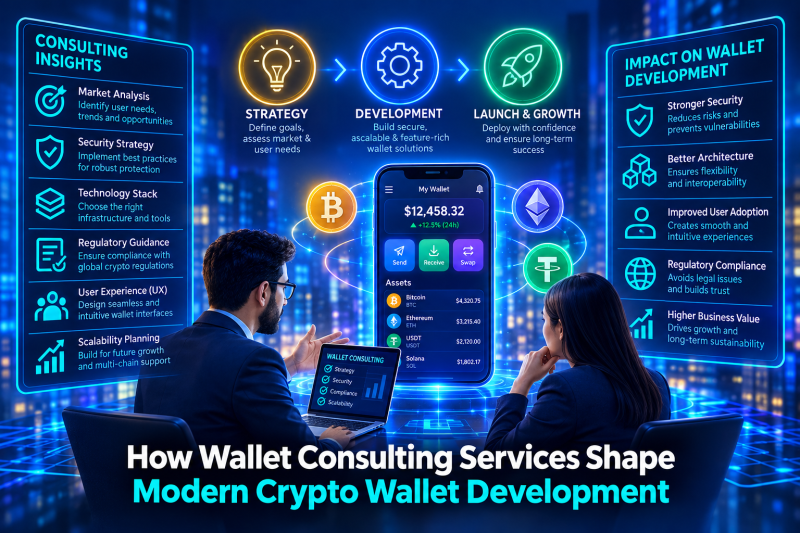
How Wallet Consulting Services Shape Modern Crypto Wallet Development
 Codezeros
Building a crypto wallet is not simply a matter of creating an interface for sending and receiving digital assets. Modern wallets can connect users with multiple blockchain networks, decentralized applications, DeFi protocols, NFT marketplaces, and other Web3 services.
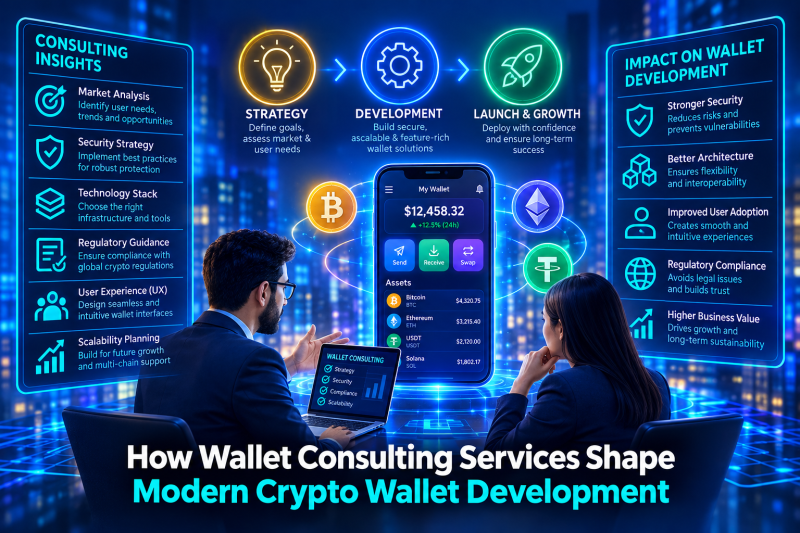
This complexity makes early architectural planning increasingly important. Wallet Consulting Service helps businesses evaluate their product requirements, blockchain infrastructure, custody model, security architecture, integrations, and long-term scalability before development begins.
A well-planned consulting process can reduce architectural uncertainty and help businesses prioritize the wallet features that matter most to their intended users.
What Is a Wallet Consulting Service?
A wallet consulting service provides strategic and technical guidance for businesses planning to build, upgrade, or expand a crypto wallet application.
Consulting may cover:
- Product and feature planning
- Blockchain selection
- Custody architecture
- Security strategy
- Multi-chain support
- Smart contract integrations
- DeFi and NFT connectivity
- Wallet infrastructure
- User experience
- Scalability
- Compliance considerations
- AI and automation opportunities
The purpose is to connect business objectives with an appropriate technical architecture before significant development resources are committed.
Why Consulting Matters Before Wallet Development
1. It Defines the Right Wallet Architecture
Businesses first need to determine what type of wallet they actually want to build.
A wallet may be:
- Custodial
- Non-custodial
- Hybrid
- Mobile
- Web-based
- Desktop
- Multi-chain
- Enterprise-focused
Each approach introduces different requirements for key management, authentication, transaction signing, infrastructure, and user access.
Consulting can help identify the architecture that fits the intended business model instead of selecting technology based only on market trends.
2. It Helps Prioritize Features
Crypto wallet applications can quickly become overloaded with features. Businesses may consider swaps, staking, NFTs, DeFi, dApps, portfolio tracking, payments, cross-chain transfers, governance, and many other capabilities.
A consulting process can separate essential features from future enhancements.
For example, a business targeting retail crypto users may prioritize simple asset management and swaps, while an enterprise wallet may require multi-signature approvals, role-based access, audit trails, and reporting.
3. It Supports Blockchain Selection
Choosing blockchain networks affects transaction fees, confirmation speed, asset availability, infrastructure requirements, and user experience.
A wallet designed for multiple ecosystems must also account for different transaction formats, token standards, network APIs, RPC providers, and fee structures.
Technical consulting can help businesses evaluate these factors before committing to a multi-chain architecture.
How Wallet Consulting Shapes Security
Security should be part of the architecture from the beginning.
Private-Key and Account Management
The wallet's custody model determines how keys and signing credentials are managed. Non-custodial products generally give users direct control, while custodial systems introduce additional operational responsibilities.
Depending on the product, businesses may consider:
- Secure key storage
- Hardware wallet support
- Multi-factor authentication
- Biometric authentication
- Multi-signature approvals
- Transaction limits
- Session controls
- Address verification
Smart Contract and dApp Risk
Wallets that interact with DeFi protocols and decentralized applications can expose users to external smart contract risks.
Consulting can help define permission models, transaction previews, contract interaction controls, and monitoring requirements before these integrations are implemented.
Wallet Consulting and User Experience
Blockchain applications often expose users to technical concepts such as gas fees, network selection, wallet addresses, signatures, and transaction confirmations.
A consulting process can help identify where users may encounter friction.
For example, the wallet interface can provide clear information about:
- Which asset is being transferred
- Which blockchain is being used
- Estimated network fees
- Transaction status
- Contract permissions
- Recipient details
The objective is to make blockchain functionality easier to understand without hiding important transaction information.
Consulting for DeFi, NFT, and Multi-Chain Wallets
Modern wallets can serve as gateways to multiple Web3 ecosystems.
A business planning DeFi functionality may need integrations for swaps, staking, lending, liquidity pools, and portfolio tracking.
NFT-focused products may require marketplace connectivity, collection displays, metadata handling, and NFT transaction support.
Multi-chain wallets require additional planning around network switching, asset discovery, transaction routing, and chain-specific infrastructure.
This is where Wallet Development Services need to be supported by clear architectural decisions rather than feature additions made independently.
2026 Trends Influencing Wallet Consulting
AI-Powered Wallet Experiences
AI can assist users by explaining transaction information, organizing portfolio data, summarizing wallet activity, and providing contextual information about blockchain operations.
Consultants should evaluate where AI adds genuine usability value without introducing unnecessary access to sensitive wallet operations.
Automation
Automation can support transaction alerts, portfolio reporting, security monitoring, recurring notifications, and operational workflows.
These functions should operate under clear permissions and predefined rules.
Agentic AI
Agentic AI can perform defined multi-step tasks, such as analyzing blockchain activity, monitoring selected assets, or preparing transaction information for user review.
For wallet applications, consultants should define strict boundaries around what an AI agent can access or initiate. Asset transfers and transaction signing should require appropriate authorization.
Enterprise Adoption
Enterprise adoption is increasing the demand for wallet infrastructure with role-based access, multi-signature approvals, audit trails, reporting, policy controls, and integration with business systems.
A consulting phase can help determine which enterprise controls are required before development begins.
How to Choose a Wallet Development Company
Businesses should evaluate a Wallet Development Company based on both development capabilities and architectural expertise.
Key evaluation factors include:
- Blockchain expertise: Does the team understand the required networks?
- Security knowledge: How are keys, authentication, and transaction permissions handled?
- Custody experience: Can the team support the required wallet model?
- Integration capabilities: Can the wallet connect with DeFi, NFT, dApp, and payment infrastructure?
- Scalability: Can the architecture support future growth?
- Consulting approach: Does the provider explain architectural trade-offs?
- Long-term support: Can the team maintain and upgrade the wallet?
A strong consulting process should produce a practical roadmap rather than only a list of technical recommendations.
Conclusion
Wallet consulting has become an important part of modern crypto wallet development because today's wallets often combine multiple blockchain networks, asset types, decentralized applications, and financial services.
A structured consulting process can help businesses make better decisions about architecture, security, integrations, user experience, AI, automation, and enterprise functionality before development begins. Codezeros can be considered when evaluating broader wallet architecture, consulting, and development requirements.
For project-specific wallet planning and technical requirements, contact us today.
Frequently Asked Questions
1. What does a crypto wallet consulting service include?
It can include product planning, architecture design, blockchain selection, custody strategy, security planning, integration analysis, scalability planning, and technology recommendations.
2. Why is consulting important before wallet development?
Consulting helps businesses identify the appropriate architecture and prioritize features before development begins, reducing the risk of expensive architectural changes later.
3. Can consultants help with multi-chain wallet development?
Yes. Consulting can evaluate blockchain networks, token standards, infrastructure requirements, network fees, and interoperability considerations.
4. Can AI be included in crypto wallets?
Yes. AI can support transaction explanations, portfolio analysis, monitoring, notifications, and other user-assistance functions. Sensitive financial actions should remain controlled by explicit authorization.
5. How do I choose the right wallet development partner?
Evaluate blockchain expertise, security architecture, custody experience, integrations, scalability, consulting methodology, and post-launch support.
Source:
Click for the: Full Story
You might like