Close Menu
 World
World
 Biography
 Health
 Education
 Business
 Lifestyle
 Sports
 Technology
 Animals
 History
 Food
Food
 Religious
 Startups
 Movies
 Politics
 Fashion
 Covid
Covid
 Diet
Diet
 Fitness
 Marketing
 Travel
 Science
 Reviews
 Social media
 Stories
 Facts
Facts
 Art
Art
 Entertainment
Enterprise Dji
Technology
Drone as First Responder: A Practical Guide to Getting Started
 Enterprise Dji
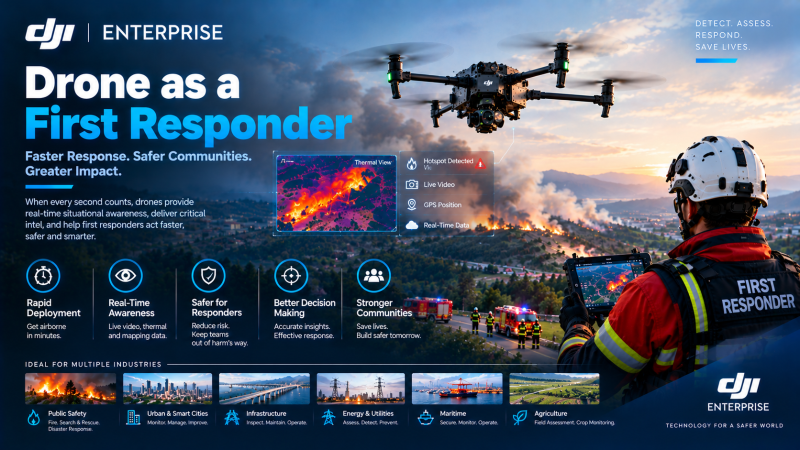
Putting a drone as first responder on priority calls is a big step for any agency, and the first few months decide whether it becomes a trusted tool or an expensive experiment. The aircraft matters, but the early choices matter more: which calls to start with, where to base the drone, who supervises it and how success will be judged.
This guide is written for agencies at the start of that journey. It covers the first decisions, a realistic starting setup, the workflow from alert to record and the mistakes that most often slow a new program down.
Quick Answer
Agencies new to drone response should start small: pick a few call types, base one or two aircraft at secure sites, assign trained remote pilots and write approval and privacy rules before the first flight. Then review results regularly and expand only where the data supports it.
What Should an Agency Decide First?
Start with the mission, because every other choice follows from it. Is the goal to reach calls sooner, to improve officer safety, to support searches or to give dispatchers better information? Most agencies want several of these, but ranking them keeps the program focused.
Next comes the coverage area. A drone has limited range and battery life, so the first sites should sit near areas with frequent calls, not simply where space happens to be available. Call data from the past year usually shows where an aerial view would have helped most.
Then name an owner. Someone must be accountable for the program, whether that is a lieutenant, a technology manager or a dedicated unit. Without an owner, decisions about training, maintenance and policy drift.
Finally, talk to the aviation authority early. Remote flights beyond visual line of sight generally require authorization, and rules differ by country, so asking sooner prevents delays later.
Which Calls Should a New Program Start With?
Start with calls where an aerial view clearly helps and the risk of flying is low. Alarms at commercial buildings, reports of crimes in progress, traffic collisions, welfare checks and missing-person searches are common first choices. They produce useful video without forcing the aircraft into tight or crowded airspace.
Leave complicated situations for later. Calls near airports, in dense urban areas or in severe weather are poor candidates while the team is still learning. A short list of qualifying calls is easier to train, easier to explain to the public and easier to measure.
As confidence grows, agencies add call types in steps, reviewing each addition before moving on.
How Does a Drone Docking Station Fit a Starting Setup?
A drone docking station keeps an aircraft charged, sheltered and ready, so a remote pilot can launch it without anyone driving to a site. For a new program, that readiness is what separates a drone that is occasionally useful from one that can actually arrive early.
A realistic starting setup is modest:
- One or two docks on rooftops at police or fire stations, chosen for clear surroundings, reliable power and a strong network connection
- A remote pilot station in the dispatch center or a nearby room
- A platform that shows live video and flight status
- A written list of who may approve a launch
Resist the urge to cover the whole jurisdiction in phase one. A limited area shows how approvals, video quality and record-keeping behave under real conditions, and it keeps early mistakes small. Overlapping coverage is a good goal for phase two, because a second site gives a backup when the first aircraft is already out or offline for maintenance.
Plan for the practical side of the dock as well: inspections, software updates, battery care and weather holds. A dock that nobody checks will eventually fail at the wrong moment.
What Does the Workflow Look Like From Alert to Record?
The workflow runs as a chain: alert, dispatch, drone dock, launch, aerial intelligence, live video, response decision and documentation.
- Alert: A 911 call, alarm or officer request arrives.
- Dispatch: A dispatcher or remote pilot approves the flight under agency rules.
- Dock and launch: The aircraft leaves its dock and follows a planned route.
- Aerial intelligence and live video: Camera feeds stream to the command center and, where policy allows, to responders.
- Response decision: Supervisors adjust unit numbers, routes and tactics based on what they see.
- Documentation: Footage and flight logs are stored for review, reporting and training.
Each step feeds the next. A slow approval delays the launch, a weak connection limits the video and missing records make the program harder to defend later.
How Does Aerial Video Help Dispatchers and Officers?
A DFR drone helps because it shows what a caller cannot describe and a patrol officer cannot yet see. The overhead view reveals exits, vehicles, crowds and approach routes at once.
On a burglary call, a dispatcher can check whether anyone is outside and where officers should position themselves. At a structure fire, a thermal camera can show where heat is concentrated, helping the incident commander choose where crews focus. For a missing person, an aerial search can cover open ground faster than a team on foot.
Not every call suits a drone, and people still make the decisions. Even so, a clearer view means fewer assumptions and fewer surprises when units arrive.
What Should the First 90 Days Look Like?
A sensible first quarter moves from preparation to limited operations to review.
In the first month, finish policy, install and test the dock, train pilots and dispatchers and run practice launches with no live call. In the second month, begin limited flights on the short list of call types, reviewing every flight afterward. In the third month, look at the numbers: time to scene, flights completed versus declined and feedback from users. Adjust policy, training or sites based on what the data shows.
This pace feels slow to enthusiastic teams, but it builds the habits and records a lasting program needs.
Which Mistakes Slow New Programs Down?
Most early problems are organizational, not technical.
- Buying hardware before writing policy
- Leaving the program without a clear owner
- Ignoring network quality at the installation site
- Training pilots but not dispatchers or supervisors
- Measuring nothing, so success is a matter of opinion
- Promising speed or savings that the agency cannot yet demonstrate
Agencies that avoid these tend to find that the technology performs as expected, because the surrounding system supports it.
Where Does DJI Enterprise Fit?
DJI Dock 3 is designed for remote deployment of Matrice 4D series aircraft, and DJI FlightHub 2 is a cloud platform for managing fleets, viewing live video, planning routes and reviewing mission data. Agencies should check current DJI Enterprise product pages for supported configurations, regional availability and specifications, and choose hardware that fits their own policies and dispatch needs.
Frequently Asked Questions
How can a new agency start a drone response program?Agencies can begin with a clear mission, a short list of call types, one or two secure launch sites and trained remote pilots. Writing approval and privacy rules before the first flight, then reviewing results regularly, gives the program a stable foundation to grow from.
How can agencies choose the first launch sites?They can map past call volume, check airspace restrictions and look for rooftops or compounds with clear surroundings, reliable power and strong connectivity. Starting near areas with frequent calls shortens flight times, and overlapping coverage can follow in a later phase.
How can dispatchers prepare for drone response?Dispatchers can train on which calls qualify, how to request a flight and how to use shared video in decisions. Practice scenarios, such as a lost video link or a competing call, help them respond calmly when conditions change.
What should the first flights focus on?The first flights should focus on low-risk, high-value calls such as alarms, collisions and welfare checks. Reviewing each flight afterward shows what worked, what confused users and where policy needs adjusting before the list of call types grows.
Do drones replace human responders?No. Drones supply information and a better vantage point, while officers, firefighters and paramedics still make decisions and take action. The aim is clearer awareness earlier in an incident, not removing people from the response.
Source:
Click for the: Full Story
You might like