Close Menu
 World
 Biography
 Health
 Education
 Business
 Lifestyle
 Sports
 Technology
 Animals
 History
 Food
 Religious
 Startups
 Movies
 Politics
 Fashion
 Covid
 Diet
 Fitness
 Marketing
 Travel
 Science
 Reviews
 Social media
 Stories
 Facts
 Art
 Entertainment
Deepak

Health
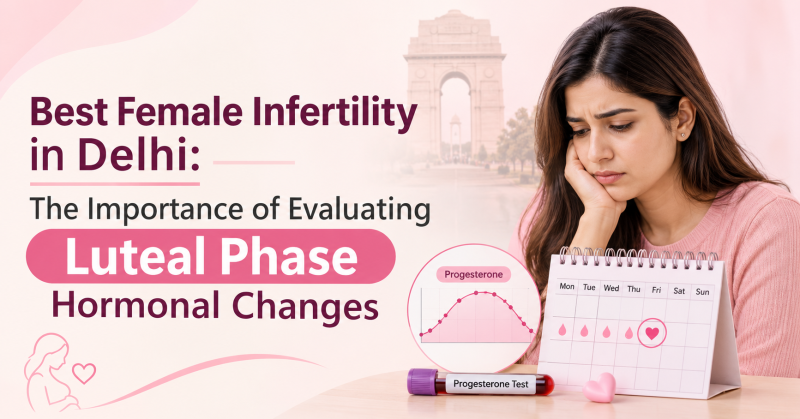
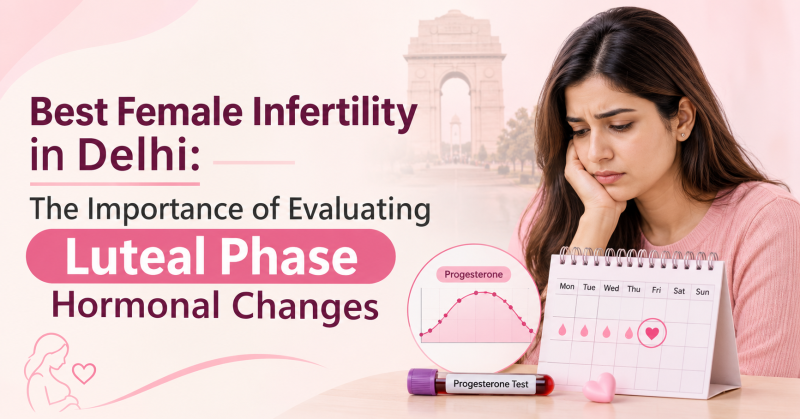
Best Female Infertility in Delhi: The Importance of Evaluating Luteal Phase Hormonal Changes
 Deepak
Many women track ovulation carefully and still wonder why pregnancy hasn’t happened. Ovulation is only one part of the cycle. The days that follow, known as the luteal phase, are when the body prepares the uterus for a possible pregnancy. If you are searching for the best female infertility in Delhi, knowing why this phase matters can help you understand what a complete evaluation should include.
What Is the Luteal Phase?
The luteal phase is the time between ovulation and the start of your next period. It usually lasts around 12 to 14 days, though this varies between women.
After the egg is released, the empty follicle becomes the corpus luteum. This temporary gland produces progesterone, along with some estrogen. Together, these hormones:
- Thicken and stabilise the uterine lining
- Help the lining become receptive to an embryo
- Support early pregnancy until the placenta takes over
If pregnancy does not occur, hormone levels fall and the period begins.
Why Luteal Phase Hormonal Changes Matter
For an embryo to implant, the timing of hormonal changes needs to be reasonably well coordinated. When progesterone is low, or the luteal phase is unusually short, the uterine lining may not develop as expected.
This may be associated with:
- Difficulty with implantation
- Very early pregnancy loss
- Spotting before periods
Doctors still debate how often a luteal phase problem is a stand-alone cause of infertility. In many women, it reflects another issue, such as a thyroid disorder, raised prolactin, PCOS, or poor follicle development earlier in the cycle. That is why the luteal phase is best evaluated as part of the bigger picture rather than in isolation.
Possible Signs Worth Noticing
Symptoms are not specific, but some women observe:
- Cycles that are consistently short
- Brown spotting for several days before the period
- A short gap between ovulation and menstruation
- Repeated early miscarriages
- Difficulty conceiving despite regular cycles
These signs do not confirm a problem on their own. Many women with them have a normal luteal phase, and others with no symptoms may still need assessment.
How Is the Luteal Phase Evaluated?
A gynaecologist may use a combination of the following:
- Detailed cycle history: cycle length, spotting patterns and ovulation timing
- Mid-luteal progesterone test: a blood test taken in the second half of the cycle, timed to your own cycle rather than a fixed day
- Thyroid and prolactin tests: to look for common hormonal contributors
- Other hormone tests: where indicated by the history
- Pelvic ultrasound: to assess follicle development and the uterine lining
- Assessment of tubes and uterus: when conception has taken longer than expected
A single progesterone reading can be misleading, because levels naturally fluctuate through the day. Interpreting results in context is as important as the test itself.
Why Timing and Interpretation Matter
One of the most common reasons luteal phase tests give confusing results is poor timing. A blood sample taken too early or too late in the cycle may not reflect true progesterone levels, especially in women with irregular cycles.
This is where experience helps. An infertility specialist in Delhi will usually match the test to your ovulation pattern and review it alongside your symptoms, ultrasound findings and other hormone reports, rather than relying on one number.
Treatment Approaches
Management depends on the cause, your age and how long you have been trying to conceive. Options a doctor may discuss include:
- Treating the underlying condition, such as thyroid or prolactin imbalance
- Ovulation induction, to improve follicle development when appropriate
- Progesterone support after ovulation or embryo transfer, where clinically justified
- Lifestyle measures, including balanced nutrition, healthy weight, adequate sleep and stress management
- Assisted reproduction (IUI or IVF), if other fertility factors are involved
Responses differ from person to person, and no treatment can guarantee pregnancy. A good plan is reviewed and adjusted as results come in.
Choosing Care for Female Infertility in Delhi
When looking for care for female infertility in Delhi, it helps to prioritise how a clinic evaluates you, not only how it describes itself. Look for a doctor who:
- Takes a full history before suggesting tests or medicines
- Explains why each investigation is needed
- Avoids starting hormones without a clear reason
- Involves both partners in the assessment where relevant
- Sets realistic expectations in plain language
Dr. Poonam Goyal, a gynaecologist and fertility specialist, follows this kind of stepwise approach, focusing on identifying the cause before planning treatment.
When to Seek Medical Advice
Consider consulting a gynaecologist or fertility specialist if:
- You have been trying for 12 months (6 months if you are 35 or older)
- You have had two or more early pregnancy losses
- Your cycles are irregular, short, or preceded by spotting
- You have PCOS, thyroid disease or endometriosis
Bring your cycle records and previous reports to your appointment. They make the consultation far more useful.
If you want consultation regarding female infertility, you can visit Dr Poonam Goyal at:
- C-3/63A, 64A, opp. Gokulpuri police station, Block C, Panchsheel Hospital, Yamuna Vihar, Shahdara, Delhi, 110053
- HOD IVF & Infertility, Max Superspeciality Hospital, Vaishali
Conclusion
Evaluating luteal phase hormonal changes gives a clearer view of what happens after ovulation, a part of the cycle that is easy to overlook. It rarely explains infertility on its own, but combined with a careful history and targeted tests, it can guide a more personalised plan. If you have been trying for some time, an early, well-timed evaluation can bring clarity and help you decide on the next step.
Frequently Asked Questions
1. What is the luteal phase of the menstrual cycle?
It is the time between ovulation and the next period, typically 12 to 14 days, when progesterone prepares the uterine lining for possible implantation.
2. How do doctors check luteal phase hormones?
They usually combine cycle history, a correctly timed mid-luteal progesterone blood test, thyroid and prolactin tests, and ultrasound findings.
3. Can a short luteal phase affect pregnancy?
It may affect implantation in some women, but it is often a sign of another underlying issue. It needs to be assessed in context rather than treated as a diagnosis by itself.
4. Is progesterone treatment always needed?
No. Progesterone support is used only when a doctor considers it appropriate, and treating an underlying cause may be the main step for some women.
5. When should I see a fertility specialist?
After 12 months of trying (6 months if you are 35 or older), or sooner if you have irregular cycles, repeated early losses, or conditions like PCOS or thyroid disease.
Source:
Click for the: Full Story
You might like