Close Menu
 World
 Biography
 Health
 Education
 Business
 Lifestyle
 Sports
 Technology
 Animals
 History
 Food
 Religious
 Startups
 Movies
 Politics
 Fashion
 Covid
 Diet
 Fitness
 Marketing
 Travel
 Science
 Reviews
 Social media
 Stories
 Facts
 Art
 Entertainment
Badal

Health
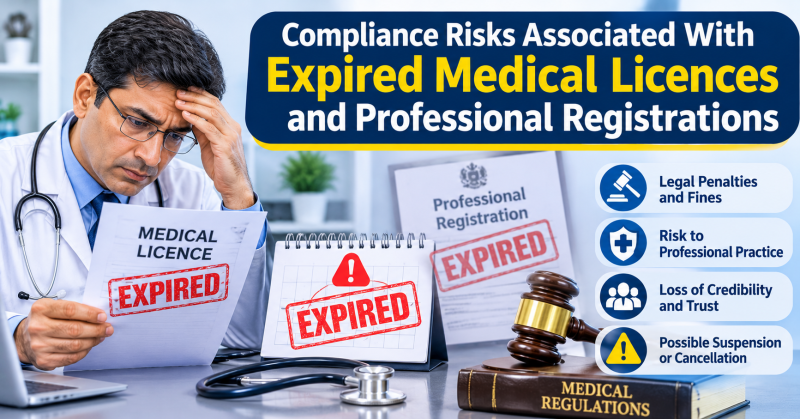
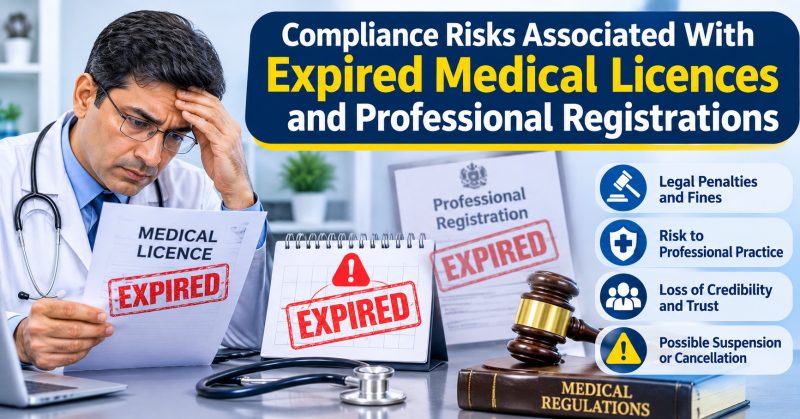
Compliance Risks Associated With Expired Medical Licences and Professional Registrations
 Badal
Practising with an expired or lapsed registration can expose a doctor to action by the medical council, penalties under the National Medical Commission Act, 2019, insurance and employment complications, and a weaker position if a patient complains. This legal compliance guide for doctors in Delhi explains why registration lapses happen, what risks follow, and which habits keep your credentials current. A lapse is often an administrative oversight, but its consequences can still be serious.
Why Registration Status Matters Legally
The NMC Act, 2019 restricts practice as a qualified medical practitioner to those enrolled in the State Medical Register or the National Medical Register. The Act also links registration to signing medical certificates and giving expert medical evidence in court. In Delhi, state-level registration is handled by the Delhi Medical Council, and the national register is maintained under the NMC framework.
In other words, registration is not just a formality. It is the legal basis on which your prescriptions, certificates, medico-legal reports and court testimony are accepted. Anyone using this Legal Guide for Doctors in Delhi should treat registration as an ongoing obligation, not a one-time milestone.
Common Ways Registrations Lapse
Consider a surgeon who moves from one private hospital to another. She assumes the previous HR team had tracked her renewal. Months later, during an insurance claim after a post-operative complication, the insurer asks for her current registration certificate and she discovers it has lapsed.
Lapses usually happen for ordinary reasons:
- Assuming the employer will manage renewals
- Missing renewal dates after moving between cities, states or institutions
- Not completing required continuing medical education (CME) credits on time
- Changing name, address or contact details without updating the council
- Holding registration in one state while practising in another
- Mismatch between the State Register and the National Medical Register entry
- Letting additional qualifications go unregistered
Risks of Practising With an Expired Registration
The exact consequences depend on the facts, the council’s current rules and whether a grace or restoration process applies. In general, doctors face these risks:
- Disciplinary action: Medical councils can act on complaints of unregistered or irregular practice, and professional misconduct can lead to warnings or removal of a name from the register.
- Statutory penalties: The NMC Act contains penal provisions for practising without being enrolled. Check the current text of the Act for specifics.
- Challenge to documents: Medical certificates, medico-legal certificates and expert opinions signed during a lapse may be questioned.
- Negligence claims: In Poonam Verma v. Ashwin Patel (1996), the Supreme Court dealt with a practitioner treating patients outside the system of medicine they were registered in and treated it as negligent. That case was not about an expired renewal, but it shows how seriously courts treat practice without proper registration.
- Insurance issues: Professional indemnity insurers may question or dispute claims if registration was not valid when the treatment occurred. Review your policy wording.
- Employment and empanelment problems: Hospitals, nursing homes and insurance or government panels typically require valid registration. Establishments registered under Delhi’s nursing home laws also rely on registered practitioners.
A lapse does not automatically mean a case will fail or that a penalty will follow, but it gives the other side an avoidable argument.
Documents and Records to Keep Current
Maintain a simple credentials file, in print and digital form, containing:
- State council registration certificate and renewal receipts
- National Medical Register ID or confirmation, where applicable
- Degree and postgraduate certificates and any additional registrations
- CME credit records and attendance certificates
- Professional indemnity policy and renewal schedule
- Registrations of the clinic or nursing home you work in
- Proof of address and name changes submitted to the council
Prescriptions and certificates should carry your name, qualifications and registration number, as required under the professional conduct rules currently in force. Medico-legal practitioners such as Dr. Vimal Kant Goyal often note that when a case is examined, the first questions are usually who treated the patient and whether that person was properly registered, so keeping these documents ready makes a real difference.
A Practical Renewal Checklist
- Note your registration expiry date today and set reminders at 90, 60 and 30 days.
- Confirm your status on the council’s and NMC’s official portals twice a year.
- Track CME credits throughout the cycle rather than at the end.
- Update address, name and employer details with the council promptly.
- Verify that your records match across the State Register and the National Medical Register.
- Ask your employer for written confirmation of what it will and will not handle for you.
- Keep payment receipts and acknowledgement numbers for every application.
- If your registration has lapsed, stop practising until you have confirmed your status with the council, then follow its restoration process.
- Check that your indemnity policy remains valid and covers your current role.
For a broader look at how credentials and records are examined in disputes, doctors may find this medico-legal resource useful alongside any medico legal guide in Delhi they already consult.
Conclusion
Most registration problems are preventable. They come from missed dates, unreported changes and assumptions that someone else is tracking your status. Diarise your expiry date, verify your entries on both registers, keep your CME and insurance current, and file your credentials where you can retrieve them quickly. If a lapse has already occurred, stop practising until you have confirmed your status, correct it promptly and consult a medico legal expert in Delhi or a healthcare lawyer about your specific situation. This article is for general information and is not legal advice.
Frequently Asked Questions
1. Can I practise while my renewal is pending?This depends on the council’s rules and any interim provisions. Do not assume you are covered. Confirm in writing with the council and keep the acknowledgement.
2. Is practising on an expired registration a criminal offence?The NMC Act contains penal provisions for practising without being enrolled, but whether they apply to a lapse depends on the facts and current rules. Seek qualified legal advice for your case.
3. Will an expired registration invalidate my past prescriptions or certificates?Not automatically, but their validity can be questioned for the period of the lapse. Records, patient outcomes and the circumstances all matter.
4. Does my hospital’s registration protect me?Not necessarily. The facility’s registration and your individual registration are separate. Each practitioner should maintain their own.
5. How do I check whether my registration is active?Use the official State Medical Council and National Medical Register portals, and keep a dated printout or screenshot for your records.
Source:
Click for the: Full Story
You might like