Close Menu
 World
 Biography
 Health
 Education
 Business
 Lifestyle
 Sports
 Technology
 Animals
 History
 Food
 Religious
 Startups
 Movies
 Politics
 Fashion
 Covid
 Diet
 Fitness
 Marketing
 Travel
 Science
 Reviews
 Social media
 Stories
 Facts
 Art
 Entertainment
Deepak

Health
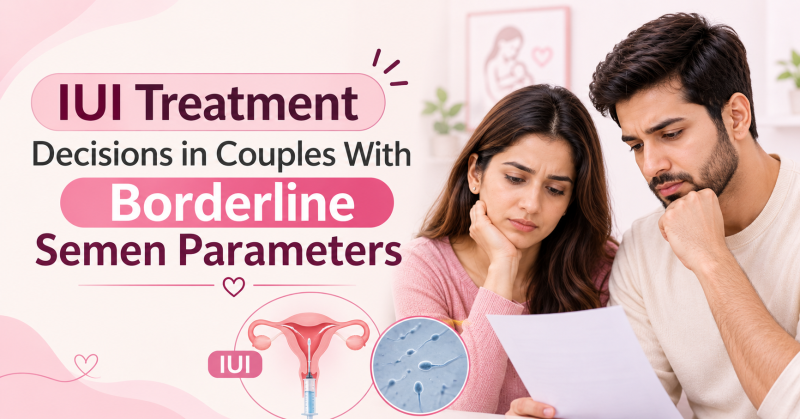
IUI Treatment Decisions in Couples With Borderline Semen Parameters
 Deepak
Few phrases cause more worry than “your semen report is borderline.” It isn’t clearly normal, and it isn’t clearly abnormal. Couples are often left wondering whether to keep trying naturally, move to IUI, or consider something more advanced. If you are searching for the best iui centre in Delhi, understanding how doctors approach these decisions can help you ask the right questions.
What Does “Borderline” Mean in a Semen Report?
A semen analysis looks at several measures, including:
- Sperm count (concentration)
- Motility (how well sperm move)
- Morphology (shape)
- Volume and other basic characteristics
Results are compared with reference values set by the World Health Organization. “Borderline” usually means one or more values sit close to the lower limit of those ranges, or that results differ between tests.
Sperm quality naturally varies from one sample to another. Illness, fever, stress, abstinence time and how the sample was collected can all influence a single report. That is why one borderline result is rarely the full story.
Why a Repeat Test Is Often Helpful
Before making treatment decisions, doctors often suggest repeating the analysis after a suitable gap. A second report can show whether the first result was a one-off or a consistent pattern, and it helps avoid starting treatment based on a single sample.
How IUI May Help
Intrauterine insemination (IUI) places prepared sperm directly into the uterus around ovulation. The sample is processed in the laboratory so that healthier, more motile sperm are concentrated, which can shorten the distance sperm need to travel.
For couples with mildly reduced semen parameters, IUI is sometimes considered because it may improve the chance that sperm reach the egg. It is not a fix for every male factor, and its usefulness depends on how much usable sperm remains after processing.
Factors Doctors Consider Besides the Semen Report
Semen quality is only one piece of the decision. A fertility specialist will also look at:
- Female age and ovarian reserve: egg quality and quantity strongly influence results.
- Ovulation: whether the woman ovulates regularly or needs medication to support it.
- Fallopian tube health: at least one open, healthy tube is generally needed for IUI.
- Uterine condition: fibroids, polyps or adhesions may affect implantation.
- Duration of infertility: longer time trying may change the plan.
- Post-wash sperm count: how many motile sperm remain after laboratory preparation.
A couple with borderline semen and otherwise favourable factors may be a reasonable candidate for IUI. The same semen report in a woman with blocked tubes or diminished ovarian reserve may call for a different approach.
When IUI May Be Less Suitable
IUI may not be the best first step if:
- Semen parameters are severely reduced rather than borderline
- Post-wash motile sperm count is very low
- Both fallopian tubes are blocked
- The woman’s age or ovarian reserve makes time a major concern
- Several previous IUI cycles have not worked
In such situations, a doctor may discuss IVF or ICSI sooner, so that time is not lost on a treatment unlikely to help.
Practical Steps Before Starting IUI
- Review recent semen reports with your doctor rather than relying on one result
- Ask about additional tests, such as hormone levels or evaluation of the sperm if needed
- Discuss lifestyle factors, including smoking, alcohol, heat exposure and weight
- Complete the female evaluation, including ultrasound and tubal assessment
- Agree on how many IUI cycles are reasonable before reviewing the plan
Lifestyle changes, particularly stopping smoking and managing weight and stress, may support sperm health over time, though the degree of improvement varies.
What to Look for in an IUI Centre
When comparing options for IUI treatment in Delhi, focus on process rather than promises. A good centre will:
- Assess both partners before recommending treatment
- Explain why IUI is, or is not, appropriate for your situation
- Monitor ovulation closely, with individualised timing
- Be transparent about realistic expectations and when to move on to other options
- Provide clear communication throughout the cycle
For couples closer to East Delhi, access matters too, since repeated monitoring visits are part of a cycle. Many families look for IUI treatment in Yamuna Vihar Delhi because it reduces travel during the monitoring phase.
Dr. Poonam Goyal, a gynaecologist and fertility specialist, takes this kind of stepwise approach, reviewing the full picture before recommending IUI.
If you want consultation regarding IUI treatment, you can visit Dr Poonam Goyal at:
- C-3/63A, 64A, opp. Gokulpuri police station, Block C, Panchsheel Hospital, Yamuna Vihar, Shahdara, Delhi, 110053
- HOD IVF & Infertility, Max Superspeciality Hospital, Vaishali
Conclusion
Borderline semen parameters do not automatically mean IUI is needed, or that it will not work. The right decision depends on repeat testing, the woman’s fertility factors and how long you have been trying. A clear, individual assessment helps you move forward with confidence rather than uncertainty. No treatment can guarantee pregnancy, but a well-planned approach gives you the best chance of making informed choices.
Frequently Asked Questions
1. What does borderline semen analysis mean?
It means one or more values are close to the lower reference limit or vary between tests. A repeat analysis helps clarify whether the result is consistent.
2. Can couples with borderline semen conceive naturally?
Yes, some can, especially when the female partner’s fertility factors are favourable. A doctor can advise how long it is reasonable to keep trying.
3. Is IUI suitable for borderline sperm counts?
It may be, particularly when the post-wash motile sperm count is adequate and the woman has open tubes and regular ovulation. Suitability is decided case by case.
4. How many IUI cycles are usually tried?
This varies, but many doctors review the plan after a few unsuccessful cycles and may discuss IVF or ICSI if progress is limited.
5. Can lifestyle changes improve semen parameters?
Healthy habits such as quitting smoking, limiting alcohol, managing weight and reducing heat exposure may support sperm health, though results differ from person to person.
Source:
Click for the: Full Story
You might like