Close Menu
 World
 Biography
 Health
 Education
 Business
 Lifestyle
 Sports
 Technology
 Animals
 History
 Food
 Religious
 Startups
 Movies
 Politics
 Fashion
 Covid
 Diet
 Fitness
 Marketing
 Travel
 Science
 Reviews
 Social media
 Stories
 Facts
 Art
 Entertainment
Deepak

Health
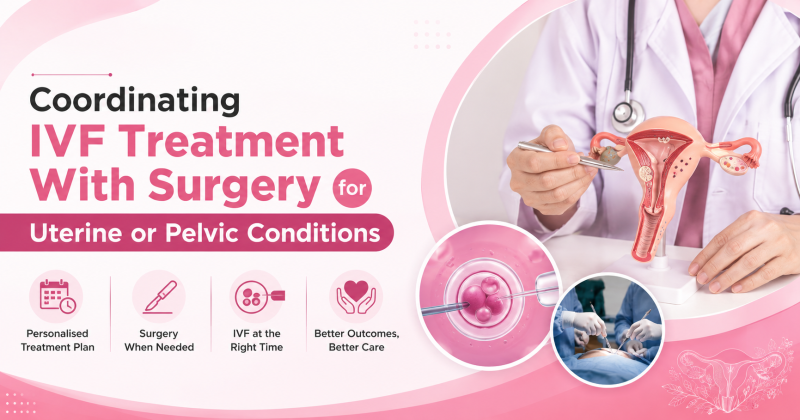
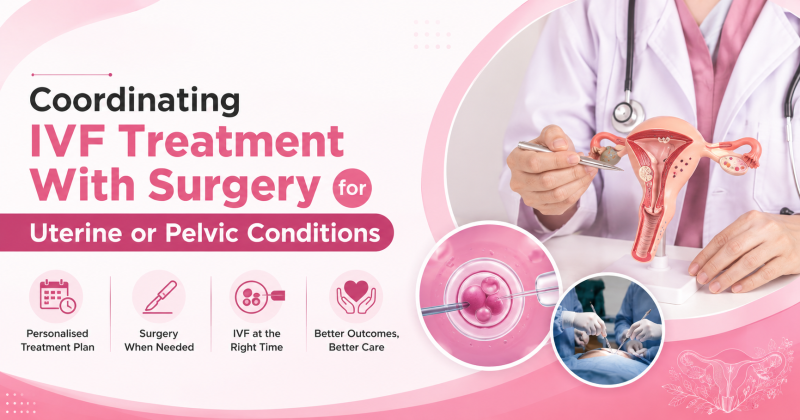
Coordinating IVF Treatment With Surgery for Uterine or Pelvic Conditions
 Deepak
For some couples, IVF alone is not the whole answer. A fibroid, polyp, endometrioma, scarred tube or uterine septum may need to be dealt with before, or sometimes instead of, an embryo transfer. The question patients most often ask is: which comes first, the surgery or the IVF?
The answer depends on your condition, your age, your ovarian reserve and your symptoms. This is where careful coordination between your gynaecologist and fertility team matters, and it is one reason the evaluation process deserves as much attention as the treatment itself when you look for the best IVF centre in Delhi.
Why Surgery and IVF Need to Be Planned Together
IVF bypasses some fertility barriers, such as blocked tubes, but it cannot correct every problem inside the uterus or pelvis. At the same time, surgery is not risk-free. It can affect ovarian reserve, form scar tissue and delay treatment.
Good planning aims to:
- Treat only what actually needs treatment
- Choose the least invasive effective option
- Time the surgery so that IVF is not unnecessarily delayed
- Protect ovarian reserve wherever possible
- Prepare the uterus for the best possible environment for implantation
Conditions That May Need Surgical Attention
Uterine polypsPolyps are small growths in the uterine lining that may interfere with implantation. They are commonly removed through hysteroscopy, a day-care procedure done through the cervix without abdominal incisions.
FibroidsNot every fibroid needs removal. Those that distort the uterine cavity (submucosal), or are large, are more likely to affect fertility. Small fibroids outside the cavity often do not need surgery. Your doctor will consider size, number and position.
Uterine septum and intrauterine adhesionsA septum (a band of tissue dividing the cavity) or adhesions from previous infection or surgery can affect implantation and pregnancy continuation. Hysteroscopic correction is often considered.
Endometriosis and endometriomasEndometriosis may cause pain, scarring and reduced ovarian reserve. Surgery for ovarian endometriomas needs particular thought, because removing a cyst can reduce healthy ovarian tissue. In many cases, doctors weigh the benefit carefully against that risk before recommending it.
HydrosalpinxA fluid-filled blocked tube can reduce implantation chances. Options discussed include removing or blocking the affected tube before embryo transfer.
AdenomyosisWhere the uterine wall is involved, medical therapy and timing of the embryo transfer are usually discussed first, as surgical options are more limited.
Which Comes First: Surgery or IVF?
There is no single rule. Some general patterns are:
- Surgery first when a condition clearly blocks implantation or causes symptoms, such as a polyp, septum or hydrosalpinx.
- IVF first when age or low ovarian reserve makes time critical, and the condition is unlikely to be made worse by waiting.
- Freeze-all strategy where embryos are created and stored, surgery is done, and the transfer happens in a later, better-prepared cycle.
- Observation only when a finding, such as a small fibroid away from the cavity, is unlikely to matter.
An experienced IVF doctor in Delhi will explain the reasoning behind the sequence suggested for you and discuss the alternatives.
Timing After Surgery
After hysteroscopic procedures, the uterus may need a short healing period, and sometimes supportive medication, before an embryo transfer. After laparoscopic surgery, recovery time is generally longer. The right interval varies from person to person, so follow your surgeon’s and fertility specialist’s advice rather than a fixed rule.
Questions to Ask Before Agreeing to Surgery
- Is this surgery likely to improve my chances of pregnancy, or is it mainly for symptom relief?
- Could it affect my ovarian reserve?
- Is there a less invasive option?
- How long should I wait before starting IVF afterward?
- What happens if I choose IVF without surgery?
- Will my fertility team and surgeon coordinate with each other?
A clear answer to each of these is a good sign of patient-centred care.
What to Look for in a Fertility Team
Many patients search for the best IVF doctor in Delhi when facing this decision. Rather than looking only at a name, consider whether the team:
- Reviews your scans and reports in detail
- Explains why surgery is, or is not, recommended
- Offers hysteroscopy and laparoscopy options or coordinates closely with those who do
- Individualises the plan and does not follow a fixed template
- Avoids guaranteeing results
Dr. Poonam Goyal, a Gynecologist and Fertility Specialist in Delhi, approaches such cases by combining gynaecological and fertility perspectives, so the surgical decision and the IVF plan are made together.
If you want consultation regarding IVF treatment, you can visit Dr Poonam Goyal at:
- C-3/63A, 64A, opp. Gokulpuri police station, Block C, Panchsheel Hospital, Yamuna Vihar, Shahdara, Delhi, 110053
- HOD IVF & Infertility, Max Superspeciality Hospital, Vaishali
This article is for general information and does not replace personalised medical advice.
FAQs
Q1. Do I always need surgery before IVF if I have fibroids?
No. Fibroids that do not distort the uterine cavity are often left alone. Surgery is usually considered when a fibroid changes the cavity, is large or causes symptoms. Your doctor will decide based on scans.
Q2. Can IVF be done first and surgery later?
Sometimes. In a freeze-all approach, embryos are frozen and the transfer is done after the condition has been treated. This may be considered when age or ovarian reserve makes time important.
Q3. Can surgery for endometriosis affect ovarian reserve?
It can, especially after removal of ovarian endometriomas. This is why the decision is made carefully, weighing symptoms and fertility goals.
Q4. How soon can IVF start after hysteroscopy?
It varies by procedure and individual healing. Your doctors will advise on timing, which can range from a short interval to a few cycles.
Q5. Why is hydrosalpinx treated before an embryo transfer?
Fluid from a blocked tube can enter the uterus and may reduce the chance of implantation. Treating or blocking the affected tube is often discussed to improve the uterine environment.
Source:
Click for the: Full Story
You might like