Close Menu
 World
 Biography
 Health
 Education
 Business
 Lifestyle
 Sports
 Technology
 Animals
 History
 Food
 Religious
 Startups
 Movies
 Politics
 Fashion
 Covid
 Diet
 Fitness
 Marketing
 Travel
 Science
 Reviews
 Social media
 Stories
 Facts
 Art
 Entertainment
Deepak

Health
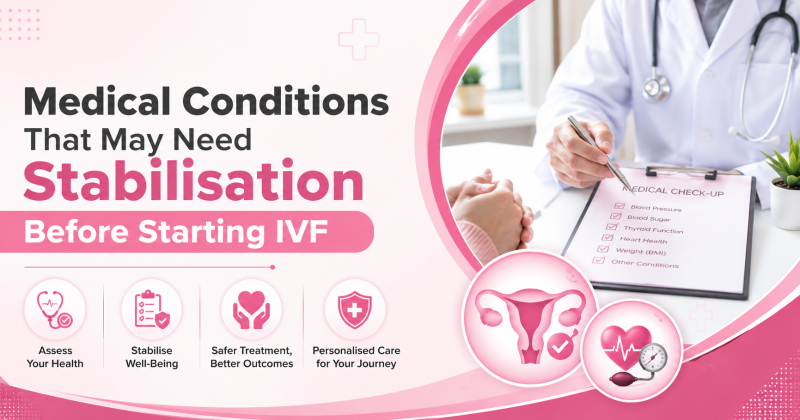
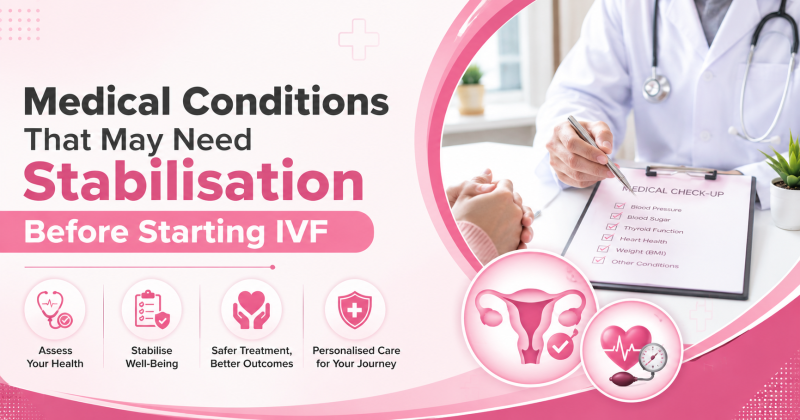
Medical Conditions That May Need Stabilisation Before Starting IVF
 Deepak
Many couples expect IVF to begin as soon as they decide to go ahead. In practice, a good fertility team often asks for a pause first. This is not a delay for its own sake. Some health conditions can affect how your body responds to IVF medicines, how safely an egg retrieval or pregnancy can proceed, and how healthy a pregnancy may be.
Understanding this early helps you plan better and avoid unnecessary stress. This is also why a thorough pre-IVF evaluation matters when choosing the best IVF centre in Delhi for your treatment.
Why Stabilisation Matters Before IVF
IVF involves hormonal stimulation, minor procedures and, if successful, a pregnancy that places extra demand on the body. A condition that is well controlled is far safer to manage than one that is active or unpredictable.
Stabilising a condition first can help to:
- Reduce risks during ovarian stimulation and anaesthesia
- Support a healthier uterine environment for implantation
- Lower the chance of complications in early pregnancy
- Make treatment planning more predictable
Stabilisation does not mean waiting for perfect health. It means reaching a point where your doctor considers the condition adequately controlled.
Medical Conditions That May Need Attention First
Thyroid disorders
An underactive or overactive thyroid can affect ovulation, menstrual regularity and early pregnancy. Thyroid levels are usually checked before treatment, and medicines are adjusted until the levels are in a suitable range.
Diabetes and blood sugar problems
Poorly controlled blood sugar can affect egg quality, implantation and pregnancy health. Many doctors ask for better glucose control, often guided by HbA1c and fasting levels, before starting a cycle.
High blood pressure
Hypertension can raise risks during pregnancy. Blood pressure is reviewed, and medicines may be changed if some are unsuitable for use in pregnancy.
PCOS and metabolic concerns
Women with polycystic ovary syndrome often respond strongly to stimulation. This can increase the risk of ovarian hyperstimulation syndrome (OHSS). Weight management, insulin resistance and cycle regulation are often addressed first, and the stimulation protocol is chosen carefully.
Endometriosis, fibroids and polyps
Some uterine or pelvic conditions may interfere with implantation or cause pain and bleeding. Depending on size, position and symptoms, your doctor may suggest medical treatment or a minimally invasive procedure before IVF.
Hydrosalpinx (fluid-filled fallopian tubes)
Fluid in a blocked tube can leak into the uterus and may reduce implantation chances. Doctors often discuss treating the tube before an embryo transfer.
Autoimmune and clotting conditions
Conditions such as lupus, antiphospholipid syndrome or clotting disorders may need specialist coordination. Some require specific medication plans during treatment and pregnancy.
Anaemia and vitamin deficiencies
Low haemoglobin, vitamin D or vitamin B12 are common and usually correctable. Addressing them can improve overall readiness for treatment and pregnancy.
Infections
Active infections, including some genital tract infections, should be treated and cleared. Screening for infections is also a routine part of IVF preparation.
Male partner factors
Stabilisation is not only about women. A male partner with uncontrolled diabetes, an infection, hormonal imbalance or other health concerns may also need evaluation and treatment before sperm is used for IVF.
How Is Readiness Assessed?
A pre-IVF evaluation is personalised. It usually includes:
- A detailed medical, surgical and menstrual history
- Blood tests (thyroid, blood sugar, haemoglobin, hormonal markers, infection screening)
- Pelvic ultrasound to assess the uterus and ovaries
- Further tests, such as hysteroscopy or a tubal assessment, where needed
- Semen analysis and related male evaluation
- Review of current medicines, including any that may not be suitable in pregnancy
Choosing an experienced IVF doctor in Delhi who looks at your complete health picture, rather than only your fertility numbers, can make the process safer and more efficient.
Will Waiting Reduce My Chances?
This is the question most patients worry about. The honest answer is that it depends on your age, ovarian reserve and the condition involved.
For many conditions, a short period of stabilisation can improve the safety and suitability of treatment. For women with lower ovarian reserve or advanced age, your doctor will weigh the benefit of preparation against the time factor. Neither delay nor rushing is right for everyone, which is why individual assessment matters. No ethical clinic can promise a guaranteed outcome, but a well-prepared cycle gives treatment a better foundation.
What You Can Do While Preparing
- Take prescribed medicines regularly and do not stop them without medical advice
- Keep a record of your reports, past treatments and surgeries
- Aim for a balanced diet, regular movement and good sleep
- Avoid smoking and limit alcohol and caffeine
- Ask your doctor what target levels you need to reach before starting
- Discuss stress and emotional wellbeing, as counselling can be part of preparation
Choosing the Right Fertility Team
Couples often search for the best IVF doctor in Delhi, but the more useful question is whether the doctor will evaluate you carefully, explain the reasoning behind each step and involve other specialists when needed. A clinic that takes time to stabilise your health before treatment is usually thinking about your safety as well as your success.
Dr. Poonam Goyal, a Gynecologist and Fertility Specialist in Delhi, follows an individualised approach to IVF planning. Treatment decisions are based on your history, test results and overall health, with clear communication at each stage.
If you want consultation regarding IVF treatment, you can visit Dr Poonam Goyal at:
- C-3/63A, 64A, opp. Gokulpuri police station, Block C, Panchsheel Hospital, Yamuna Vihar, Shahdara, Delhi, 110053
- HOD IVF & Infertility, Max Superspeciality Hospital, Vaishali
This article is for general information and does not replace personalised medical advice.
FAQs
Q1. Can I start IVF if I have thyroid problems?
Often yes, once thyroid levels are well controlled. Your doctor will check your levels and may adjust medication first, because uncontrolled thyroid disease can affect ovulation and early pregnancy.
Q2. Does PCOS need to be treated before IVF?
PCOS does not always need to be “cured,” but related concerns such as irregular cycles, insulin resistance and weight are often addressed. Women with PCOS may respond strongly to stimulation, so protocols are chosen carefully to lower the risk of OHSS.
Q3. How long might stabilisation take before IVF?
It varies. Some issues, such as vitamin deficiencies, may need only a few weeks. Others, such as diabetes control or a surgical correction, may take longer. Your doctor will set a timeline based on your condition and age.
Q4. Will delaying IVF reduce my chances of pregnancy?
Not necessarily. A short, planned delay can improve safety and readiness. For women with reduced ovarian reserve or older age, your doctor will balance preparation against time and advise accordingly.
Q5. What should I look for in an IVF centre when I have an existing medical condition?
Look for a team that does a thorough pre-treatment evaluation, coordinates with other specialists when needed, explains the plan clearly and avoids guaranteeing results.
Source:
Click for the: Full Story
You might like