Close Menu
 World
 Biography
 Health
 Education
 Business
 Lifestyle
 Sports
 Technology
 Animals
 History
 Food
 Religious
 Startups
 Movies
 Politics
 Fashion
 Covid
 Diet
 Fitness
 Marketing
 Travel
 Science
 Reviews
 Social media
 Stories
 Facts
 Art
 Entertainment
Deepak

Health
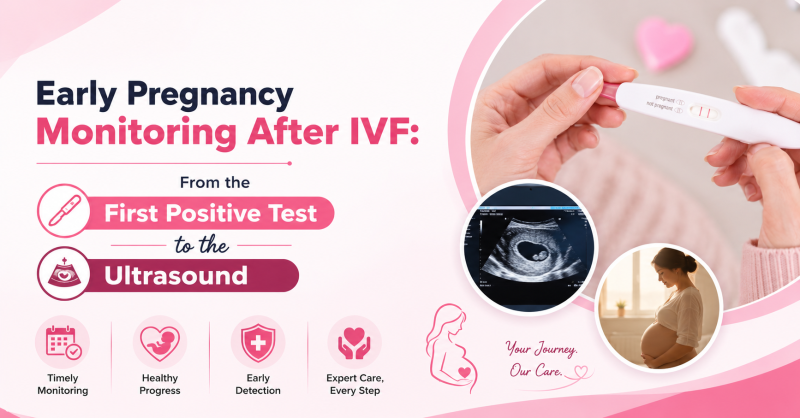
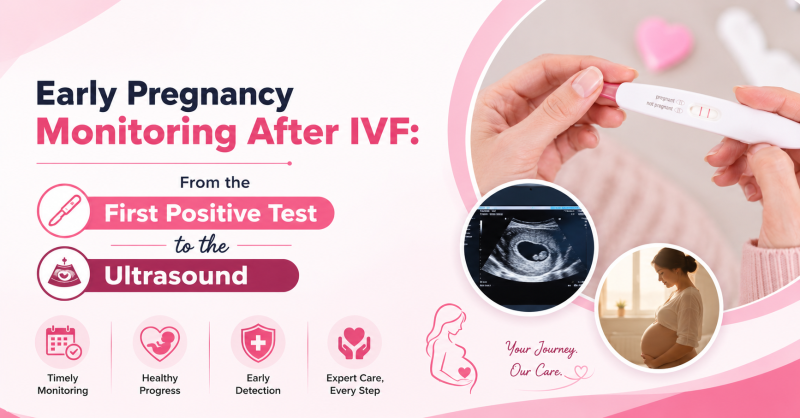
Early Pregnancy Monitoring After IVF: From the First Positive Test to the Ultrasound
 Deepak
A positive pregnancy test after IVF is a moment many couples have waited a long time for. It is also a moment that brings new questions. What happens next? How often should you be tested? When will you finally see the heartbeat?
The weeks after a positive result are carefully monitored in IVF pregnancies. Knowing what to expect can help you feel calmer and more prepared. This guide walks through each stage, and it also shows what to look for in follow-up care when choosing the best IVF centre in Shahdara or elsewhere in Delhi.
Step 1: The First Positive Test
After an embryo transfer, a blood test measuring beta-hCG (the pregnancy hormone) is usually done around 9 to 14 days later, depending on the embryo stage and your clinic’s protocol. A blood test is generally preferred over a home urine test because it is more accurate and gives a measurable value.
Home tests done too early can mislead. Some medicines used in fertility treatment may also affect results, so it is best to follow your clinic’s testing date.
Step 2: Repeat hCG Testing
A single number tells only part of the story. Your doctor may repeat the hCG test after 48 hours or a few days to check that the level is rising appropriately. In a healthy early pregnancy, hCG usually rises steadily, though the exact pattern varies from person to person.
Please avoid comparing your levels with those of other patients or with figures found online. Every pregnancy has its own range, and your doctor interprets the trend in your context.
Step 3: Continuing Supportive Medicines
Many women continue progesterone and sometimes estrogen, aspirin or other medicines for some weeks after a positive test. These are prescribed to support the uterine lining in early pregnancy.
Important points to remember:
- Do not stop or change medicines without medical advice
- Take them at the recommended times
- Report any rash, severe discomfort or difficulty with injections or vaginal medicines
- Keep a simple note of doses to avoid confusion
Step 4: The Early Ultrasound
The first scan is usually done around 5 to 7 weeks of pregnancy, counted from the last menstrual period or the equivalent embryo transfer date. An early transvaginal scan can help confirm:
- That the pregnancy is inside the uterus
- The number of gestational sacs (single or twin pregnancy)
- The presence of a yolk sac
- The embryo’s heartbeat, once it becomes visible
If the scan is done very early, the heartbeat may not yet be visible. This does not automatically mean something is wrong, and your doctor may simply advise a repeat scan after a week or so.
What Is Normal in Early Pregnancy?
Some symptoms are common and often harmless:
- Mild cramping or a pulling sensation
- Breast tenderness
- Fatigue
- Nausea
- Bloating, often worsened by hormonal medicines
Some women have few or no symptoms and are still progressing well. The absence of symptoms is not a reliable sign of a problem.
When to Call Your Doctor Promptly
Contact your fertility team without waiting for the next appointment if you notice:
- Heavy vaginal bleeding or passing clots
- Severe or one-sided abdominal pain
- Fainting or dizziness
- Shoulder-tip pain
- Fever
- Severe bloating, rapid weight gain or breathlessness (which may indicate ovarian hyperstimulation in some cases)
Light spotting can occur in early pregnancy, but it should still be reported so that your doctor can assess it.
Why Early Monitoring Matters After IVF
IVF pregnancies are not necessarily more fragile, but they are watched more closely. Early monitoring helps doctors to:
- Confirm that the pregnancy is in the right location
- Identify the rare possibility of an ectopic pregnancy
- Detect multiple pregnancy
- Adjust medication where needed
- Support the emotional needs of patients who have been through a long journey
Looking After Yourself in the Early Weeks
- Eat balanced meals and stay hydrated
- Take folic acid and other prescribed supplements
- Avoid smoking, alcohol and unprescribed medicines
- Rest when tired, though complete bed rest is generally not required unless advised
- Ask about travel, exercise and work before making changes
- Seek emotional support, because anxiety in the waiting weeks is very common
Choosing Follow-Up Care You Can Trust
Many patients look for an IVF doctor in Delhi who stays involved after the transfer, rather than only until the pregnancy test. Continuity matters. Ask whether your clinic offers clear contact guidance, timely scans and a plan for when to transition to routine antenatal care.
Some couples also search for the best IVF doctor in Delhi at this stage, hoping for reassurance. The most helpful quality is usually a doctor who explains each report calmly and honestly, without making promises that cannot be kept.
Dr. Poonam Goyal, a Gynecologist and Fertility Specialist in Delhi, supports patients through early pregnancy monitoring with scheduled tests, scans and clear guidance, until they are ready to move on to routine obstetric care.
If you want consultation regarding IVF treatment, you can visit Dr Poonam Goyal at:
- C-3/63A, 64A, opp. Gokulpuri police station, Block C, Panchsheel Hospital, Yamuna Vihar, Shahdara, Delhi, 110053
- HOD IVF & Infertility, Max Superspeciality Hospital, Vaishali
This article is for general information and does not replace personalised medical advice.
FAQs
Q1. When should I take a pregnancy test after IVF embryo transfer?
Most clinics advise a blood hCG test about 9 to 14 days after transfer, depending on embryo stage. Testing earlier at home can give unreliable results.
Q2. Why is the hCG test repeated after a positive result?
Repeat testing shows whether the level is rising appropriately. Your doctor looks at the trend rather than one number, because normal ranges vary.
Q3. When can the heartbeat be seen after IVF?
An early ultrasound at around 5 to 7 weeks may show the heartbeat. If it is not visible yet, a repeat scan after a short interval is often advised before drawing any conclusion.
Q4. Is spotting normal after a positive IVF pregnancy test?
Light spotting can occur in early pregnancy, but it should always be reported to your doctor. Heavy bleeding, clots or severe pain need prompt medical attention.
Q5. Should I continue my medicines after a positive test?
Usually yes. Progesterone and other supportive medicines are often continued for a period decided by your doctor. Do not stop them on your own.
Source:
Click for the: Full Story
You might like