Close Menu
 World
World
 Biography
 Health
 Education
 Business
 Lifestyle
 Sports
 Technology
 Animals
 History
 Food
Food
 Religious
 Startups
 Movies
 Politics
 Fashion
 Covid
Covid
 Diet
Diet
 Fitness
 Marketing
 Travel
 Science
 Reviews
 Social media
 Stories
 Facts
Facts
 Art
Art
 Entertainment
Deepak

Health
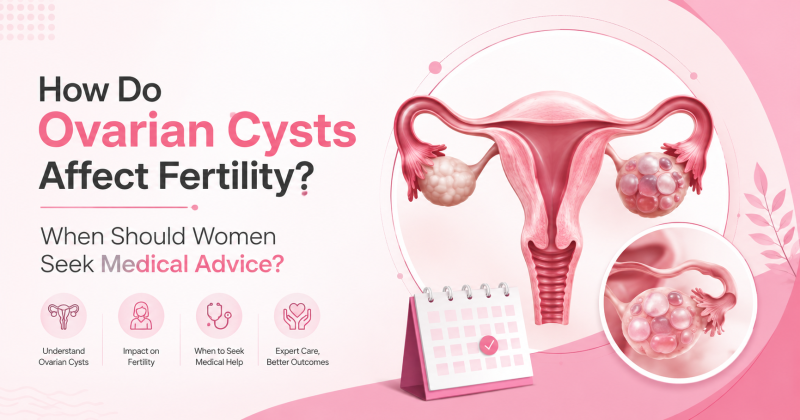
How Do Ovarian Cysts Affect Fertility? When Should Women Seek Medical Advice?
 Deepak
Ovarian cysts are one of the most common findings during a routine pelvic ultrasound, and for many women, they cause little more than a moment of worry before disappearing on their own. But for others, cysts can become a genuine concern when trying to conceive. If you've been told you have an ovarian cyst and are also trying to get pregnant, it's natural to wonder how the two are connected.
This blog breaks down what ovarian cysts are, how they may influence fertility, and when it's time to speak with a specialist offering female infertility in Delhi.
What Are Ovarian Cysts?
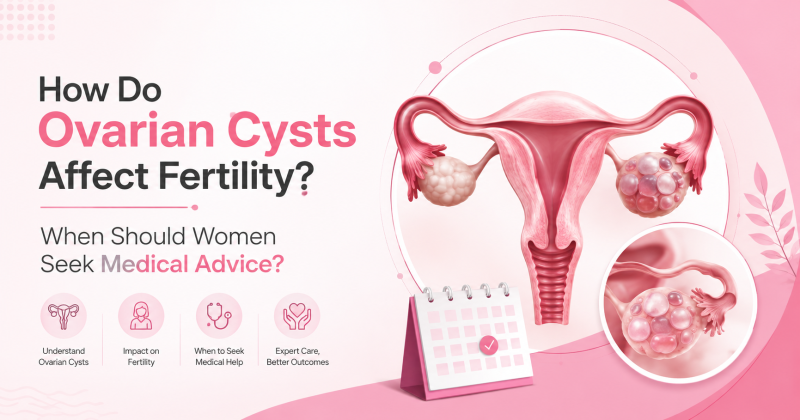
Ovarian cysts are fluid-filled sacs that form in or on the ovary. Most are a normal part of the menstrual cycle and are called functional cysts. These typically form when a follicle doesn't release an egg as expected, or when it doesn't dissolve after ovulation.
Other types of cysts include:
- Endometriomas – linked to endometriosis, formed when endometrial-like tissue grows on the ovary
- Dermoid cysts – present from birth, containing tissue such as hair or fat
- Cystadenomas – growths that develop from ovarian tissue
- Polycystic ovaries – multiple small cysts often associated with PCOS
Not all cysts are the same, and their impact on fertility varies significantly depending on the type, size, and whether they recur.
How Can Ovarian Cysts Affect Fertility?
Many ovarian cysts are harmless and resolve within a few menstrual cycles without any treatment. However, some cysts can interfere with reproductive health in the following ways:
1. Disrupted Ovulation
Functional cysts, especially if they persist or recur frequently, may interfere with the regular release of eggs. Irregular or absent ovulation can make conception more difficult.
2. Distorted Pelvic Anatomy
Larger cysts can press against nearby structures, including the fallopian tubes. This may affect the ability of the egg and sperm to meet, or interfere with the passage of a fertilised egg into the uterus.
3. Endometriosis-Related Cysts
Endometriomas are often associated with pelvic inflammation, scarring, and reduced ovarian reserve. Women with endometriosis-related cysts may find it takes longer to conceive, and in some cases, may require fertility support alongside cyst management.
4. Hormonal Imbalance
Certain cysts, particularly those linked to polycystic ovaries, are associated with hormonal fluctuations that can affect the menstrual cycle and ovulation pattern.
5. Impact on Ovarian Reserve
In some cases, especially with endometriomas or after cyst removal surgery, ovarian reserve (the number of eggs remaining) can be affected. This is one reason why treatment decisions for cysts in women planning pregnancy need to be made carefully.
It's important to note that having a cyst does not automatically mean infertility. Many women with ovarian cysts conceive naturally, particularly when the cyst is small, simple, and not recurrent.
Common Symptoms to Watch For
Ovarian cysts don't always cause noticeable symptoms, which is why many are found incidentally during a scan. When symptoms do occur, they may include:
- Pelvic pain or a dull ache on one side
- Bloating or a feeling of fullness in the abdomen
- Irregular periods or unusually heavy bleeding
- Pain during intercourse
- Difficulty conceiving despite regular attempts
Sudden, severe pelvic pain accompanied by fever, vomiting, or dizziness should be treated as urgent, as it may indicate a cyst rupture or ovarian torsion.
When Should Women Seek Medical Advice?
It's reasonable to consult a gynecologist or fertility specialist if any of the following apply:
- A cyst is found on ultrasound and you are trying to conceive
- You experience persistent or worsening pelvic pain
- Your periods have become irregular, heavier, or unusually painful
- You have been trying to conceive for over a year (or six months if you're above 35) without success
- You've been diagnosed with a cyst that keeps recurring across cycles
- You have a known history of endometriosis or PCOS
An infertility specialist in Delhi can assess whether a cyst is likely to resolve on its own, needs monitoring, or requires further evaluation before or during fertility treatment.
How Are Ovarian Cysts Evaluated?
Diagnosis usually begins with a detailed history and pelvic examination, followed by:
- Transvaginal ultrasound – to assess the size, type, and location of the cyst
- Hormonal blood tests – to check ovarian reserve and rule out hormonal causes
- Tumour marker tests (if needed) – particularly for cysts with atypical features
- Repeat scans – functional cysts are often reassessed after one or two cycles to see if they resolve naturally
This evaluation helps determine whether the cyst is likely to affect fertility or whether it can simply be observed.
Treatment Approaches
Management depends entirely on the type, size, and symptoms associated with the cyst, as well as the woman's fertility goals.
- Watchful waiting: Many functional cysts shrink or disappear within one to three menstrual cycles without intervention.
- Medication: Hormonal treatment may be used to regulate cycles, though this is generally not used when actively trying to conceive.
- Laparoscopic surgery: Recommended for larger cysts, persistent cysts, or those causing significant symptoms. Minimally invasive techniques aim to preserve as much healthy ovarian tissue as possible.
- Fertility-focused planning: For women with endometriomas or reduced ovarian reserve, a fertility specialist may recommend timing treatment carefully, or considering options such as egg freezing before surgery if reserve is a concern.
A women's health specialist offering care for best female infertility in Delhi will typically tailor the approach based on your age, cyst characteristics, and how long you've been trying to conceive.
A Reassuring Perspective
An ovarian cyst diagnosis can feel alarming, especially when pregnancy is already on your mind. But most cysts are benign and many resolve on their own. The key is not to ignore persistent symptoms or delay evaluation if conception is taking longer than expected. Early assessment allows for timely, appropriate management rather than reactive treatment later.
If you've been diagnosed with an ovarian cyst and are also facing difficulty conceiving, a consultation with a gynecologist experienced in reproductive health, such as Dr. Poonam Goyal, can help clarify next steps, explain your specific findings, and guide you toward an approach suited to your situation.
Frequently Asked Questions
1. Can a small ovarian cyst prevent pregnancy?
Most small, simple cysts do not prevent pregnancy and often resolve without treatment. However, if a cyst is affecting ovulation or is part of a larger condition like endometriosis, it may contribute to delayed conception.
2. Do all ovarian cysts require surgery?
No. Many functional cysts are monitored with repeat ultrasounds rather than operated on. Surgery is generally considered for larger cysts, persistent cysts, or those causing significant symptoms.
3. Can I still get pregnant naturally with PCOS-related cysts?
Yes, many women with polycystic ovaries conceive naturally or with the help of ovulation-inducing treatment. A specialist can assess your hormonal profile and ovulation pattern to guide the right approach.
4. How soon after a cyst is found should I see a fertility specialist?
If you're actively trying to conceive, it's advisable to discuss the finding with a specialist promptly, especially if the cyst is large, recurring, or accompanied by pain or irregular cycles.
5. Does removing an ovarian cyst affect future fertility?
Surgery aims to preserve healthy ovarian tissue wherever possible. However, in some cases, particularly with endometriomas, ovarian reserve may be affected, which is why the decision to operate is made carefully and individually.
Source:
Click for the: Full Story
You might like