Close Menu
 World
World
 Biography
 Health
 Education
 Business
 Lifestyle
 Sports
 Technology
 Animals
 History
 Food
Food
 Religious
 Startups
 Movies
 Politics
 Fashion
 Covid
Covid
 Diet
Diet
 Fitness
 Marketing
 Travel
 Science
 Reviews
 Social media
 Stories
 Facts
Facts
 Art
Art
 Entertainment
Deepak

Health
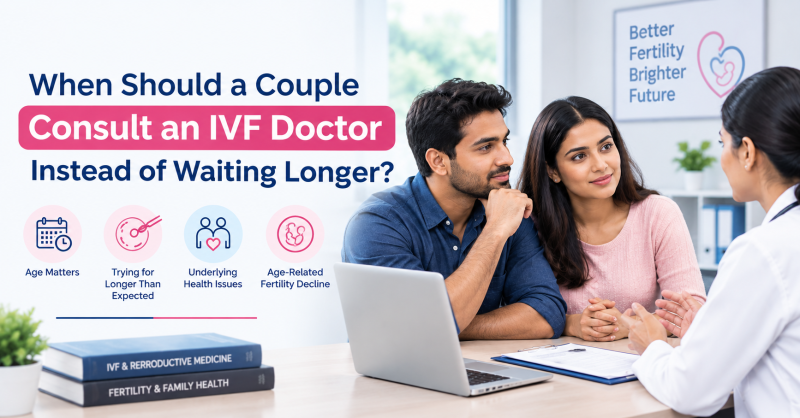
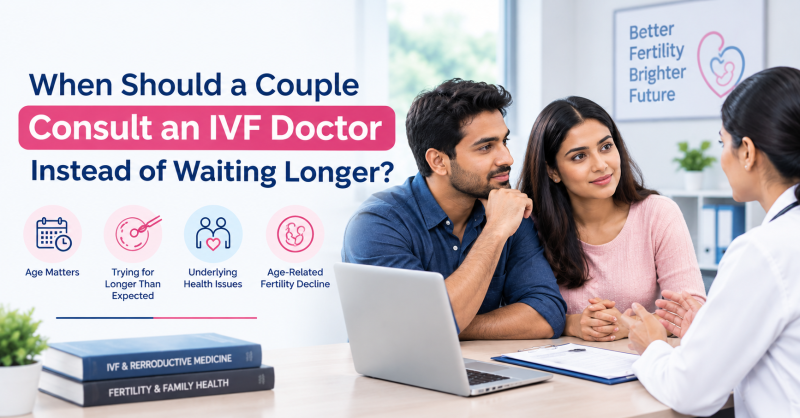
When Should a Couple Consult an IVF Doctor Instead of Waiting Longer?
 Deepak
For many couples trying to conceive, there's often a lingering hope that "it will happen eventually." This is understandable, and in many cases, it's true. But for some couples, waiting too long before seeking professional guidance can reduce the range of options available later, particularly when age or an underlying medical condition is involved.
Knowing when to move from waiting to consulting an IVF doctor in Delhi can make a meaningful difference in how smoothly the fertility journey unfolds.
Understanding the "Trying Naturally" Timeline
Fertility specialists generally use the following benchmarks to define when medical evaluation becomes appropriate:
- Under 35 years: After 12 months of regular, unprotected intercourse without conception
- 35 to 40 years: After 6 months of trying
- Above 40 years: Evaluation is usually recommended without waiting, given the natural decline in egg quantity and quality with age
These are general guidelines, not rigid rules. Some situations call for earlier evaluation regardless of age.
Situations That Warrant Earlier Consultation
Waiting the full recommended period isn't always necessary. Couples should consider consulting a fertility specialist sooner if any of the following apply:
- Irregular, absent, or unusually painful periods
- A known diagnosis of PCOS, endometriosis, or fibroids
- A history of pelvic infections or previous abdominal surgery
- Two or more miscarriages
- Known male-factor issues, such as low sperm count or motility
- One or both partners have an existing medical condition that could affect fertility (thyroid disorders, diabetes, etc.)
- Previous cancer treatment (chemotherapy or radiation)
- A partner's age is above 40, or ovarian reserve is known to be low
In these situations, earlier evaluation allows more time to explore appropriate treatment options.
Why "Waiting a Bit Longer" Can Sometimes Cost Time
It's natural to hope that more time will resolve the issue. However, for age-related fertility decline in particular, time is a factor that can't be reversed. Egg quantity and quality decrease progressively, and this decline tends to accelerate after the mid-30s.
This doesn't mean panic is warranted, but it does mean that unnecessary delays, especially past the recommended evaluation windows, can sometimes narrow the range of options later, or make treatment more complex than it might have been with earlier intervention.
What Does an IVF Consultation Actually Involve?
Many couples imagine that seeing an IVF specialist means committing to IVF immediately. In reality, an initial consultation is primarily diagnostic and exploratory. It typically includes:
- A detailed medical, menstrual, and reproductive history for both partners
- A physical and pelvic examination
- Hormonal blood tests (such as AMH, FSH, LH, thyroid profile)
- An ultrasound to assess the uterus and ovarian reserve
- A semen analysis for the male partner
- Additional tests if there's a suspected underlying condition, such as an HSG for tubal patency
Based on these findings, the specialist may recommend lifestyle changes, ovulation tracking, IUI, or IVF, or in some cases, simply reassurance and continued natural attempts with monitoring. IVF is one possible outcome of the consultation, not the only one.
Is IVF Always the Next Step After Consultation?
No. IVF is typically considered when:
- Tubal blockage or damage is present
- Male-factor infertility is significant
- IUI or other treatments have not resulted in pregnancy after a reasonable number of cycles
- Ovarian reserve is significantly reduced
- There is a genetic condition requiring embryo screening
- Age-related fertility decline limits the effectiveness of less invasive treatments
Many couples are first guided through simpler interventions such as ovulation induction or IUI before IVF is discussed, depending on their diagnostic findings.
What to Look For When Choosing an IVF Centre
Because fertility treatment often involves multiple steps and, sometimes, several cycles, the relationship with your specialist and clinic matters. When evaluating a best IVF centre in Delhi, consider:
- Whether the clinic conducts a thorough diagnostic workup before recommending treatment
- Clear, honest communication about your specific chances, without exaggerated promises
- Transparent explanation of costs and the treatment process
- Availability of a full range of treatments (IUI, IVF, ICSI) so your plan can be adjusted as needed
- A specialist who takes time to answer questions and address emotional concerns, not just clinical ones
A best IVF doctor in Delhi should be someone who helps you understand your specific fertility profile clearly, rather than moving straight to the most advanced treatment without proper evaluation.
Emotional Readiness Matters Too
The decision to consult a fertility specialist isn't only medical, it's emotional. Many couples delay consultation due to stress, stigma, or the hope that stepping away from "overthinking it" will help. While stress management is genuinely valuable, it shouldn't come at the cost of ruling out a treatable medical factor.
Seeking a consultation doesn't mean something is necessarily wrong. It simply means gathering clear information so that, whatever the outcome, the path forward is based on facts rather than uncertainty.
Final Thoughts
There's no single "right moment" to see a fertility specialist, but there are clear signals, based on age, symptoms, and medical history, that suggest earlier evaluation is worthwhile. An initial consultation is diagnostic, not a commitment to any particular treatment, and can offer clarity even if the outcome is simply reassurance.
If you and your partner have been trying to conceive and fall into any of the situations discussed above, speaking with an experienced specialist like Dr. Poonam Goyal can help you understand your specific fertility factors and the realistic options available, so you can make informed decisions rather than continuing to wait uncertainly.
Frequently Asked Questions
1. Does consulting a fertility specialist mean I'll need IVF?
No. A consultation is primarily diagnostic. Many couples are guided through simpler treatments like ovulation tracking or IUI before IVF is even discussed, depending on test results.
2. At what age should fertility evaluation start if trying to conceive?
Generally after 12 months of trying under age 35, after 6 months between 35–40, and without delay above 40, though certain medical conditions may warrant earlier evaluation regardless of age.
3. Can lifestyle changes alone resolve fertility issues in some cases?
In some situations, yes, particularly where weight, thyroid function, or stress levels play a contributing role. This is usually assessed during the initial evaluation.
4. What tests are typically done during the first fertility consultation?
Common initial tests include hormonal blood work, ultrasound for ovarian reserve, and semen analysis for the male partner, with additional tests added based on findings.
5. Is it normal to feel anxious before an IVF consultation?
Yes, this is a common and understandable response. A good specialist will take time to explain findings clearly and address emotional concerns alongside medical ones.
Source:
Click for the: Full Story
You might like