Close Menu
 World
 Biography
 Health
 Education
 Business
 Lifestyle
 Sports
 Technology
 Animals
 History
 Food
 Religious
 Startups
 Movies
 Politics
 Fashion
 Covid
 Diet
 Fitness
 Marketing
 Travel
 Science
 Reviews
 Social media
 Stories
 Facts
 Art
 Entertainment
Deepak

Health
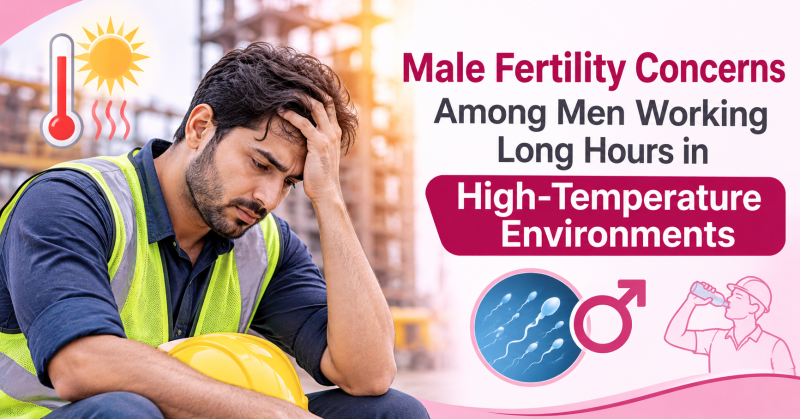
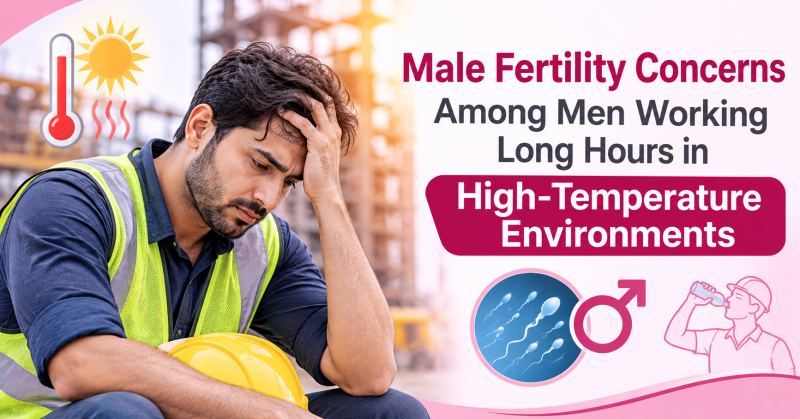
Male Fertility Concerns Among Men Working Long Hours in High-Temperature Environments
 Deepak
Some jobs come with heat as part of the daily routine. Commercial kitchens, bakeries, foundries, welding units, boiler rooms, glass and metal workshops, and long-distance driving all expose men to sustained warmth for hours at a stretch. In a city where summer temperatures regularly climb past 40°C, outdoor work in construction or delivery adds another layer. Men exploring the best male fertility in Delhi options often do not realise that their work environment may be part of the conversation. Heat does not automatically cause infertility, but it is a recognised factor that doctors take seriously when evaluating sperm health.
Why the Testes Are Sensitive to Temperature
The testes sit outside the body for a reason. Healthy sperm production, known as spermatogenesis, works best at a temperature a few degrees below core body temperature. The scrotum has its own cooling mechanisms, including a network of blood vessels that helps release heat and muscles that adjust the distance of the testes from the body.
When the surrounding environment stays hot for long periods, these cooling mechanisms can be overwhelmed. Rising scrotal temperature can affect the cells responsible for producing sperm and may also influence how sperm mature.
How Heat Exposure Can Affect Sperm Quality
Research on occupational and environmental heat has found associations between prolonged exposure and changes in semen parameters. The effects most commonly reported include:
- Lower sperm count (reduced sperm concentration)
- Reduced motility, meaning fewer sperm swim forward effectively
- Changes in morphology, with a higher proportion of abnormally shaped sperm
- Possible increase in sperm DNA damage in some men
Not every man exposed to heat will show these changes. The degree of effect varies with the intensity of heat, the number of hours spent in it, how many years the exposure has continued, and individual health factors.
Importantly, heat exposure usually does not affect sexual desire or erections. A man can feel completely well and still have altered semen parameters, which is why testing matters more than symptoms.
Working Conditions That May Add to the Risk
Prolonged Sitting
Drivers, machine operators and people who sit for long shifts may experience raised scrotal temperature, particularly when seats are heated by engines or poorly ventilated cabins.
Heavy or Tight Protective Clothing
Safety gear, thick uniforms and non-breathable fabrics trap heat close to the body. While protective clothing is essential, it can reduce natural cooling.
Dehydration and Fatigue
Long shifts in hot environments often lead to inadequate fluid intake, poor sleep and irregular meals. These factors affect overall health and may indirectly influence reproductive function.
Combined Lifestyle Factors
Smoking, alcohol, excess weight and frequent hot baths or saunas add to thermal and oxidative stress. When these combine with occupational heat, the overall impact may be greater.
Is the Effect of Heat Permanent?
This is one of the most important questions for men in these occupations. In many cases, heat-related changes in sperm quality are reversible once exposure is reduced. However, improvement does not happen overnight.
A complete cycle of sperm production takes roughly two and a half to three months. This means a repeat semen analysis is usually most meaningful after this period of reduced heat exposure. The extent of recovery differs from person to person, and long-term or very intense exposure may not fully reverse in every case.
When Heat Is Not the Whole Story
Doctors are careful not to assume that heat explains every abnormal report. A varicocele, which is an enlargement of veins in the scrotum, itself raises testicular temperature and can coexist with workplace heat. Hormonal imbalances, past infections, genetic factors, medications and previous surgery can also affect sperm production. A proper evaluation helps separate occupational influences from underlying medical conditions.
How Male Fertility Is Usually Evaluated
Men concerned about male fertility in Delhi can expect an assessment that may include:
- Detailed history, including work hours, type of heat exposure, clothing, sitting time, lifestyle and medical background
- Semen analysis interpreted according to WHO laboratory standards, often repeated because results naturally vary
- Physical examination to check testicular size and look for a varicocele
- Hormone tests such as FSH, LH and testosterone when the semen report or examination suggests a need
- Additional tests, such as sperm DNA fragmentation testing, for selected men
Fertility is a shared concern, so the female partner's evaluation usually proceeds alongside.
Practical Steps Men Can Discuss With Their Doctor
- Take regular breaks from hot areas and from prolonged sitting where the job allows
- Choose loose, breathable underwear and clothing outside work hours
- Stay well hydrated during shifts
- Avoid placing laptops directly on the lap and limit hot tubs or saunas
- Reduce smoking and alcohol, and work towards a healthy body weight
- Schedule a follow-up semen test after a few months of changes rather than retesting too soon
These measures support sperm health but cannot replace medical evaluation when a problem exists.
Getting Clear Guidance Instead of Guesswork
Many men delay testing because they feel healthy or assume their job is unchangeable. An early consultation gives clarity. Dr. Poonam Goyal, a Gynecologist and Fertility Specialist in Delhi, evaluates couples together, considering both partners' reports, occupational factors and medical history before suggesting the next step, whether that is lifestyle adjustment, treatment of an underlying condition, or assisted reproduction such as IUI, IVF or ICSI. Every plan depends on individual findings, and no approach can guarantee pregnancy.
A Manageable Factor Worth Addressing
Heat at work is one of the few male fertility factors that can often be modified, at least partly. Understanding how temperature affects sperm production, getting tested at the right time and making realistic changes gives men a clearer picture of their reproductive health, without unnecessary alarm.
If you want consultation regarding male fertility, you can visit Dr Poonam Goyal at:
- C-3/63A, 64A, opp. Gokulpuri police station, Block C, Panchsheel Hospital, Yamuna Vihar, Shahdara, Delhi, 110053
- HOD IVF & Infertility, Max Superspeciality Hospital, Vaishali
Frequently Asked Questions
1. Can working in a hot environment reduce sperm count?
Prolonged exposure to high temperatures has been associated with lower sperm count, reduced motility and changes in sperm shape. The effect varies between men and depends on the intensity and duration of exposure.
2. How long does it take for sperm to recover after reducing heat exposure?
Since sperm production takes around two and a half to three months, improvements are usually assessed with a repeat semen analysis after this period. Recovery varies and is not always complete.
3. Does sitting for long hours while driving affect male fertility?
Long hours of sitting, especially in warm vehicles, may raise scrotal temperature. Taking breaks and improving ventilation may help, but a semen analysis is the only way to know whether sperm quality is affected.
4. Should men in high-heat jobs get a fertility test even without symptoms?
Heat-related sperm changes usually cause no symptoms. If a couple has been trying to conceive for a year without success, or six months if the female partner is over 35, both partners should consider evaluation.
5. Can heat exposure cause permanent infertility?
In many men, heat-related changes are reversible once exposure decreases. However, other conditions such as varicocele or hormonal problems may also be present, so a full medical evaluation is advisable.
Source:
Click for the: Full Story
You might like