Close Menu
 World
 Biography
 Health
 Education
 Business
 Lifestyle
 Sports
 Technology
 Animals
 History
 Food
 Religious
 Startups
 Movies
 Politics
 Fashion
 Covid
 Diet
 Fitness
 Marketing
 Travel
 Science
 Reviews
 Social media
 Stories
 Facts
 Art
 Entertainment
Badal

Health
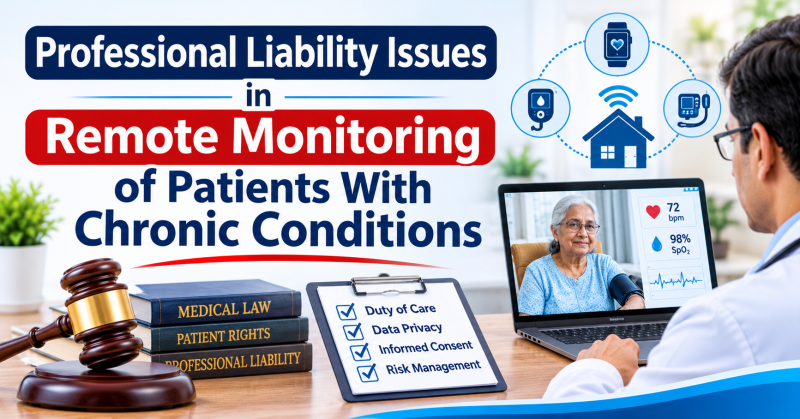
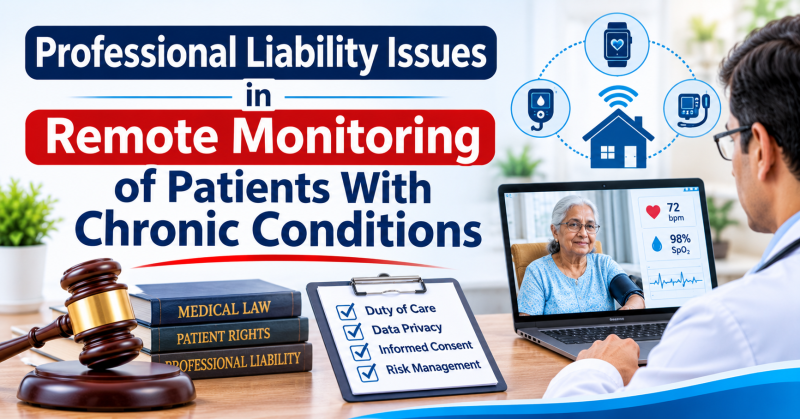
Professional Liability Issues in Remote Monitoring of Patients With Chronic Conditions
 Badal
A doctor who monitors a chronic patient remotely owes the same duty of care as one who sees the patient in the clinic. Reviewing glucose logs, blood pressure readings or wearable data from a distance does not create a lower standard, and it does not remove the duty to act when the data shows a problem. Doctors looking for legal help in Delhi on this subject usually describe the same pattern: data was collected, but nobody was clearly responsible for reading it, responding to it or recording what was done. This article explains where liability risk arises in remote monitoring and how to reduce it.
What Governs Remote Monitoring in India
India has no dedicated statute for remote patient monitoring. The main reference is the Telemedicine Practice Guidelines, issued in March 2020 as an appendix to the Indian Medical Council (Professional Conduct, Etiquette and Ethics) Regulations, 2002. They allow doctors to follow up and manage patients with chronic conditions through telemedicine, while holding them to the same professional standards as in-person care. The doctor must judge whether remote management is still adequate or the patient needs a physical examination.
Two cautions apply. The NMC's 2023 professional conduct regulations were put in abeyance soon after notification, so doctors should confirm which version is in force before citing a clause. And the guidelines restrict categories of drugs that may be prescribed remotely, so check the current list before changing a chronic patient's medication by phone or app.
Beyond professional rules, a patient can pursue a civil or consumer complaint, and the question will be whether care fell below the accepted standard and caused harm. For criminal liability, the Supreme Court in Jacob Mathew v. State of Punjab (2005) required gross negligence or recklessness. Section 106(1) of the Bharatiya Nyaya Sanhita, 2023 provides a lower maximum punishment for registered medical practitioners in death-by-negligence cases arising from medical procedures. These are possible outcomes in serious cases, not likely ones.
Where Liability Risk Actually Arises
Unclear ownership of the data
When a clinic enrols a patient in a monitoring programme, a basic question often goes unanswered: who reads the readings, and how often? If readings arrive daily but are reviewed monthly, the patient may believe someone is watching in real time. That gap between expectation and reality is a common source of disputes.
Alerts without a response pathway
Setting an alert threshold is a clinical decision. If an alert fires and no one is assigned to respond, the clinic has created a record showing that a warning was generated and not acted on. Doctors should define in advance what happens when a reading crosses a threshold and who is responsible out of hours.
Over-reliance on device data
Home devices can be inaccurate, used incorrectly or shared between family members. A single abnormal reading may be an error, and a normal trend may hide a symptom the patient never mentioned. Data should support clinical judgment, not replace it.
Setting Expectations Through Consent
Consent for remote monitoring should do more than authorise data collection. It should tell the patient, in their own language, what the service does and does not do.
A useful consent note covers:
- What data will be collected and by which device or app
- How often readings will be reviewed, and by whom
- That the service is not an emergency response, with clear instructions on where to go or whom to call in an emergency
- How data is stored and who can see it
Dr. Vimal Kant Goyal has spoken on the value of medico-legal awareness for practising doctors, and this is a good example of why: a clear statement of limits at enrolment protects the patient first and the doctor second. For readers who want a broader legal guide for doctors in Delhi, this medico-legal resource for medical practitioners is a useful place to continue.
A Realistic Scenario
This is a hypothetical illustration, not a reported case.
A physician enrols a 58-year-old diabetic patient in a remote glucose-monitoring arrangement. The patient uploads readings through an app. The clinic reviews the dashboard weekly, but the patient believes someone watches it daily. Over ten days the readings climb steadily. No alert threshold was set, and the patient assumes the doctor would call if there were a problem. By the time the clinic notices, the patient has been admitted with complications. The family files a complaint.
The mistakes were an unstated review schedule, no alert thresholds and no record of what the patient had been told. The concern is not only the clinical outcome but that the clinic cannot show what service it actually promised. The physician should have set thresholds, told the patient the review frequency in writing, and recorded advice to seek urgent care for symptoms.
Building a Defensible Monitoring Process
Most of this requires discipline rather than technology.
- Choose patients carefully. Not every chronic patient suits remote monitoring. Record why remote management was judged appropriate.
- Define thresholds and responses for each patient, and write them in the record.
- Assign a named person to review data and a backup when they are absent.
- Document each review, even briefly, with the action taken.
- Schedule physical visits at intervals appropriate to the condition, and note when a patient was called in because remote data was not enough.
- Audit periodically to check that reviews happened as promised.
Data Protection and Records
Monitoring generates continuous health data, and that raises privacy obligations. The Digital Personal Data Protection Act, 2023 is being brought into force in phases, so clinics should review how consent, storage and sharing are handled under the rules currently in effect. Vendor contracts matter too: a clinic that uses a third-party app should know where data is held and who can access it.
Record retention rules differ by type of record and establishment. A small clinic, a nursing home and a hospital may face different requirements, and Delhi has its own registration framework, so confirm the rules that apply to your setting rather than assuming a general standard.
Conclusion
Remote monitoring extends care, and it extends responsibility with it. The main risks come from unclear ownership, alerts with no response plan and consent that promises more than the clinic delivers. Doctors can reduce exposure by defining who watches the data, documenting each decision and telling patients plainly what the service can and cannot do. These steps do not guarantee protection from a complaint, but they make the clinical reasoning visible if one arises.
Frequently Asked Questions
1. Is the doctor liable if the patient ignores advice given remotely?
Not automatically. If the advice was clear and recorded, patient non-compliance can be relevant, though a court or commission will look at the full facts.
2. Can a clinic outsource monitoring to a technology vendor?
Yes, but the treating doctor generally remains responsible for clinical decisions. The vendor contract should define response times, escalation steps and data handling.
3. Should a patient be told when readings will not be watched in real time?
Yes. State the review schedule and the non-emergency nature of the service in the consent record. This avoids a false sense of security.
4. When should a doctor consult a medico legal consultant in Delhi?
Consider it when designing a monitoring programme, drafting consent forms or vendor contracts, or after receiving a complaint or legal notice. Early advice on the document and process is usually more useful than advice after a dispute begins.
5. Does an automated alert count as medical advice?
It depends on its content and who set the rules behind it. If the doctor configured thresholds and messages, the clinic should treat them as part of the clinical service and review them accordingly.
Source:
Click for the: Full Story
You might like