Close Menu
 World
 Biography
 Health
 Education
 Business
 Lifestyle
 Sports
 Technology
 Animals
 History
 Food
 Religious
 Startups
 Movies
 Politics
 Fashion
 Covid
 Diet
 Fitness
 Marketing
 Travel
 Science
 Reviews
 Social media
 Stories
 Facts
 Art
 Entertainment
Rajan

Health
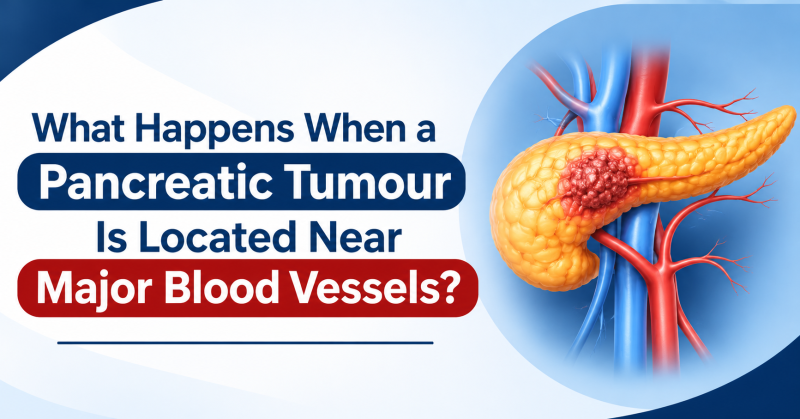
What Happens When a Pancreatic Tumour Is Located Near Major Blood Vessels?
 Rajan
Few reports cause more alarm than a scan saying a pancreatic tumour is "abutting" or "involving" a blood vessel. Many families hear this as "inoperable." That is often not the case.
The pancreas lies deep in the abdomen, wrapped around some of the body's most important blood vessels. A tumour near them is common, and whether it can be removed depends on exactly how it relates to those vessels. This guide explains how doctors judge that question, what treatment pathways exist, and what to look for when seeking the best pancreatic surgery in Delhi.
Why the Pancreas Sits So Close to Major Vessels
Several large vessels pass directly behind, beside or through the pancreas:
- Superior mesenteric vein (SMV) and portal vein: carry blood from the intestines to the liver. They run behind the pancreatic neck.
- Superior mesenteric artery (SMA): supplies the small intestine and part of the colon.
- Coeliac axis and hepatic artery: supply the liver, stomach and spleen.
- Splenic vein and artery: run along the back of the pancreas body and tail.
A tumour in the head or neck of the pancreas, in particular, can lie against the SMV, portal vein or SMA. Because tumour and vessel are neighbours, the key question is whether the surgeon can safely separate them or reconstruct the vessel.
How the Relationship Is Assessed
Accurate staging is the foundation of every decision. It usually involves:
- Pancreas-protocol CT scan: a multiphase scan that shows the tumour and vessels in detail.
- MRI or MRCP: helpful for small lesions, the bile duct and liver findings.
- Endoscopic ultrasound (EUS): gives close views and allows a tissue sample.
- Blood tests: including CA 19-9, which supports monitoring but cannot diagnose the disease on its own.
- Multidisciplinary tumour board review: surgeons, medical oncologists, radiologists and gastroenterologists review the case together.
A scan reported elsewhere as "vessel involvement" is worth re-reviewing by a specialist pancreatic team. Interpretation requires experience, and a second opinion can clarify whether surgery remains an option.
Treatment Pathways When Vessels Are Involved
1. Upfront surgery. For resectable tumours, surgery may come first, followed by chemotherapy.
2. Neoadjuvant (pre-operative) therapy. For borderline resectable tumours, chemotherapy, sometimes with radiotherapy, is often given before surgery. It can shrink the tumour, treat microscopic spread and help identify patients who will benefit from an operation. Not every patient responds, and the plan is reassessed with repeat imaging.
3. Surgery with vein resection and reconstruction. If a tumour is stuck to the portal or superior mesenteric vein, the surgeon may remove a short section of the vein and rejoin it or use a graft. In experienced hands this is an established technique.
4. Arterial involvement. Arterial resection is much more complex, carries higher risk and is considered only in carefully selected cases at specialised centres. For most patients with significant artery encasement, systemic treatment is the main approach.
5. Palliative and supportive care. When surgery is not appropriate, the focus shifts to controlling the disease, relieving jaundice or blocked bowel, managing pain and maintaining quality of life.
Risks and Recovery
Operations such as the Whipple procedure (pancreaticoduodenectomy) are among the most demanding in abdominal surgery. Risks include:
- Leakage from the pancreatic join (pancreatic fistula)
- Bleeding
- Infection
- Delayed stomach emptying
- Diabetes or digestive enzyme deficiency after surgery
Adding vein reconstruction can increase technical complexity. Hospital stay is typically measured in weeks rather than days, and recovery involves dietary changes, enzyme supplements if needed, and regular oncology follow-up. Individual outcomes depend on tumour type, stage, overall health and the surgical team's experience.
What to Look for in a Pancreatic Surgery Centre
Because these operations are complex, the setting matters as much as the surgeon. When comparing options for pancreatic surgery in Delhi, consider:
- Whether the case is discussed by a multidisciplinary tumour board
- Experience with vascular resection and reconstruction
- Access to intensive care, interventional radiology and endoscopy
- Willingness to explain realistic goals, risks and alternatives
- Support for nutrition and long-term follow-up
Patients seeking pancreatic surgery in Sir Ganga Ram Hospital can arrange a consultation with Dr. Tarun Mittal, a surgeon with over 20 years of experience, at Old Rajendra Nagar, New Delhi – 110060. Bring all your scans on disc, your pathology reports and a list of current medicines, so the team can review the vessel relationships directly rather than relying on report summaries alone.
When to Seek Help Early
Pancreatic tumours often cause vague symptoms at first. See a doctor promptly if you notice:
- Yellowing of the eyes or skin
- Dark urine and pale stools
- Unexplained weight loss
- Persistent upper abdominal or back pain
- New-onset diabetes with other symptoms
Early evaluation widens the options, including surgery.
Conclusion
A pancreatic tumour near major blood vessels is a serious finding, but it does not automatically close the door to surgery. Outcomes depend on which vessels are involved, how closely, and how the cancer responds to treatment. Careful staging, multidisciplinary planning and an experienced surgical team make the biggest difference. If you or a family member has received this diagnosis, seek a specialist review promptly and carry your complete records to the consultation.
Medical disclaimer: This article is for general education and does not replace professional medical advice, diagnosis or treatment.
Frequently Asked Questions
1. Can a pancreatic tumour near a blood vessel still be operated on?
Yes, in many cases. If contact with a vein is limited, surgery with vein reconstruction may be possible. Artery involvement is more difficult, and the decision rests on detailed imaging and expert review.
2. What does "borderline resectable" mean?
It means the tumour touches vessels enough that immediate surgery may not achieve complete removal, but surgery may become possible after chemotherapy or other treatment.
3. Why is chemotherapy sometimes given before surgery?
It aims to shrink the tumour, address microscopic spread and test how the cancer behaves, helping select patients who are most likely to benefit from an operation.
4. Is vein resection during pancreatic surgery safe?
It is an accepted technique when performed by experienced surgical teams in suitable patients, though it adds complexity. Your surgeon should explain the specific risks for your case.
5. Should I get a second opinion if my scan shows vessel involvement?
Yes. Resectability assessment is nuanced, and a review by a high-volume pancreatic team can confirm the stage and clarify the options.
Source:
Click for the: Full Story
You might like